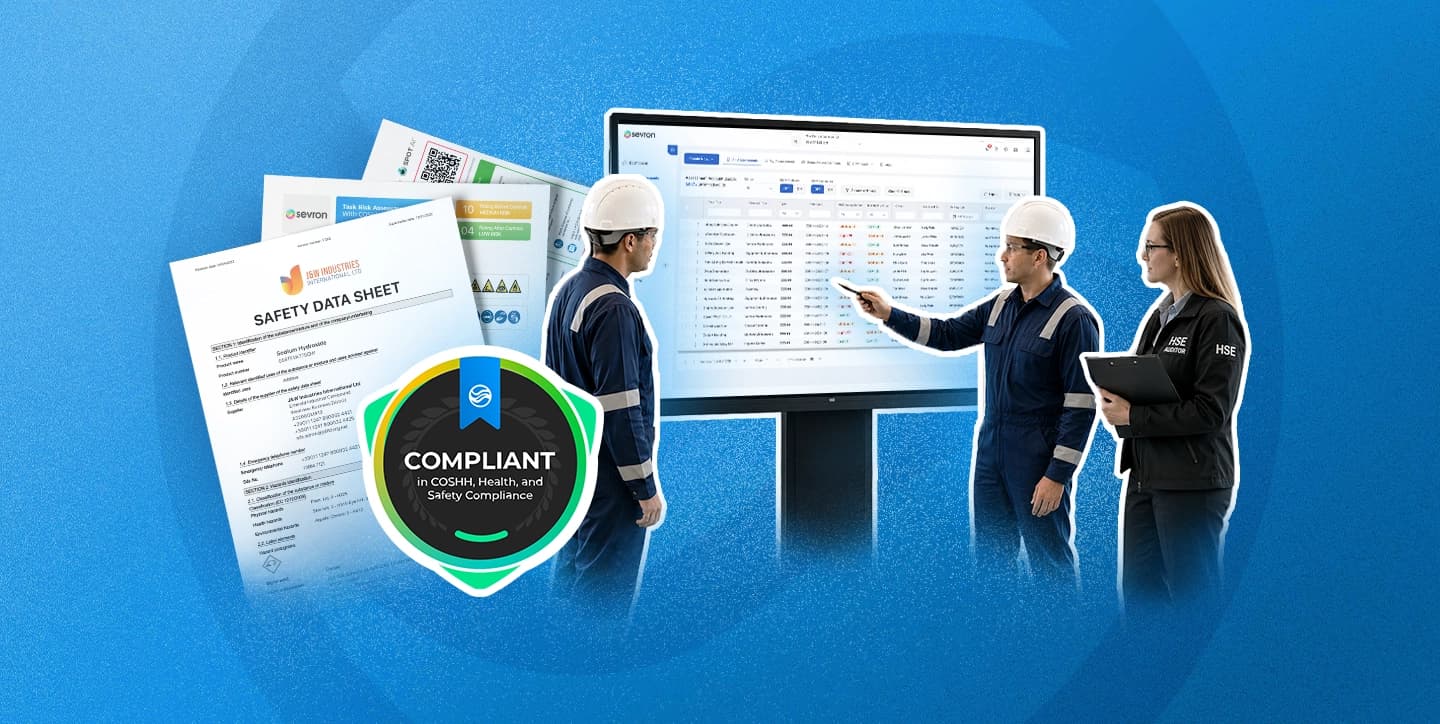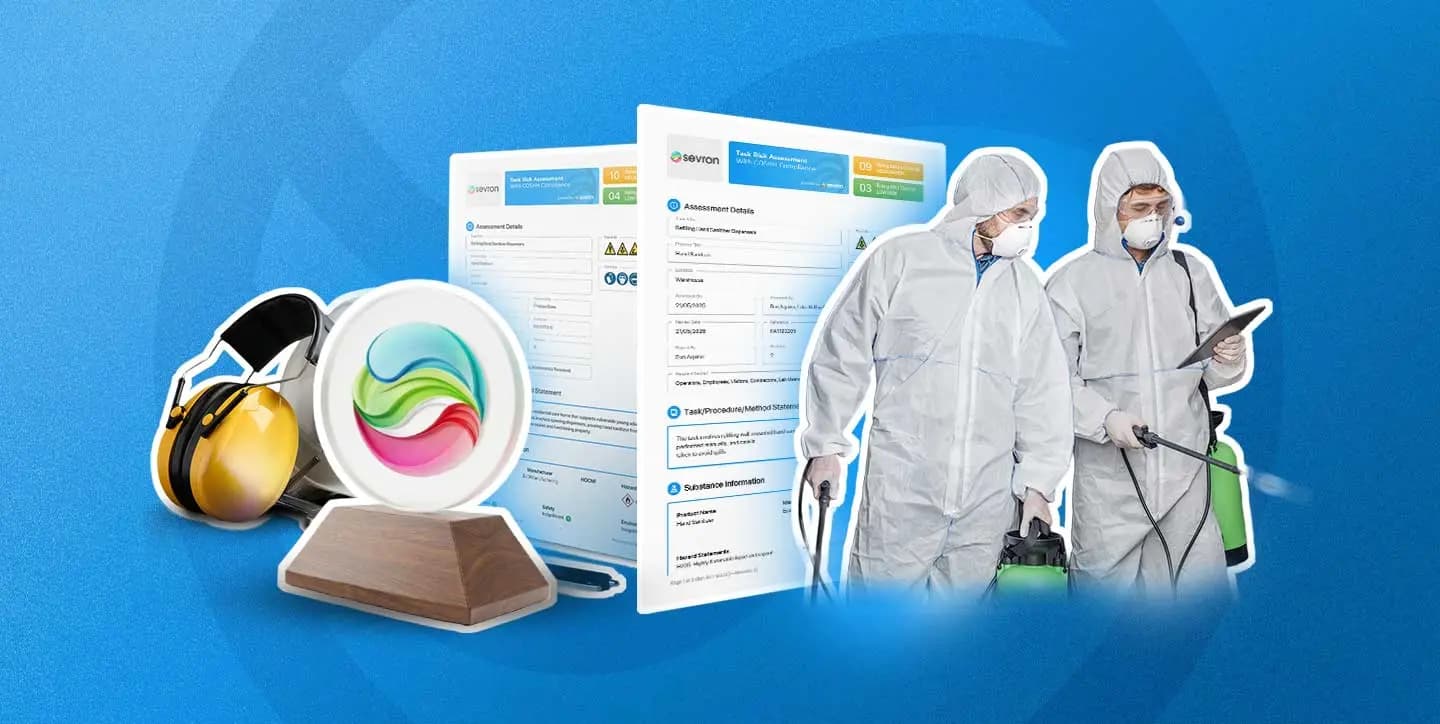

A COSHH folder tells you what a client intended. It rarely tells you what happens at the bench.
That gap is the job. You have a day on site, sometimes half of one, and a client who has paid for confidence rather than a list of faults. Somewhere in an inventory of forty or four hundred substances sit two or three genuine exposure problems, alongside a good deal of paperwork that is technically fine and practically inert.
Telling those apart quickly is a method rather than a knack. Here is the shape of one that holds across client types.
Agree the boundary before you agree the fee
Review our COSHH can mean a document check, a full site assessment, or rewriting two hundred assessments under your own name. Those are different pieces of work with different liabilities, and the difference rarely surfaces in the enquiry email. What does the phrase actually mean to the person who sent it?
Pin it down in writing. Which sites, which substances, which shifts. Whether you are auditing what exists or authoring what does not. Whether you are recommending controls or specifying them. Whether anything carries your signature.
This protects your client as much as you. HSE guidance on using a consultant tells employers to be clear about what help they need and to ask the adviser to confirm what they will do and when, and it tells them to satisfy themselves that the adviser has relevant training or experience in their industry and is adequately insured. A consultant who volunteers that framing tends to look more credible, not less.
Where the duty sits
Appointing you does not move the legal duty, and the law says so directly. Under regulation 7 of the Management of Health and Safety at Work Regulations 1999 an employer appoints one or more competent people to assist with their statutory obligations, and under regulation 6 of COSHH the duty to assess exposure remains theirs. Regulation 21 of the 1999 Regulations then closes the gap, providing that an employer has no defence for a breach by reason of any act or default of a person appointed under regulation 7. Your work makes the duty easier to discharge. It cannot take it on.
Build the picture from tasks, not the substance list
A chemical inventory ranks by what a client bought. Exposure ranks by what people do. Starting from the list pulls you toward the substances with the loudest labels and away from the tasks that put people in contact.
So, work from the job. Which activities bring people into contact with what, how often, for how long, and in what quantity. Then ask what the work itself creates. Wood dust, respirable crystalline silica, welding fume and flour dust turn up on nobody's purchase ledger, which is exactly why they get missed. The scale of the harm is not in dispute. HSE statistics for 2024/25 estimate around 11,000 lung disease deaths each year in Great Britain linked to past exposures at work, with chronic obstructive pulmonary disease and lung cancers making up most of that figure. A client with an immaculate inventory and an unassessed cutting bay has the harder problem.
Prioritise from there. Frequent contact ahead of occasional. Poorly ventilated ahead of open. Carcinogens, mutagens and asthmagens ahead of irritants, because for those COSHH requires exposure to be reduced as low as is reasonably practicable rather than simply kept under a workplace exposure limit. Respirable crystalline silica makes the point plainly. Table 1 of HSE's EH40 sets its limit at 0.1 mg/m³ as an eight-hour average and carries a carcinogen notation where the silica is generated by a work process. EH40 is also explicit that control counts as adequate only where good control practice is applied, the limit is not exceeded, and exposure to carcinogens, mutagens and asthmagens is reduced as low as is reasonably practicable. A client sitting just under 0.1 has not finished the job, and an assessment treating the limit as the finish line has misread the duty.
Read the file, watch the task, ask the operator
Read the assessment first so you know what is claimed. Then watch the task without interrupting it. Then ask the person doing it to talk you through a normal shift, including the awkward parts. Where all three match, note it and move on quickly. Where they diverge, you have found something.
The divergences repeat across clients. The assessment names local exhaust ventilation that sits switched off or has no record of thorough examination and test. It specifies gloves, and the gloves on the shelf are the wrong material for the substance. The operator describes a decanting step, or a cleaning routine at the end of shift, that appears nowhere in the document. None of that shows up in a desk review, which is why HSE's guidance to employers notes that risks are difficult to identify without visiting the workplace.
So, which tells you more about a client's real control of exposure, the signature on the assessment or the fifteen minutes you spend watching the task?
Judge the assessment against the job, not against a template
Regulation 6 of COSHH sets the standard as suitable and sufficient. Suitable means it fits the real task. Sufficient means it goes far enough to control the exposure. A tidy template can fail both. When you test an assessment, look for whether it:
- Names the actual task, quantity, and frequency rather than just the product.
- Covers every relevant route of exposure, including skin contact and ingestion, not inhalation alone.
- Checks whether the substance carries a workplace exposure limit in HSE's EH40, and controls exposure regardless where it does not.
- Specifies controls that exist on site, with maintenance and examination records to match.
- Considers health surveillance where the substance and the exposure call for it.
- Rests on a current safety data sheet, checked by revision date and version rather than by assumption.
Two of those deserve a closer look. On ventilation, regulation 9 of COSHH requires control measures to be maintained and examined, and HSE states that LEV must be thoroughly examined and tested at least every 14 months, more often for the higher-risk processes named in Schedule 4. Ask for the certificate, not the assurance.
On safety data sheets, a supplier reissues a sheet, a classification shifts, and the assessment built on the old version quietly stops being accurate while looking untouched on the shelf. Checking the client's copy against the current sheet takes a minute per substance in the UK's largest SDS database, free and without an account.
The assessment that reads well and protects nobody
Generic assessments are a common finding and an easy one to under-report, because they look like compliance. If a document could apply to any workshop in the country, it is not describing your client's exposure. Say so plainly in the report, and say what it should describe instead. Sevron's COSHH guide covers the fundamentals if a client needs the reasoning in writing.
Write recommendations your client can start on this week
HSE sets out what it expects of consultant advice, and the list is a fair specification for any report. Advice should be specific to the workplace. It should concentrate on practical action against significant risks rather than over-responding to trivial ones. Recommended controls should be reasonably practicable. It should not generate paperwork for the sake of it, and it should come with a proper handover explaining the key risks and controls.
Two habits make that land. Rank findings by risk rather than by how easy they were to spot. And separate what the law requires from what you consider good practice, so your client knows which items are not negotiable, and which are your professional judgement. That distinction is also what lets them defend a decision after you have left the site.
Sit back a little and picture the handover meeting. Twelve findings on the table, and the operations director has one question. Which of these will an inspector care about? If your report ranks a missing countersignature alongside an untested extraction hood, that question becomes unanswerable and the whole document gets shelved. Rank them, and the same client has the extraction sorted inside a fortnight.
Keeping your own method current matters as much as the client's records. It is also the first thing to slide, because no client is paying for it.
Removing the cost helps. The Knights of Safety Academy, Sevron's health and safety training partner, runs its online courses free of charge, from the COSHH Risk Assessor Certification through incident investigation, task risk assessment and a set of ISO awareness courses. Among them is a course on managing chemical safety for consultants. This course develops a practical method for reviewing a client's chemical safety arrangements. It focuses on how a consultant defines the engagement, builds an evidence-based picture of the work, evaluates controls, forms defensible findings and gives proportionate advice.
The part that gets harder with every client you win
One client, one folder, and a good method is enough. Fifteen clients across ninety sites is a different problem. Every supplier reissue ripples into whichever assessments referenced that substance, at whichever location, and tracking it by hand across separate client files is where most consultancies quietly lose their evenings.
That is the specific pressure Safety365 is built around for consultants working across multiple clients. Substances link to their Safety Data Sheets and to the COSHH Assessments that use them, so a reissued sheet flags the assessments it affects rather than waiting to be noticed. Records stay separated by location, and the audit trail shows who assessed what and when, which is the evidence your client needs and the proof of work you need. It is the machinery behind Sevron's Accelerated Compliance approach, taking clients from certified through competent to compliant without you rebuilding the picture each visit.
See what it looks like across every client
Method carries you a long way. It stops carrying you at the point where the number of clients, sites and substances outgrows what one person can hold between visits.
Two ways to work out whether the infrastructure side earns its place. A call makes sense if you want to talk through your own portfolio, how records would separate by client, and what setting up the first one would involve. The demo makes sense if you would rather see it running before you speak to anyone. It is pre-recorded and available on demand, so you can start it now and stop whenever you like.
Frequently Asked Questions
Can a consultant take on a client's COSHH duty?
No. An employer appoints competent assistance under regulation 7 of the Management of Health and Safety at Work Regulations 1999, and the COSHH duty to assess and control exposure stays with them. Your work makes that duty easier to discharge, which is worth stating in the engagement letter rather than leaving implied.
Do I need to be on OSHCR to advise on COSHH?
Not legally. The Occupational Safety and Health Consultants Register is voluntary, though HSE supports it as a way for businesses to find consultants with professional status recognised by their body, valid insurance and current knowledge, so it carries weight with clients comparing advisers.
How often does a client's LEV need testing?
At least every 14 months for most systems under regulation 9 of COSHH, and more frequently for the higher-risk processes listed in Schedule 4. Records should be kept, so ask to see the certificate and its date rather than accepting that a test was done.
How long should a COSHH review take?
It depends on the number of tasks rather than the number of substances. A single-site client with a handful of processes can be covered properly in a day, while a multi-shift operation with process-generated dust or fume needs observation across more than one shift to be worth anything.
A folder proves intent. Fifteen minutes on the floor proves control.

Safety & Compliance Experts
The Sevron team brings decades of combined experience in health and safety compliance, risk assessment, and workplace safety solutions.

Reviewed by
Dale Allen
CEO & Founder