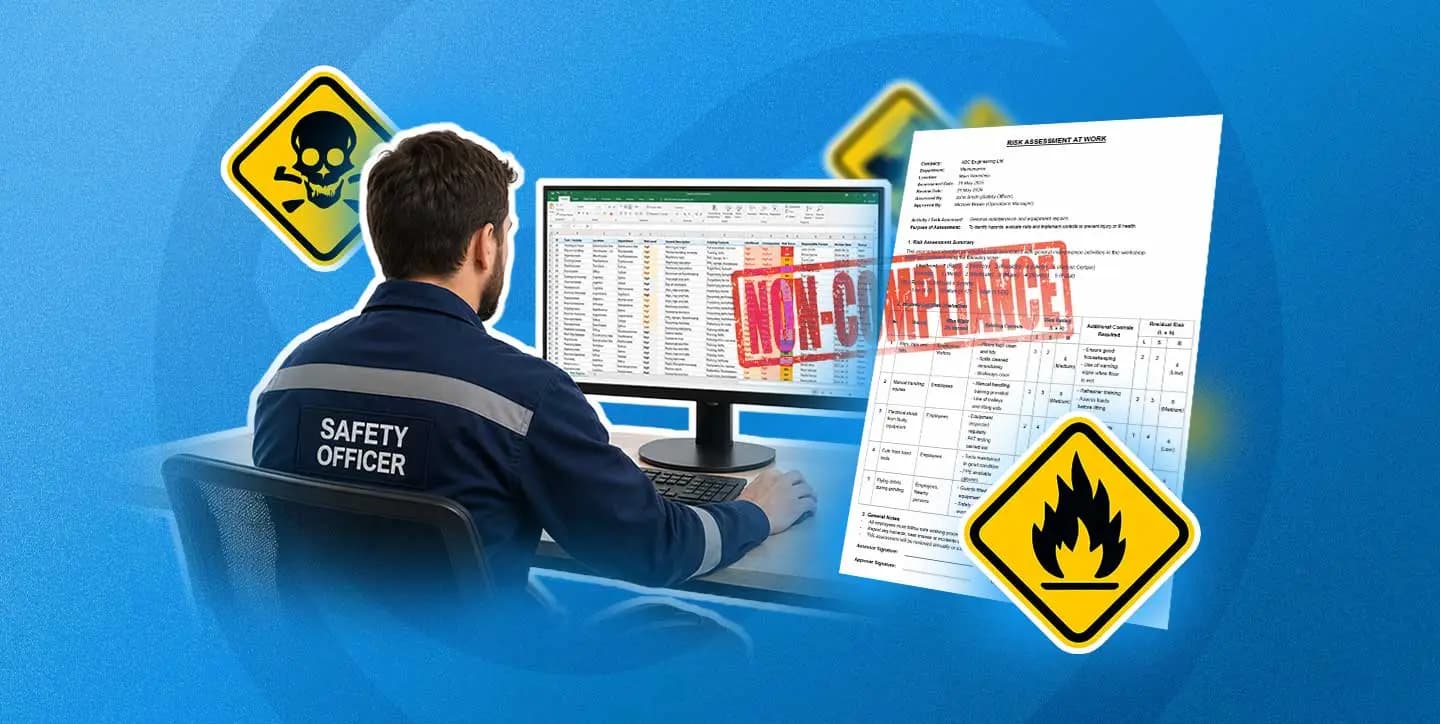

A spreadsheet looks free. It is not. The cost is hidden, and it shows up as out-of-date assessments, missed reviews, and the exact gaps an HSE inspector looks for. COSHH is not a list. It is a living duty, and a spreadsheet does not behave like one.
Picture the request landing on a Friday afternoon. A major client wants your full COSHH file before Monday as a condition of the contract. With a spreadsheet, you spend the weekend opening tabs, hunting for the latest version of each safety data sheet, and hoping the copy on the shared drive is the right one. With a connected system, you export it in minutes, current and complete, and keep your weekend. That gap, between a scramble and a click, is the hidden cost in a single afternoon. So why do so many businesses start with the spreadsheet anyway?
Why So Many Start With a Spreadsheet
It is understandable. A spreadsheet is free, familiar, and feels like plenty when you have a handful of substances. Everyone can open it, nobody needs training, and it costs nothing to set up. The trouble is that COSHH is not a static list you fill in once. It is a duty that has to stay valid as products, suppliers and people change, and a spreadsheet has no way of knowing when any of that has happened.
The Hidden Costs, One by One
- Safety data sheets go out of date. Suppliers reissue them, and a spreadsheet does not tell you, so your assessment rests on old hazard information without anyone realising.
- Reviews get missed. The law expects assessments to stay valid, but a spreadsheet sends no reminder, so reviews slip until the document describes a workplace that has moved on.
- Versions multiply. Copies spread across drives, inboxes and desks, and nobody is sure which one is current, which means decisions get made from the wrong sheet.
- The audit trail disappears. When an inspector asks who assessed what, and when, and what changed, a spreadsheet cannot show it.
- Time drains away. Manual updates, chasing safety data sheets and rebuilding broken files swallow an afternoon at a stretch and add up across a year into real lost hours.
- Everything stays scattered. Assessments live in one place, safety data sheets in another, training records somewhere else, so no one ever sees the whole picture at once.
The gap nobody planned
A spreadsheet does not cause harm by itself. It is where the gaps hide: the out-of-date sheet, the review that never happened, the control nobody checked. Those gaps are exactly what HSE prosecutes, and they are almost always invisible until something forces them into the light.
The Real Cost Is Health, and Enforcement
This is where the hidden cost becomes a real one. HSE's 2024/25 figures estimate 1.9 million workers suffering from work-related ill health, and around 13,000 deaths a year linked to past exposures at work, most of them from occupational lung disease. A spreadsheet does not cause that harm. But it is the place the gaps live, and those gaps are what turn a routine inspection into an improvement notice, and an improvement notice ignored into a prosecution. The numbers speak for themselves, and they are not abstract to the families behind them.
What Good Looks Like
The fix is not more admin piled on top of a busy week. It is a single connected system: current safety data sheets, assessments linked to the substances and mixtures they cover, automatic review reminders so nothing lapses unnoticed, a clear record of who did what and when, and access for the whole team rather than one locked file. The difference is not cosmetic. It is the difference between a list that tells you nothing and a system you can stand behind when someone asks.
What a connected system gives you that a spreadsheet cannot
- Sheet alerts: when a supplier reissues a safety data sheet, the system flags every assessment and mixture that uses it, before the change catches you out.
- Review reminders: scheduled prompts mean no assessment quietly lapses while the year moves on.
- One source of truth: no copies, no version confusion, one current record that the whole team works from.
- Audit-ready records: who assessed what, when it was reviewed, and what changed, all in one place and ready to show.
Safety365 brings those pieces together so doing COSHH properly becomes the path of least resistance, the quiet engine behind Sevron's Accelerated Compliance approach to getting certified, competent and compliant. The spreadsheet felt free because the bill arrives later, as lost time, stale records and risk. A system turns that around.
See the difference a connected system makes.
Assessments, safety data sheets and review dates in one place, current and audit-ready.
Frequently Asked Questions
Is it illegal to manage COSHH on a spreadsheet?
No, a spreadsheet is not banned. But you still have to meet every COSHH duty, and that is where spreadsheets tend to fall short. The legal risk is not the tool itself; it is the missed reviews, stale sheets and missing audit trail that the tool makes likely.
What is the real risk?
Out-of-date information, missed reviews and no audit trail. They become visible gaps in an inspection or after an incident, exactly when they cost the most.
Can I move my spreadsheet into a system?
Yes. Safety365 lets you bring existing substances and assessments across, then keep them current from one place rather than starting from scratch.
How much time does a spreadsheet actually cost?
More than it looks. Chasing safety data sheets, fixing versions and rebuilding files quietly absorbs hours across a year that a connected system gives back.
What does a connected system actually include?
Current safety data sheets linked to your assessments, automatic review reminders, mixture calculations, an audit trail of who did what and when, and one place to show your records on demand.
A spreadsheet is where compliance goes to quietly expire. See what a connected system looks like.

Safety & Compliance Experts
The Sevron team brings decades of combined experience in health and safety compliance, risk assessment, and workplace safety solutions.

Reviewed by
Dale Allen
CEO & Founder