
Fuel & Energy Compliance Without Compromising Operational Tempo
Free 14-day trial. No credit card required.

Chemical Hazards in the Energy Sector
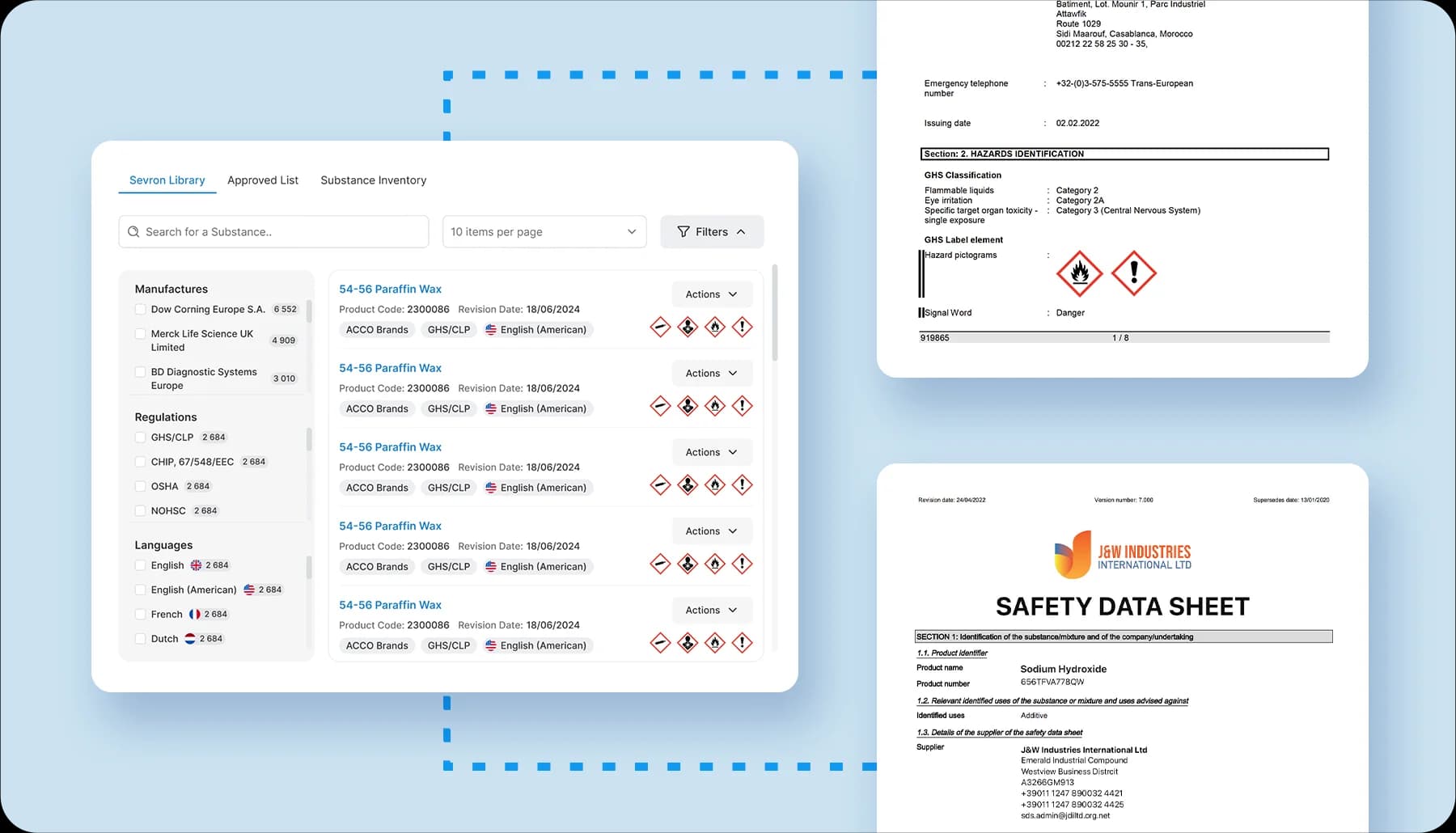
Exploration, drilling, refining and transport involve corrosives, flammables, drilling fluids, gases and water-treatment chemicals. Each requires accurate safety data sheets to guide safe handling and emergency response. Companies must satisfy health and safety regulations from HSE/RIDDOR and environmental agencies, and maintaining accurate, up-to-date SDSs is essential to meet these overlapping regulatory requirements.
- Managing chemicals across complex supply chains: Upstream, midstream and downstream sites each maintain their own SDS libraries. Consolidating them into a single source of truth is difficult without a central platform. New drilling fluids, additives or blends mean SDSs must be reauthorised. Without alerts and version control, outdated documents persist and create regulatory compliance gaps that only surface during audits or, worse, after an incident.
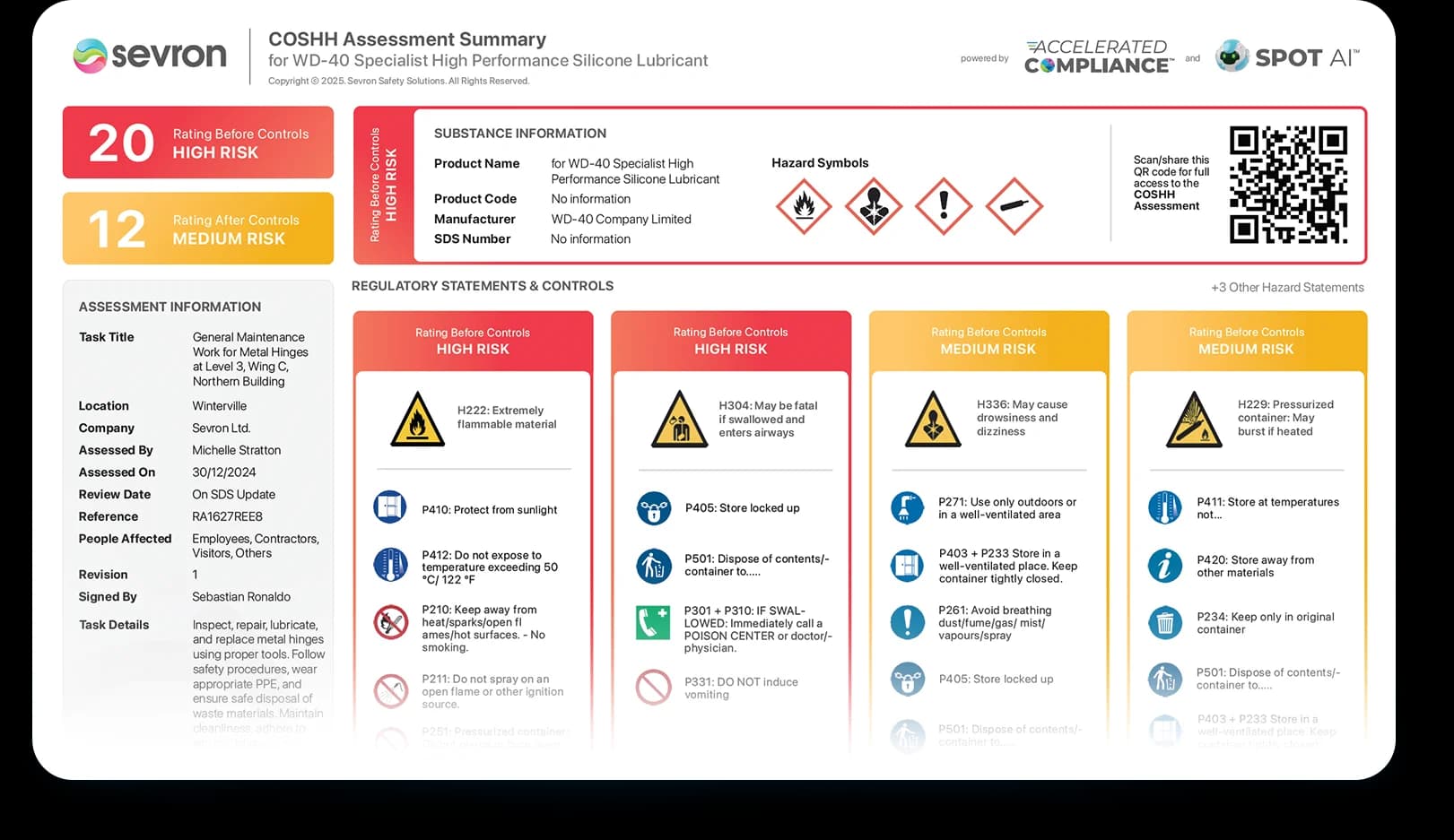
- Maintaining safety documentation for specialised hazards: Drilling fluids may contain silica, benzene and naturally occurring radioactive materials (NORM). Produced water can change classification as field conditions shift. Oil blends require new SDSs when composition changes. Accurate documentation of control measures through COSHH assessments is essential for these high-hazard substances, and falling behind on revisions puts both employees and regulatory standing at risk.
- Providing guidance and access in remote locations: Energy operations often take place offshore, at remote wellheads or on the road between terminals. Field teams need reliable access to SDS information and assessment records to support compliance during transport and field activities. When the nearest office is two hours away, a paper filing system is not a compliance strategy.
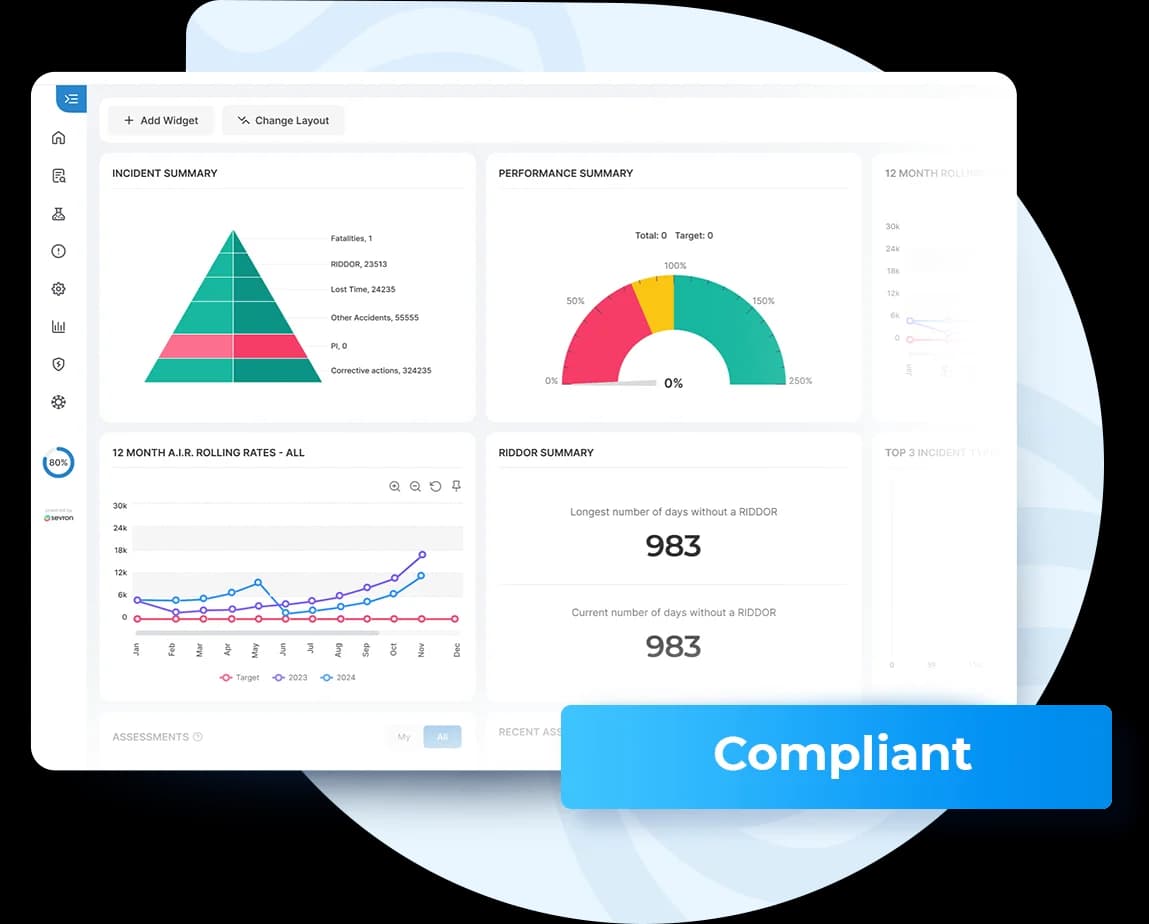
- Meeting regulatory reporting and audit requirements: Preparing reports for multiple jurisdictions is time-consuming without efficient automated tools. Refinery turnarounds and plant outages bring large numbers of temporary workers onto site, all of whom need to identify the hazards they are working around. Continuous improvement of training records and accessible safety documentation become non-negotiable during these periods.
How Safety365 Supports Fuel & Energy Operations
Benefits of Choosing Sevron for Fuel & Energy
When compliance sits in disconnected systems, gaps become inevitable. Here is what changes when energy companies move to Safety365.
Comprehensive compliance
Ensure SDSs are accurate and accessible across all operations to meet legislative requirements and regulatory obligations. One platform means one version of the truth, not a different spreadsheet at every site.
Operational continuity
Access across devices keeps crews informed in remote locations, reducing downtime from compliance issues. Whether it is a terminal, a tanker or a drilling platform, the information travels with the team.
Improved safety culture
Centralising information and providing structured assessment processes empowers workers to recognise hazards and follow safe procedures. When safety data is easy to find, people actually use it.
Reduced administrative burden
Automated data management and reporting save time for HSE teams and reduce errors. Less time chasing paperwork means more time on the operational safety work that actually prevents incidents.
Scalability
The system supports single wells, multi-site operations or large refineries, adapting as the business grows. Add new locations, new substances and new users without rebuilding the compliance framework.
Risk mitigation
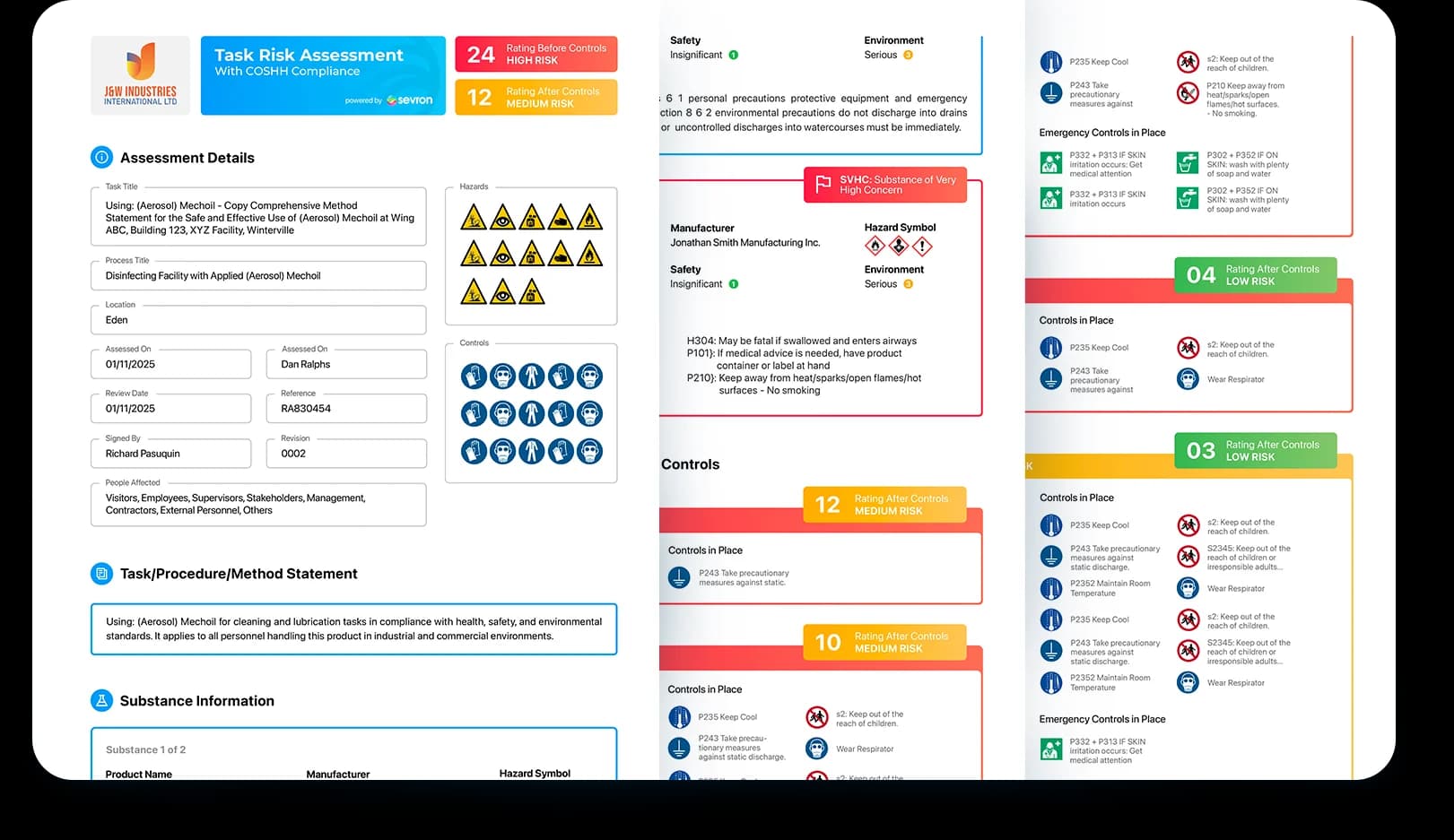
COSHH assessments and task risk assessments with documented control measures help mitigate risk and prevent costly shutdowns. Having the right documentation in place before an incident occurs is the difference between a near-miss and a prosecution.
Frequently Asked Questions
Common questions from fuel and energy operations about Safety365.
Safety365 uses a single cloud-based platform that accommodates multiple sites and operational types under one account. Upstream drilling operations and downstream refinery teams access the same SDS library, but permissions and location filters let each site see what is relevant to them. A corporate HSE team can monitor compliance across the whole business without logging into separate systems. We set up the location structure during onboarding so it mirrors how the organisation actually operates. Contact our implementation services team to discuss your specific requirements.
Yes. Safety365 is a responsive web application that works on phones, tablets and laptops through any modern browser. Field crews can pull up SDSs, review COSHH assessments and check compliance status from remote sites or while in transit. There is no native app to install or update; teams simply log in online through their browser. An internet connection is required to access the platform.
When a supplier issues a revised SDS, Safety365 flags the update and highlights any COSHH assessments linked to that substance. The HSE team knows immediately which assessments need reviewing rather than discovering outdated documentation months later. The platform tracks SDS revision history so there is a clear audit trail showing when changes occurred and when assessments were updated in response. This authorisation process keeps your clients and stakeholders confident that chemical documentation is current.
Safety365 exports compliance data in standard formats that can feed into environment reporting workflows. The platform does not connect directly to specific emissions reporting systems through built-in integrations, but the data exports are structured for straightforward import into other tools. If a specific integration is critical for the operation, our team can discuss what is feasible during implementation.
The COSHH assessment wizard pulls hazard classifications and exposure information directly from the linked SDS. For dangerous substances like benzene or respirable crystalline silica, this includes carcinogenicity classifications, workplace exposure limits and required control measures. The wizard guides the assessor through identifying appropriate controls based on the hazard profile. All assessments are stored centrally and linked to the relevant SDS, so when hazard data is updated, the linked assessments are flagged for evaluation and review.
Safety365 is not an SDS authoring tool. It is designed for managing, accessing and linking SDSs to assessments as part of responsible chemical safety practice rather than creating them. If the organisation produces substances that require authored SDSs, those would need to be created through a dedicated authoring service and then uploaded to Safety365 for registration and distribution. Our SDS request service can help source sheets from manufacturers when they are not already in the database of 47,000+ manufacturers.
Use Cases

Manufacturing
Automate assessments and chemical safety across complex operations and fast-moving production environments.

Construction & Engineering
Ensure equipment safety, manage site risks, and maintain compliance across evolving project scopes.

Multi-Site Director
Gain real-time oversight across locations. Standardise compliance workflows, monitor performance, and generate reports in minutes.

Safety Officer
Reduce paperwork and admin time. Use automated assessments, dashboards, and documentation to stay compliant and stress-free.
685,800+ health and safety professionals in 135+ countries
rely on Sevron to simplify chemical safety compliance.
