
Chemical Safety Management for Manufacturing Operations
Free 14-day trial. No credit card required.

Challenges of Managing Safety in Manufacturing
Production facilities handle hazardous chemicals daily, creating risks that require constant attention. Without proper controls and current documentation, workers face exposure to harmful substances that can cause immediate injury or long-term health issues.
- Exposure to hazardous substances: Workers in production environments encounter substances hazardous to health through inhalation, skin contact, or ingestion. Without documented risk assessments and control measures, workers operate without understanding the risks posed by the chemical substances they handle.
- Improper chemical handling: Safe handling procedures prevent accidents, burns, and long-term health issues when working with hazardous chemicals. When workers lack access to current Safety Data Sheets or proper training on chemical hazards, improper handling becomes likely, increasing risks to human health.
- Outdated safety documentation: Safety Data Sheets are mandatory for outlining correct use, handling, storage, and disposal of chemicals. When safety documentation falls out of date, workers reference incorrect hazard information, emergency procedures, or control measures.
Managing Safety Information in Manufacturing Facilities

Benefits of Safety365 for Manufacturing Operations
Implementing an EHS management system can help reduce manual errors and provide better visibility into compliance status. When chemical safety information sits in scattered systems, workers cannot access it when needed. Here is what changes when manufacturing operations move to Safety365.
Faster COSHH assessments with AI
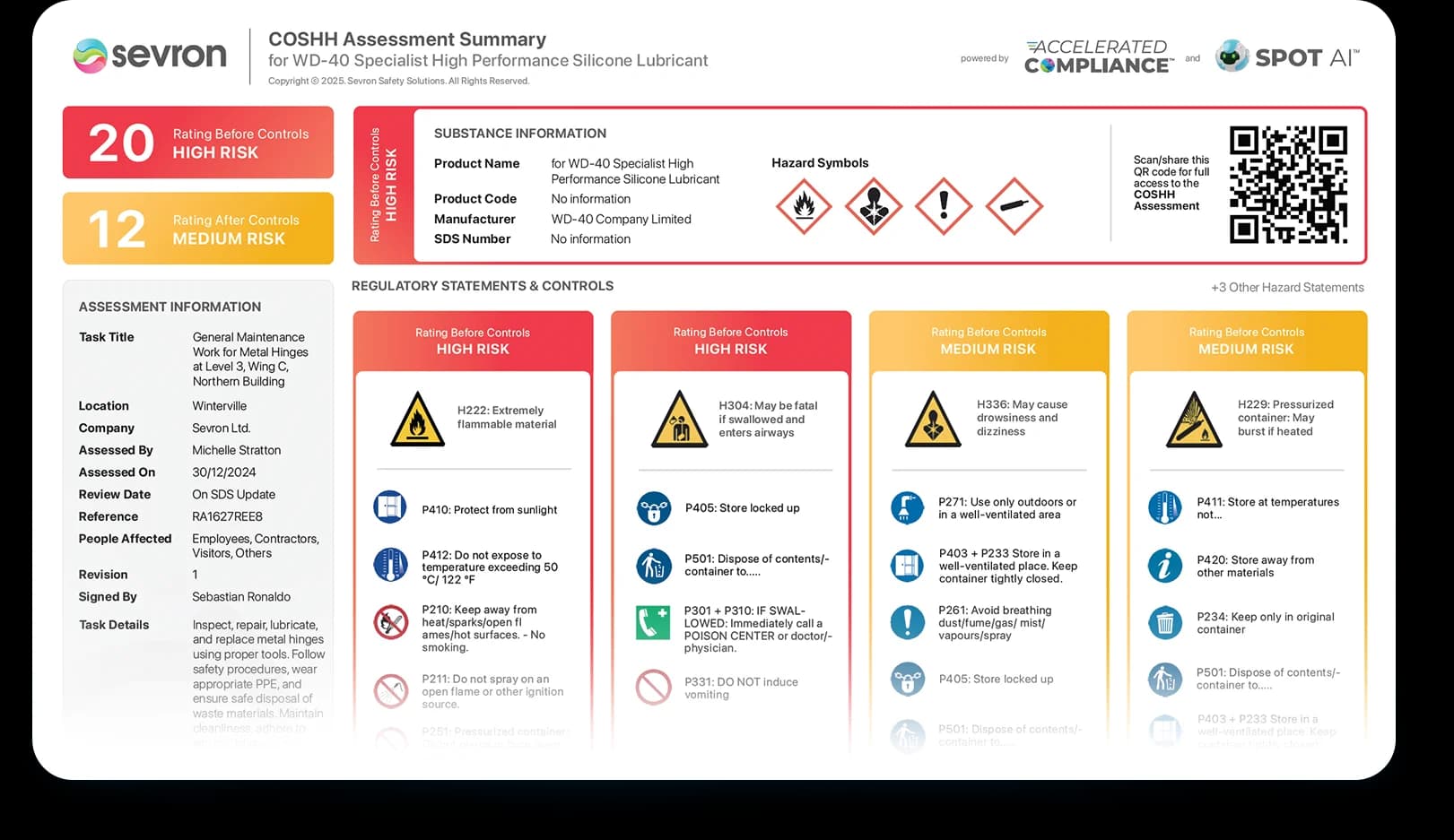
The SPOT AI wizard generates compliant COSHH assessments in minutes by reading hazard data from linked safety data sheets and suggesting task-specific control measures. Production teams create assessments without specialist qualifications, eliminating delays and external consultant costs.
Improved compliance processes
Key regulations for chemical safety include COSHH and REACH. Compliance with health and safety and environmental regulations like EPA, REACH, UK REACH, CLP, and COSHH ensures the protection of workers, consumers, and the environment. Automated reminders keep assessments current before the Health and Safety Executive conducts inspections.
Streamlined documentation management
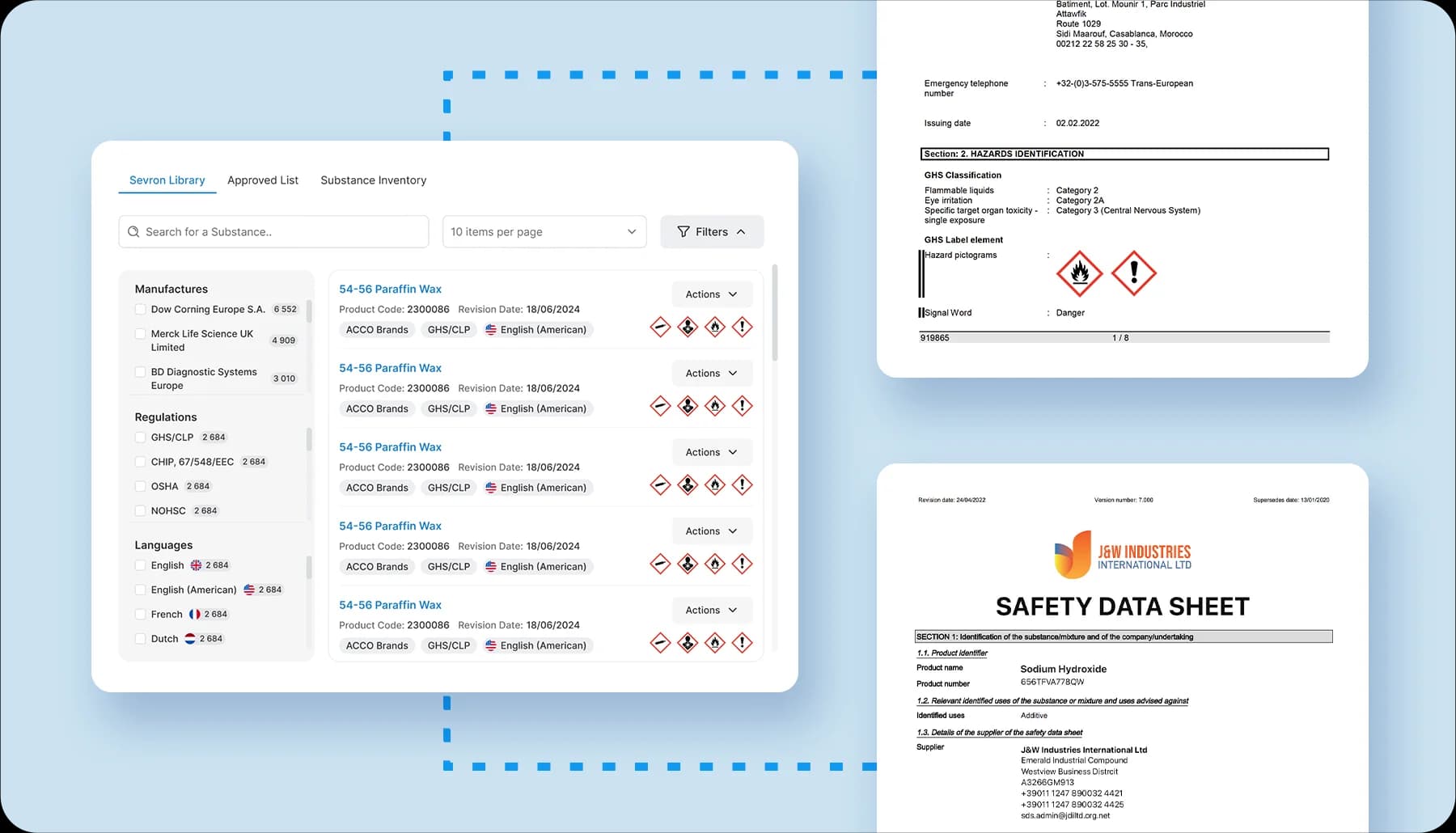
Safety Data Sheets are 16-section documents detailing chemical properties, handling, and emergency measures. Maintaining an accurate and up-to-date chemical inventory is foundational for chemical safety compliance. Workers and safety officers find documentation without searching filing cabinets, making ensuring chemical safety straightforward.
Worker protection through assessments and training
Conducting regular risk assessments is important for identifying potential hazards before they become serious issues. The GHS provides a universal approach to classifying chemical hazards, standardizing labeling and Safety Data Sheets. Regular training sessions help keep safety protocols fresh in employees' minds and ensure they're prepared to handle chemical-related incidents. Workers follow documented control measures, and personal protective equipment requirements are clearly stated.
Regulatory compliance and incident prevention
Chemical safety compliance in manufacturing is critical to prevent fatal injuries, illnesses, environmental disasters, and legal penalties. Regulatory adherence minimizes heavy fines, lawsuits, and legal sanctions from regulatory bodies. The Control of Major Accident Hazards (COMAH) regulations help businesses implement measures to prevent major accidents with hazardous chemicals in the workplace. Safety365 maintains documentation for inspections, ensuring legal compliance and market access.
Protection against reputational damage
Non-compliance can damage a company's reputation, leading to loss of trust among customers and business partners. Compliance programs help identify and mitigate safety and environmental risks in the manufacturing environment. Adhering to compliance standards demonstrates a commitment to ethical business practices and responsible stewardship. Ensuring regulatory compliance saves money by helping avoid costs associated with fines and legal issues while protecting public health.
Frequently Asked Questions
Common questions from manufacturing operations about chemical safety management with Safety365.
Safety365 centralises chemical safety documentation for every substance used in production. Each chemical links to its SDS and COSHH assessment, so workers access current hazard information and control measures from any device. Safety officers track which chemicals are documented and which need follow-up across the facility. When new substances arrive, the system searches the database, links the SDS, and generates assessments through the Spot AI wizard.
The platform searches over 1.6 million safety data sheets from the managed database. Once linked, every sheet connects to its relevant COSHH assessment. The system tracks SDS versions and flags when manufacturers release updates, ensuring workers always reference current documentation. Manufacturing teams find the sheets they need in seconds rather than searching filing cabinets or contacting suppliers.
The chemical inventory tracks every substance across the facility, linking each to its SDS and assessment. Workers see which chemicals are in use, where they are stored, and what control measures apply. When substances move between production areas or suppliers change formulations, the system maintains the documentation trail. This tracking supports compliance requirements and helps manufacturing operations stay ahead of regulatory changes.
Every assessment, SDS, and action is stored with full revision history and timestamps. The system generates exportable reports that meet Health and Safety Executive standards for inspections. Automated review reminders ensure documentation stays current. Manufacturing environments face constant regulatory scrutiny, and Safety365 keeps documentation organised and accessible when inspectors request evidence.
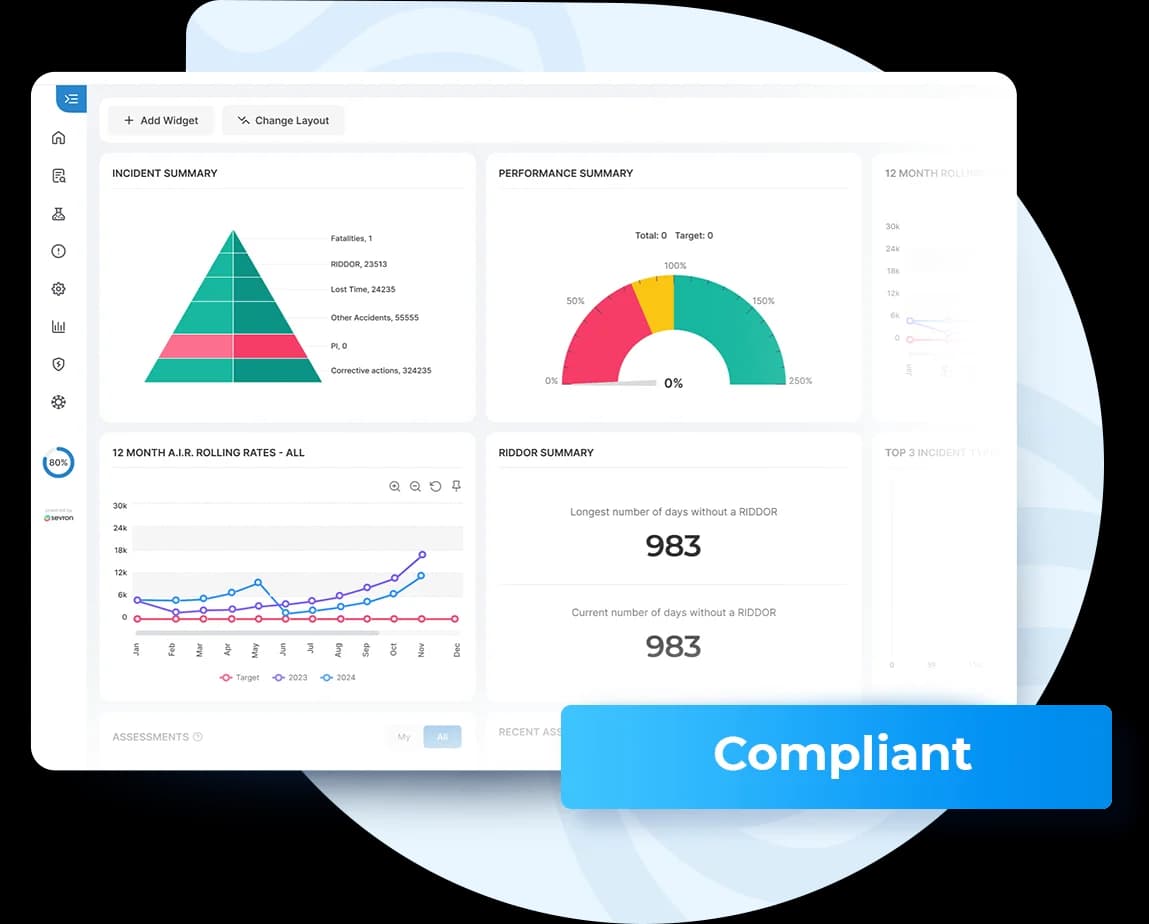
The platform structures chemical safety work across production operations. COSHH assessments, task risk assessments, and SDS management feed into a single dashboard. Workers access the safety information they need before starting tasks. Safety officers see compliance status across the facility and identify gaps before they become incidents. Regular inventory reviews and staying informed about regulatory obligations become systematic rather than reactive.
Workers search by chemical name, product code, or manufacturer and find the linked SDS and assessment in seconds. The system is accessible from any device with a browser, so information is available on the production floor, not locked in an office filing cabinet. When chemical products arrive or processes change, current documentation is already in place. EU REACH and health regulations require workers to understand the substances they handle, and Safety365 makes that information immediately accessible.
Manufacturing facilities use Safety365 because it replaces scattered documentation with a single system that handles chemical safety from inventory to incident response. Technology can enhance supply chain transparency and support safe product stewardship in chemical compliance management. The platform gives production teams and safety officers the tools to assess risks, maintain compliance, and protect workers. Multiple regulations apply to the chemical industry, and Safety365 helps manufacturing operations comply with legal requirements whilst protecting workers from major accident hazards.
Use Cases

Manufacturer
Handle chemical complexity at scale. Centralise SDSs, automate SVHC tracking, and meet customer audit demands with confidence.

Construction & Engineering
Ensure equipment safety, manage site risks, and maintain compliance across evolving project scopes.

Multi-Site Director
Gain real-time oversight across locations. Standardise compliance workflows, monitor performance, and generate reports in minutes.

Technology
Support safety in labs and assembly areas with chemical safety and regulatory compliance in agile tech-driven environments.
685,800+ health and safety professionals in 135+ countries
rely on Sevron to simplify chemical safety compliance.
