
Clear, Compliant COSHH Summaries Your Workers Can Actually Use
No credit card required
685,800+ health and safety professionals in 135+ countries
rely on Sevron to simplify chemical safety compliance.

COSHH summaries built to pass inspection
Structured to HSE Standards
Sevron's summary format follows the layout HSE inspectors expect: substance identification, hazards, control measures, emergency procedures, and sign-off. No guesswork on what to include.
Accessible On-Site or On Mobile
Workers can pull up the summary on a phone or tablet without needing the full assessment file. Perfect for toolbox talks or quick refreshers before handling a substance.
Always Current, Never Outdated
Revise a control measure or update PPE requirements and the summary regenerates instantly. No version control issues, no outdated printouts floating around the site.
Watch a COSHH Assessment Summary Generate Automatically
See how Sevron builds a complete COSHH assessment summary the moment you finish an assessment. Hazard ratings update, control measures populate, GHS pictograms appear, and the QR code generates linking back to the full assessment record.
Key Points
- One-Page Format: Every COSHH assessment summary fits on a single page. Substance details, hazard ratings, control measures, PPE requirements, and emergency procedures in a format workers can scan in under two minutes.
- Auto-Generated from Assessment Data: Complete an assessment and the summary builds itself. No copying data between documents, no manual reformatting. Sevron pulls everything directly from the assessment you just finished.
- HSE Inspection Ready: Review dates, assessor sign-off, version history, and unique reference numbers appear on every summary. Inspectors get the documentation trail they check for without you building it manually.
- Print and Display Where It Matters: Designed for printing and posting next to where hazardous substances are stored or used. Workers get safety information at the point of use, not buried in a filing cabinet.
- Generated in 55+ Languages: Produce summaries in the language your workforce reads most comfortably. Sevron supports over 55 languages, so every worker gets safety information they can actually understand.
COSHH Assessment Summary Overview
The COSHH assessment summary is the document posted on the wall next to the substance. It is what a worker reads before handling a chemical, what an auditor picks up during a site visit, and what a first aider grabs during a spill. The full COSHH assessment contains the detailed analysis. The summary communicates the findings.
Regulation 12 of the COSHH Regulations 2002 requires employers to provide suitable information about the hazardous substances employees work with. A multi-page assessment satisfies the analysis requirement. It does not satisfy the communication requirement if nobody reads it. The summary exists to close that gap, covering substance identity, hazard classification, controls applied, and emergency actions where workers can actually see them.
Across 613,000+ COSHH assessments created in Sevron, the pattern holds. Organisations that display summaries where substances are handled report fewer queries to safety teams, faster onboarding for new workers, and cleaner audit outcomes. The document earns its space on the wall.
Hazard Ratings at a Glance
Every summary displays risk ratings before and after control measures. A colour-coded indicator shows the shift clearly, moving from HIGH RISK (16) down to LOW RISK (4) once controls are applied.
Risk ratings buried inside a twelve-page assessment do not change behaviour on the shop floor. When a worker can see at a glance that pre-control risk is high and post-control risk depends on wearing the correct RPE, the controls stop being abstract policy. They become personal.
Regulatory Compliance Statements
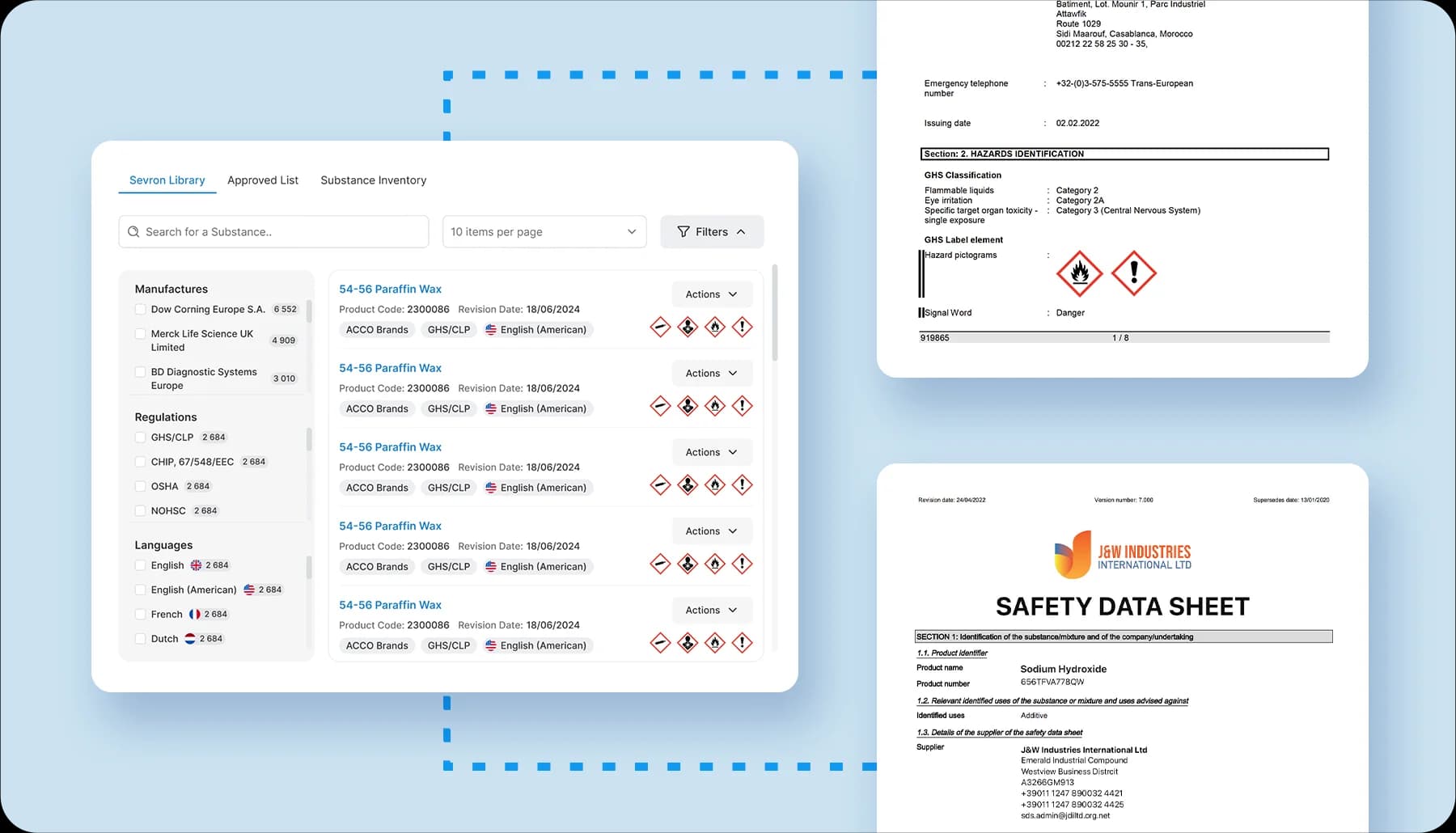
GHS pictograms, hazard phrases, and precautionary statements appear on every summary. These are auto-populated from the substance's safety data sheet, drawn from Sevron's database of 1.6 million SDS records from 47,000+ manufacturers.
When an SDS is updated by the manufacturer, the regulatory data flows through to the assessment and then to the summary. You do not rely on someone remembering to check. The summary always reflects the current regulatory position for that substance.
Point-of-Use Safety Documentation
A COSHH assessment might run eight or ten pages. That is fine for the assessment itself. It is thorough, and it should be. But posting a ten-page document in a laminated sleeve next to a drum of solvent is not practical.
The COSHH assessment summary extracts the information workers need at task level and presents it in a format designed for quick reference. When the right information is where the work happens, compliance improves where it actually counts.
QR Code for Digital Access
Each printed summary includes a QR code that links directly to the full digital COSHH assessment. A worker scans it with any smartphone and gets the complete record, including exposure limits, monitoring data, and the full control hierarchy.
The printed summary gives immediate reference information. The QR code gives depth when depth is needed. Sevron has generated over 1.8 million PDFs on the platform, and the QR code on each one bridges the gap between the one-page summary and the comprehensive digital record.
Emergency and First Aid Procedures
During a chemical spill or exposure incident, nobody opens a filing cabinet. First aid and emergency procedures are printed directly on the COSHH assessment summary because time-critical information needs to be visible before anyone thinks to look for it.
The summary lists the specific first aid measures for that substance, spill containment procedures, and emergency contacts. This is not generic guidance. It is substance-specific and drawn from the SDS data Sevron holds for that product.
Audit and Inspection Readiness
HSE inspectors check for current, accessible, and complete COSHH documentation. Current means the assessment has been reviewed within the required period. Accessible means workers can actually reach it. Complete means nothing is missing. The COSHH assessment summary is structured around these requirements.
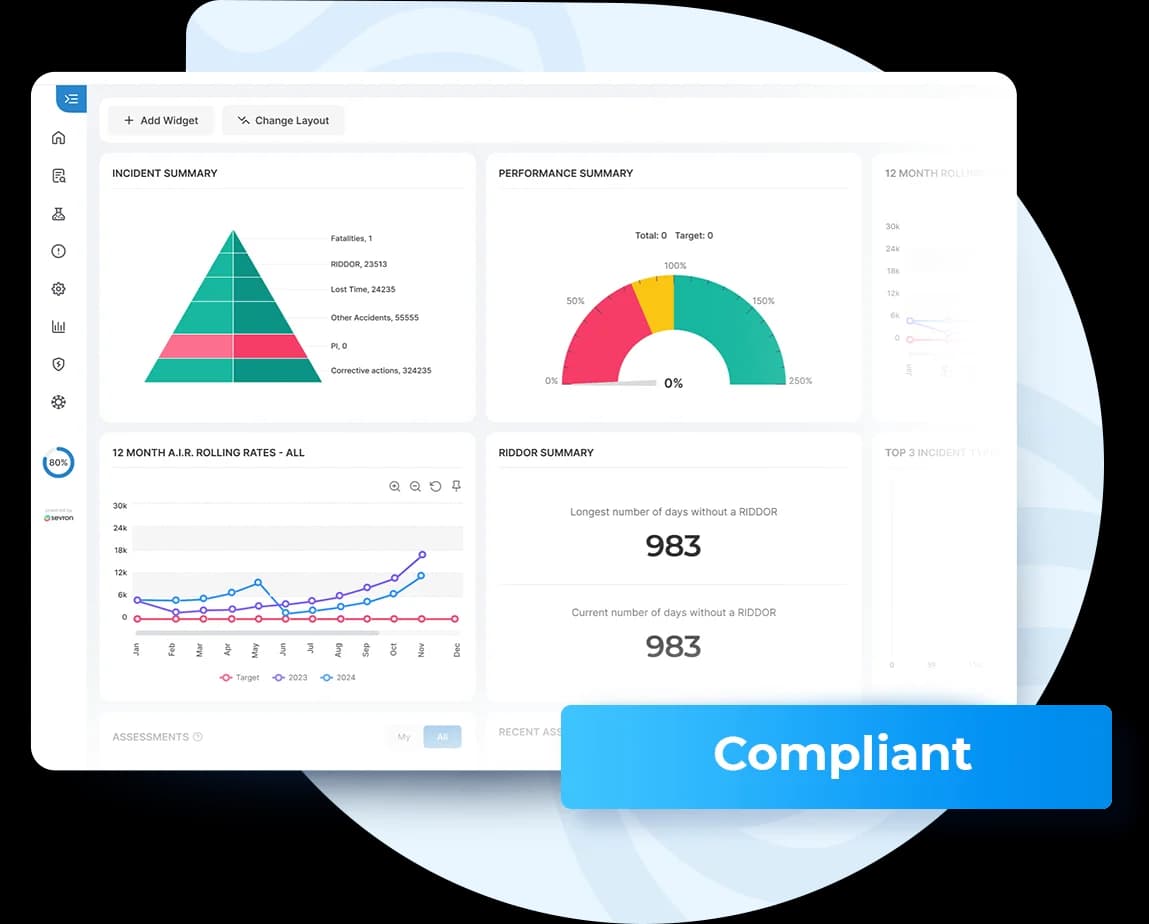
Every summary shows the assessor name, review date, next review due date, and approval status. An inspector can verify compliance in seconds rather than flipping through a binder. Over 105,000 individuals have digitally signed assessments in Sevron, and that sign-off data appears on the summary alongside the version history.
Assessment Tracking and Version History
The summary tracks assessment metadata automatically. Creation date, last review, next review due, responsible assessor, and version number are all visible on the document.
When a parent assessment changes, the summary reflects the latest approved version. Sevron holds over 11 million assessment history records. Every change is logged, every version is retrievable, and the summary workers see always matches the current state of the assessment.
Professional, Inspection-Ready Output
Summaries are generated as branded PDF documents with unique reference numbers. The formatting follows a consistent, professional layout that presents well during inspections and client audits.
Digital sign-off replaces wet signatures, giving you a verifiable audit trail with timestamps and signee identification. The output meets the documentation expectations of ISO 45001, BSI, and HSE standards without requiring manual formatting.
Top Solutions Built For Compliance
Multilingual Safety Solutions for Global Compliance
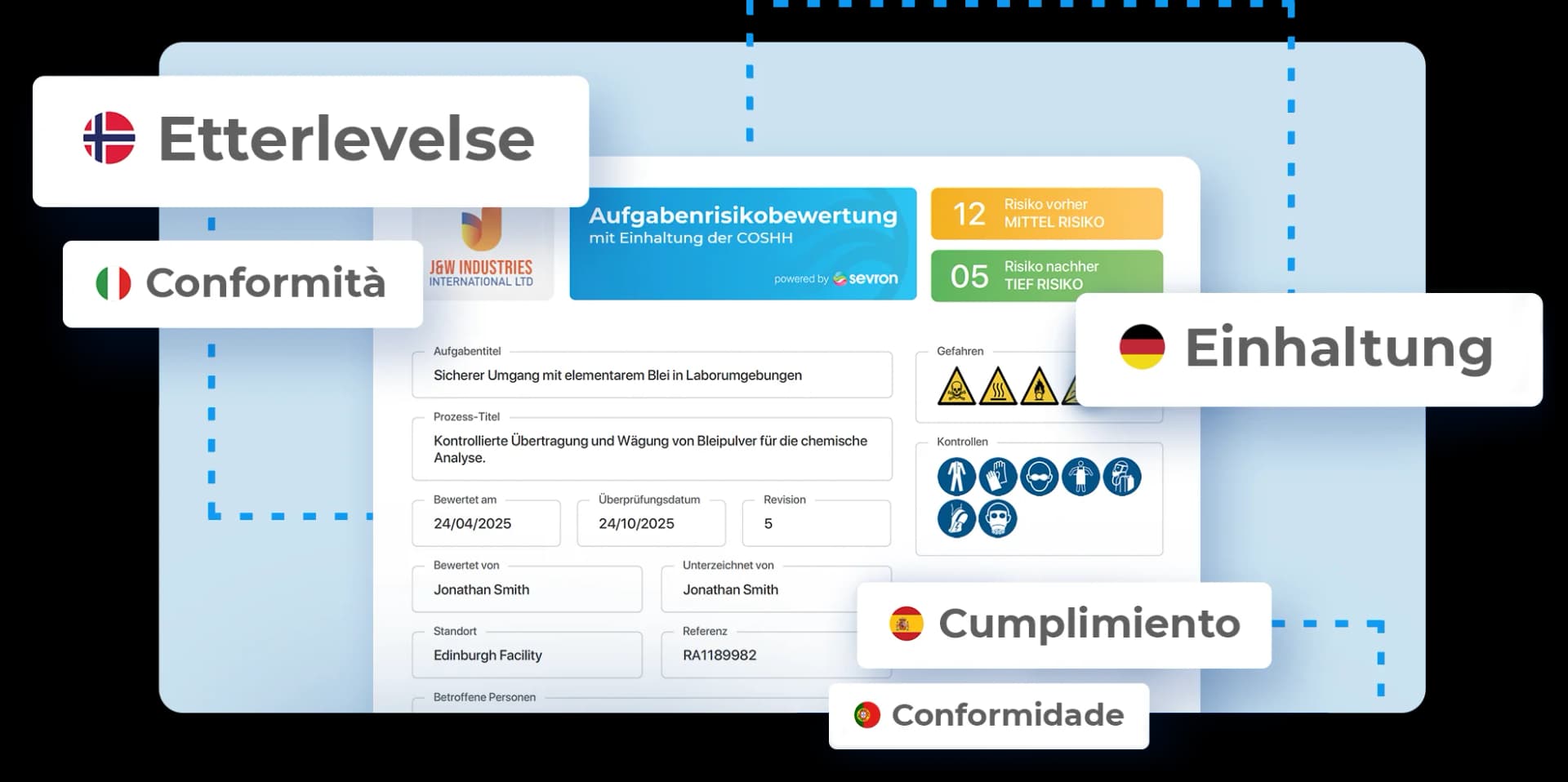
Safety should speak everyone's language. Modern platforms are aligned with international frameworks like the Globally Harmonized System (GHS) and REACH, supporting compliance across multiple sites. Supporting English, Spanish, German, Portuguese, Italian, Norwegian, and other languages, every end-user accesses consistent safety data for global regulatory compliance.
Small Business Bundle
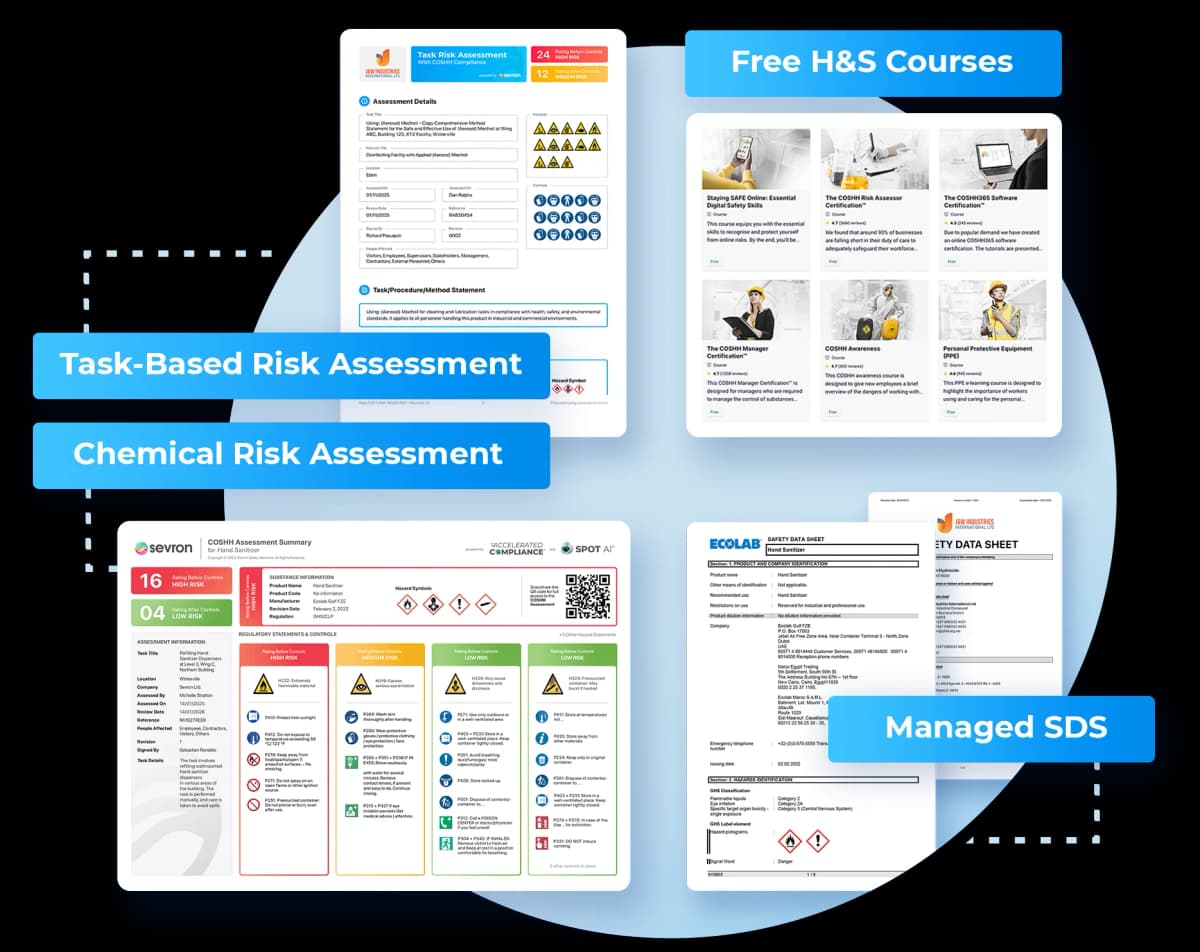
Big companies have safety teams-you don't. But you still have the same legal duty of care. That's why we built the Small Business Bundle.
It's free and gives you risk assessments, SDS management, and expert training-the same tools big businesses use, made simple for you. No cost. No hassle. Just compliance made easy. You're welcome.
Create a COSHH Risk Assessment
in Just 5 Simple Steps
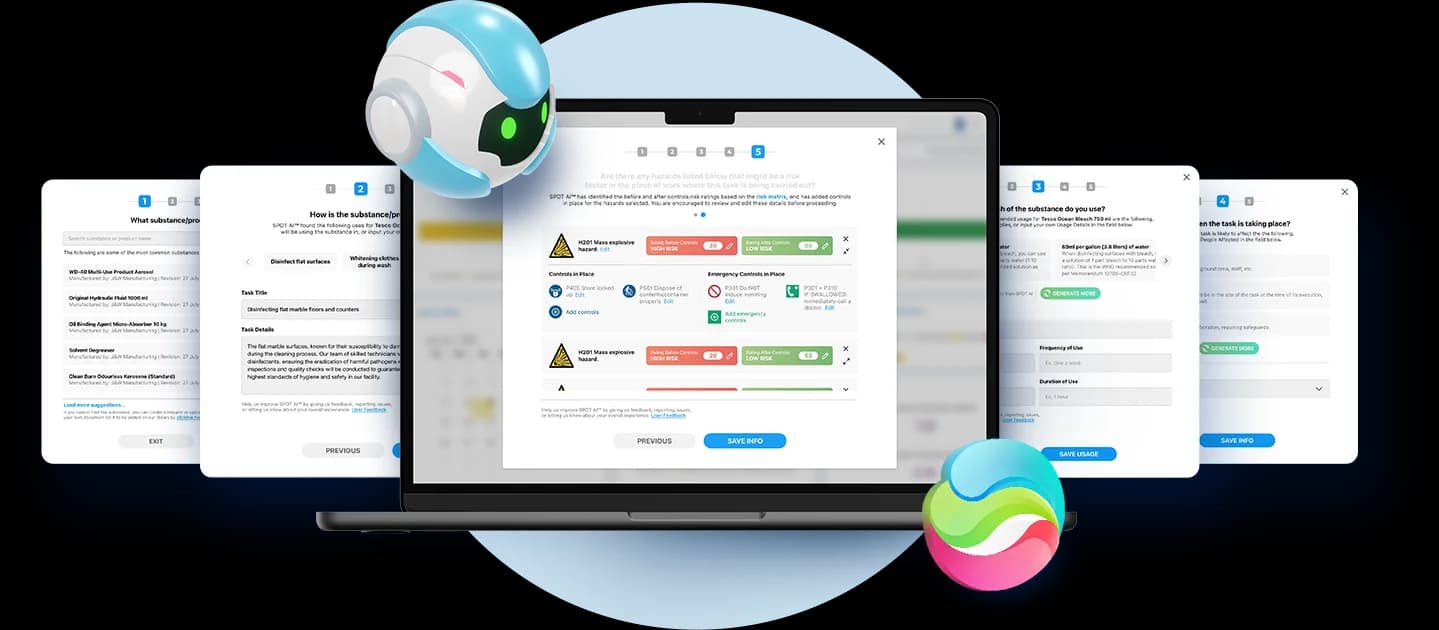
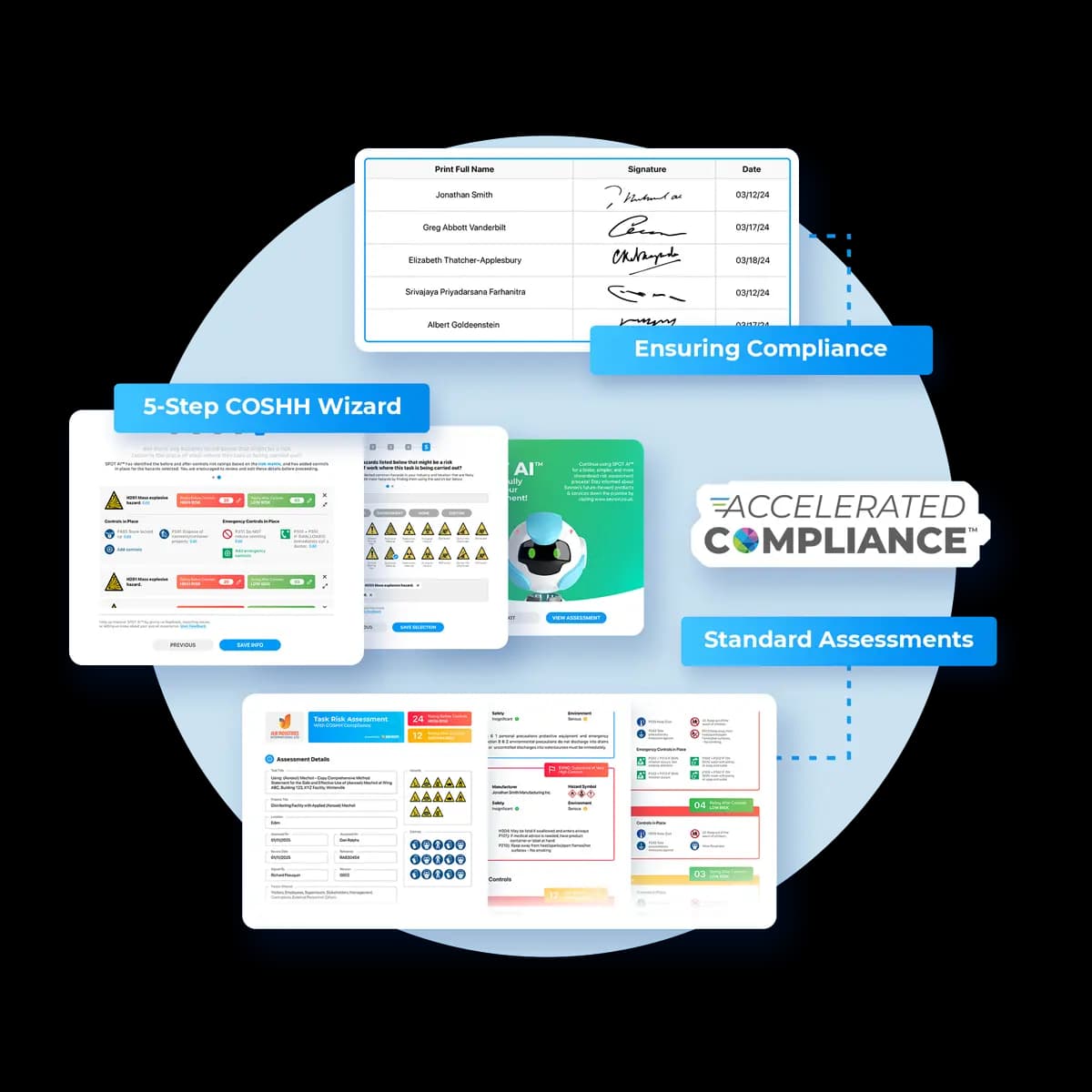
Sevron's 5-Step Wizard creates fully compliant COSHH risk assessments in just 60 secondswith AI-powered automation. Connected to real-time tracking, updated safety data sheets, and a comprehensive dashboard for full audit readiness, it's part of a complete COSHH management software system trusted by industry leaders.
No shortcuts, no barriers, no waiting. Just effortless chemical safety that you can start using right here, right now.
STEP 1: Get Certified
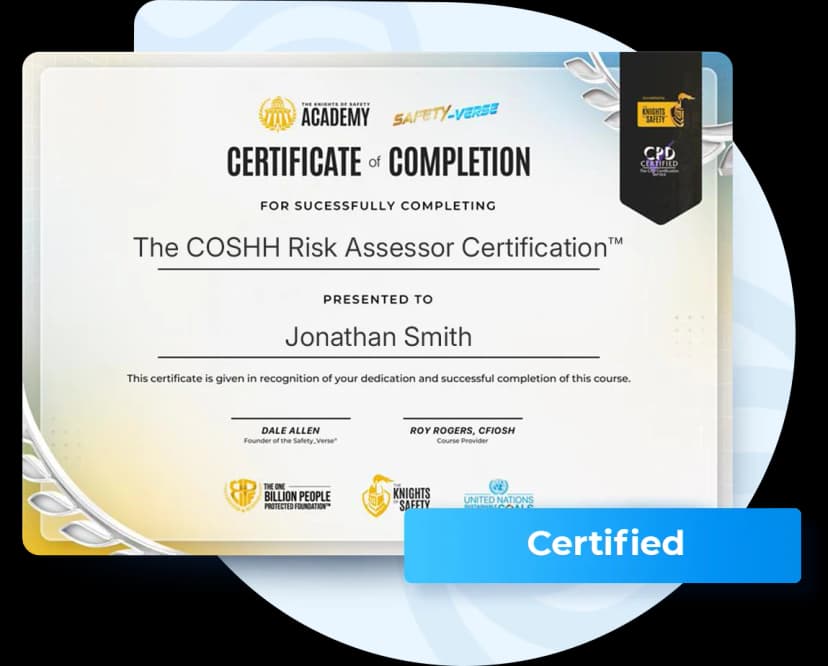
Train your team with expert-led courses to build a strong safety culture and meet compliance standards.
- 70+ free courses
- Certified COSHH risk assessor
- Instant compliance certificates
STEP 2: Be Competent
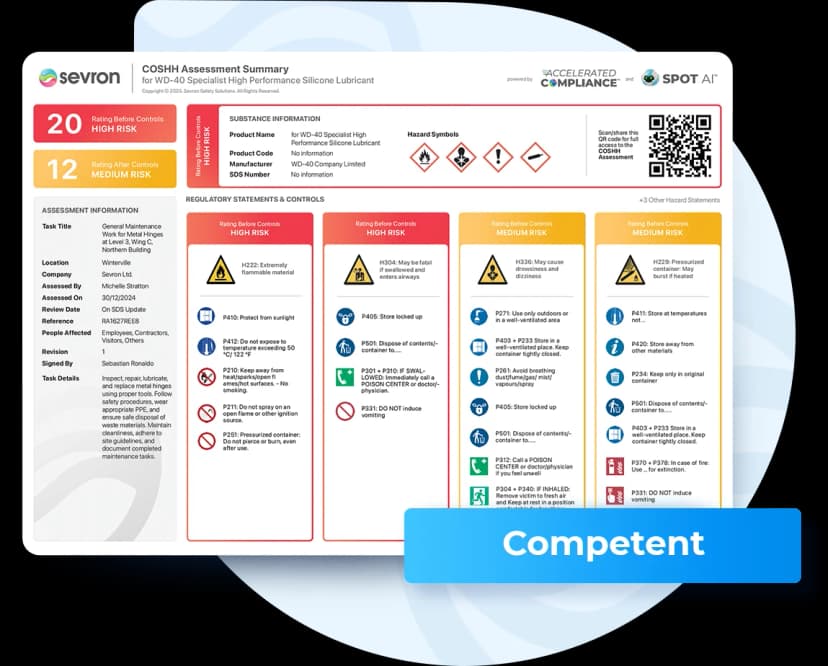
Create AI-powered risk assessments in seconds with smart hazard detection and customizable safety controls.
- 5-Step (60 second) Wizard
- AI hazard detection
- Editable risk controls
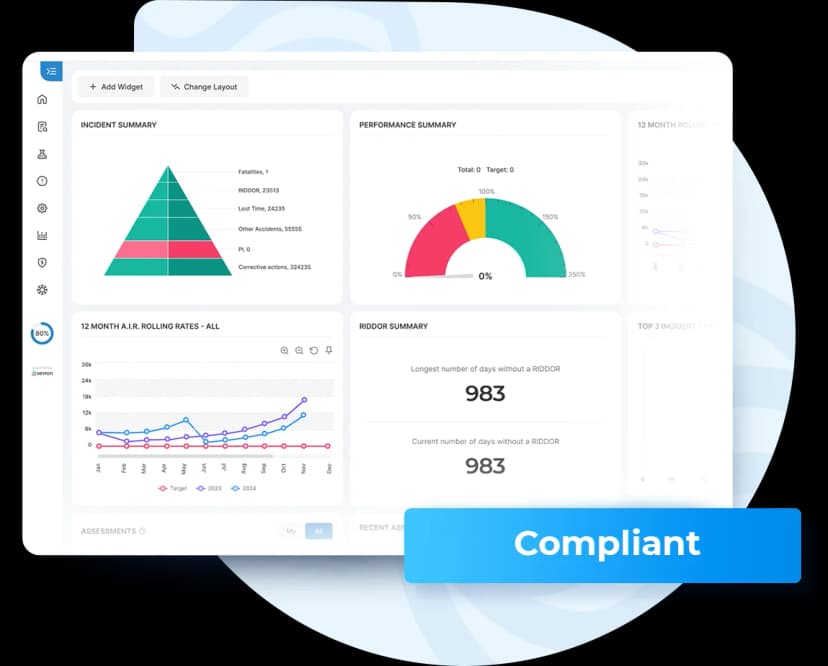
STEP 3: Stay Compliant
Automate SDS management, compliance tracking, and reporting with real-time updates and notifications.
- Live compliance dashboard
- Automated SDS updates
- Audit-ready reports
Trusted by 685,800+
Safety professionals worldwide rely on Sevron to simplify chemical safety compliance


"We generate COSHH assessments in under a minute. It's transformed our chemical safety process."— Josephine Smith, ACM




Related Pages
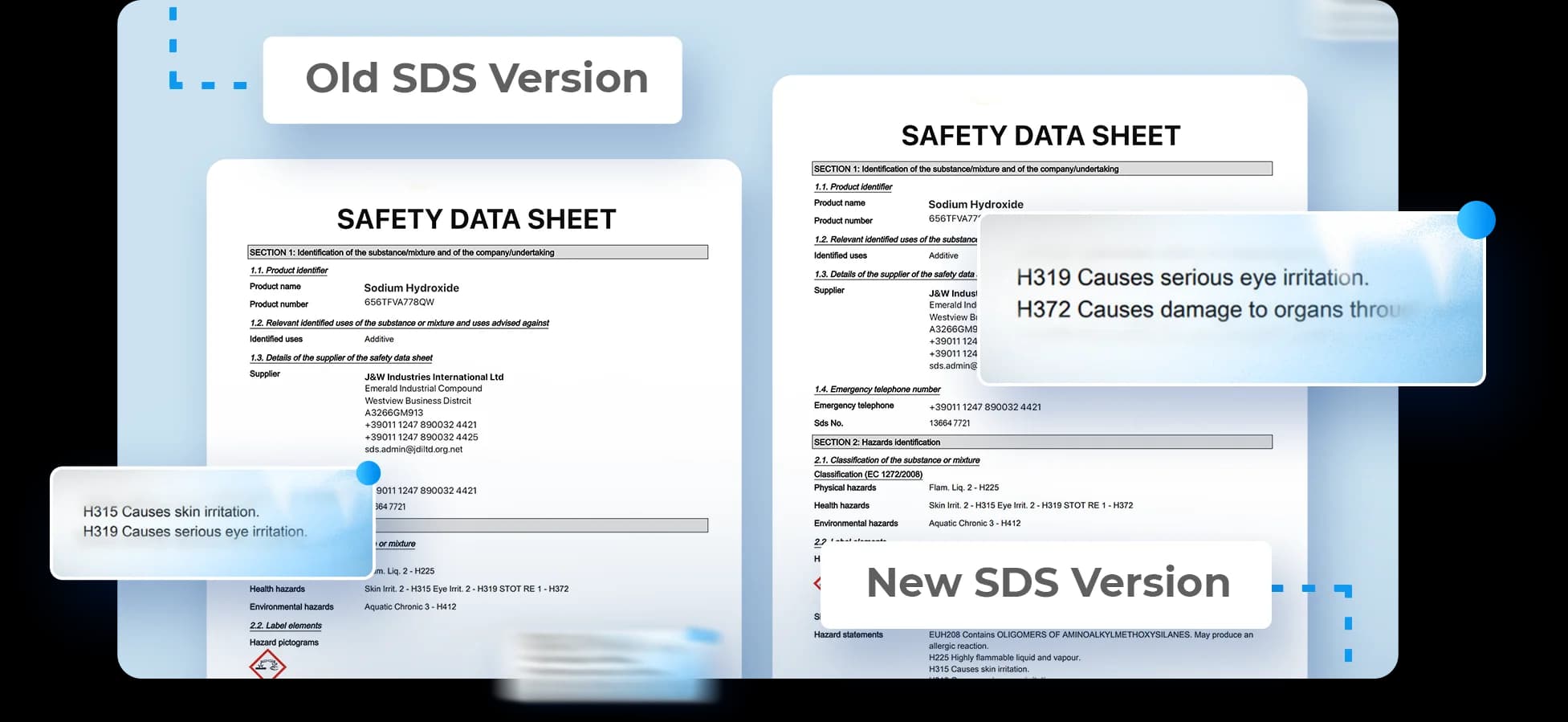
SDS Management
Search, store, and manage Safety Data Sheets with automatic updates and instant access.
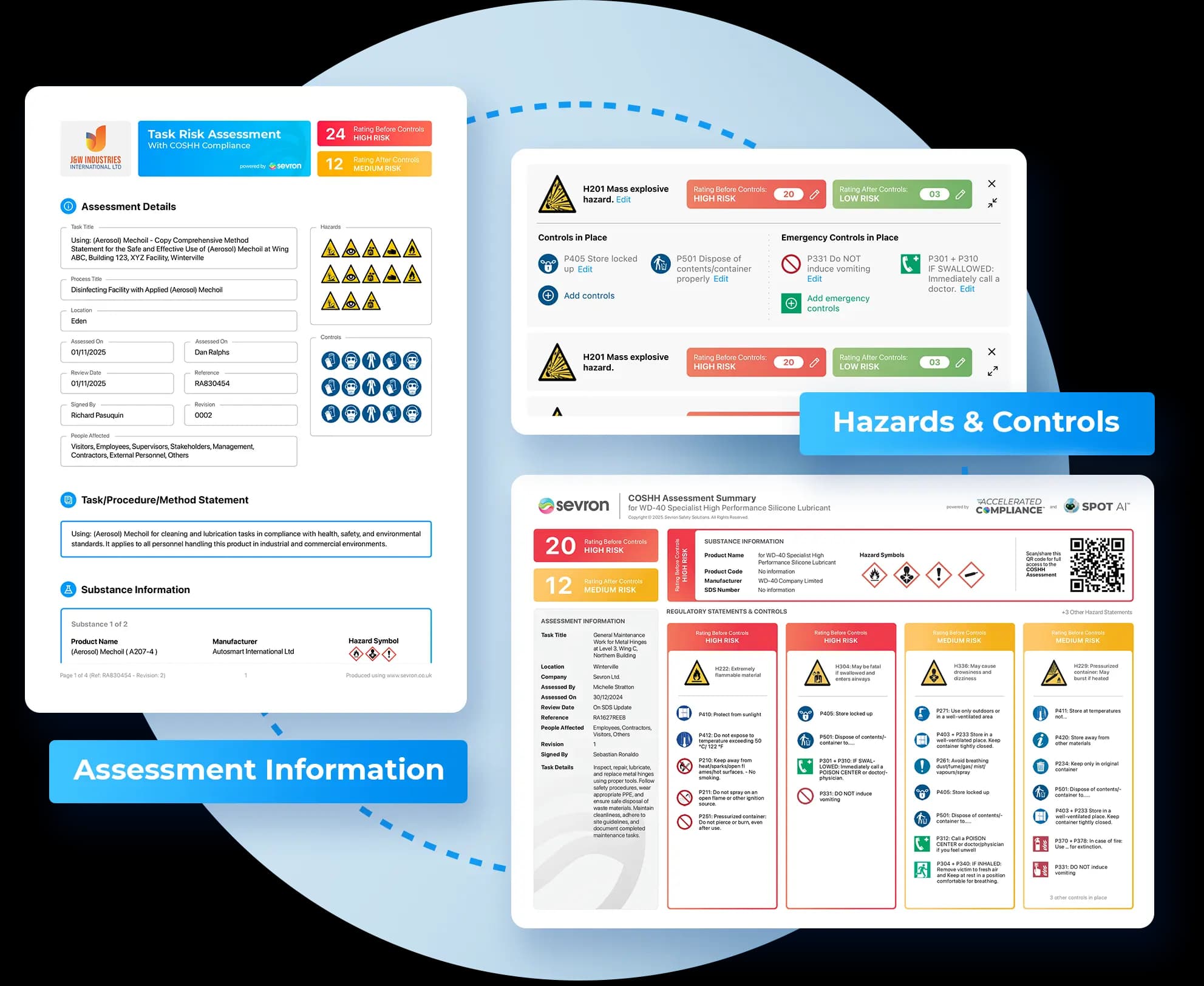
Chemical Management
Complete chemical management platform with COSHH assessments, SDS library, and compliance tracking.
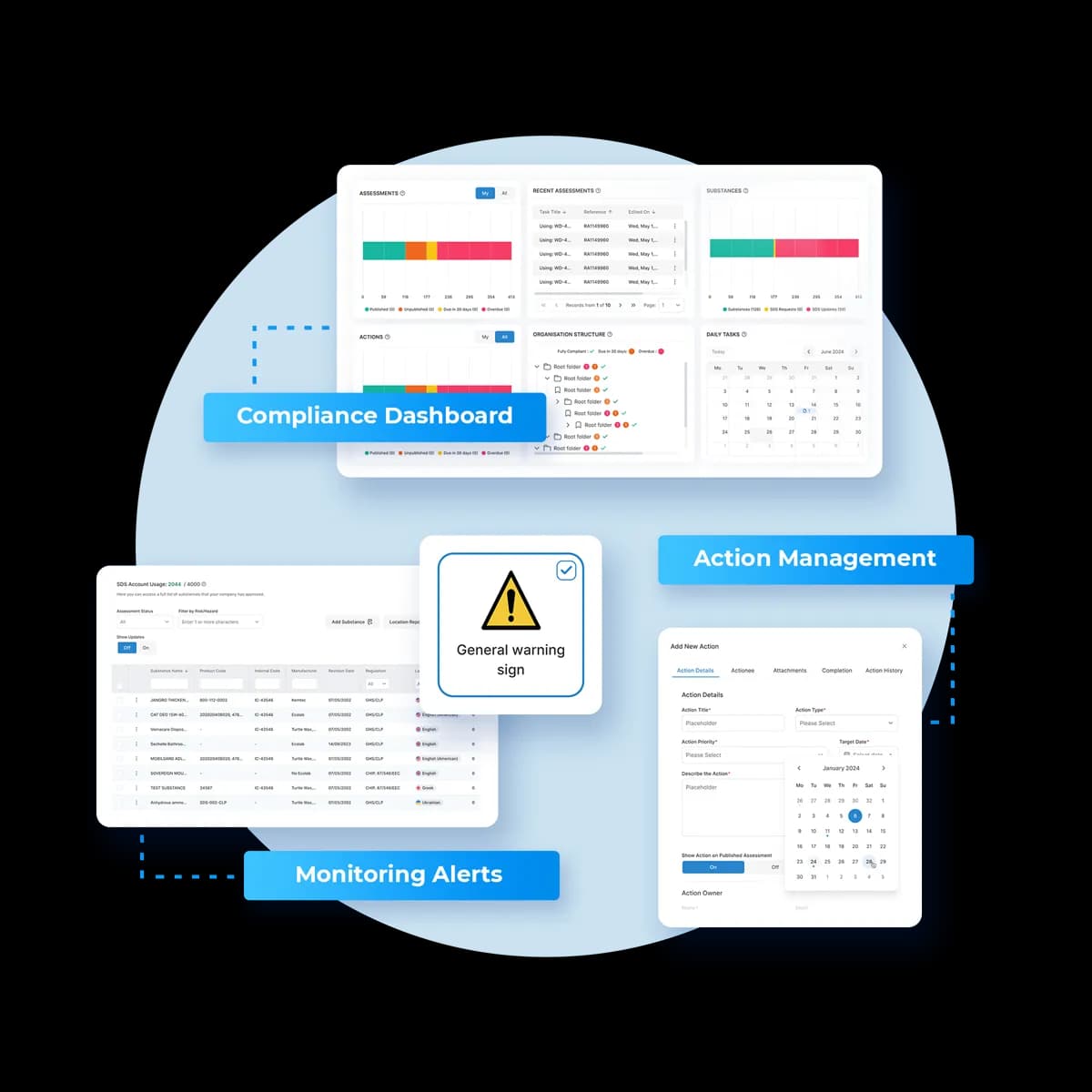
EHS Management
End-to-end environment, health and safety management with real-time dashboards and audit trails.
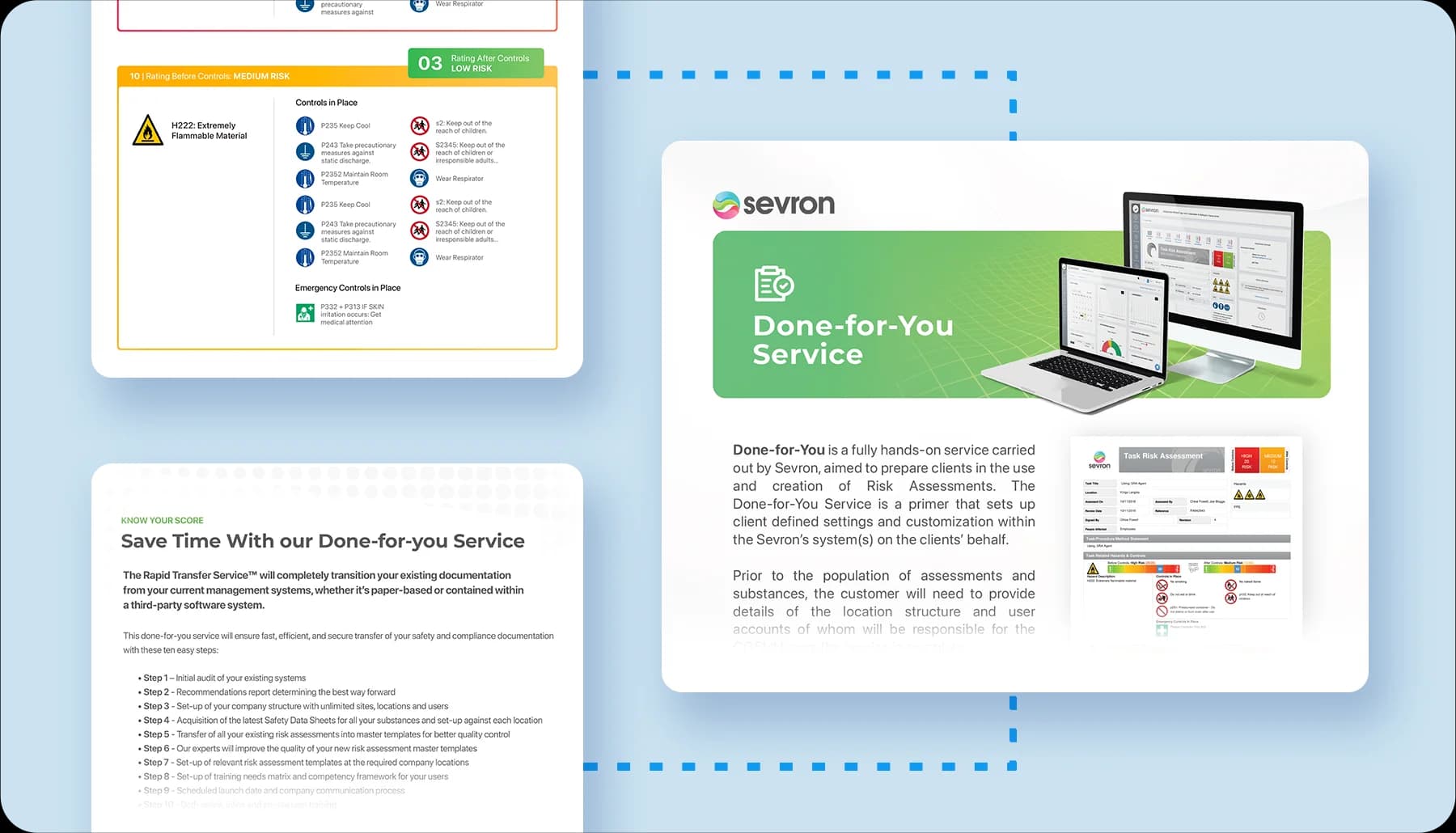
Done-For-You
Let our experts handle your compliance documentation and train your team.
Frequently Asked Questions
What is a COSHH assessment summary?
A document that presents the key findings of a full COSHH assessment on a single page. It includes the hazardous substance details, risk ratings, control measures, PPE requirements, and emergency procedures in a format designed for workers on site.
How is the summary different from the full COSHH assessment?
The full assessment contains detailed exposure analysis, monitoring schedules, and control hierarchies. The summary distils this into the essential information workers and auditors need at the point of use. The assessment is the analysis. The summary is the communication.
Can the summary be used during HSE inspections?
Yes. Every summary includes assessor details, review dates, version history, and unique reference numbers. It is designed to satisfy the documentation requirements inspectors check during site visits.
Is the summary generated automatically?
Yes. Finish a COSHH assessment in Sevron and the summary is created instantly. Hazard ratings, controls, regulatory data, and emergency procedures pull directly from the assessment you just completed.
Can I print the summary and display it on site?
Yes. The summary is designed for printing and display where hazardous substances are stored or used. Each printed copy includes a QR code linking to the full digital assessment for workers who need more detail.
What information appears on the summary?
Substance name and manufacturer, GHS pictograms, hazard classifications, risk ratings before and after controls, required PPE, emergency and first aid procedures, regulatory statements, assessor details, review dates, and version history.
Does the summary update when the assessment changes?
Yes. The summary is linked to the parent assessment. Change a control measure or update PPE and the summary reflects it immediately, keeping displayed documentation current.
Can I generate summaries in multiple languages?
Yes. Sevron generates COSHH assessment summaries in over 55 languages, so every worker can access safety information in the language they read most comfortably.