
Safety & Compliance Management for Manufacturers
Free 14-day trial. No credit card required.

Safety Challenges in Manufacturing
Manufacturers operate under demanding regulatory standards that require continuous oversight. Compliance with relevant laws and regulations provides legal protection, reducing the risk of legal issues, fines, penalties, litigation, and regulatory sanctions. Without centralised systems, compliance gaps emerge across facilities, exposing the organisation to legal consequences and reputational damage. Non-compliance can damage a company's reputation, leading to loss of trust among customers and business partners.
- Managing chemical substances used in production: Maintaining an accurate and up-to-date chemical inventory is foundational for chemical safety compliance. Manufacturers must track every chemical substance across all facilities, linking each to current safety data sheets and COSHH assessments. Key regulations for chemical safety include COSHH and REACH. Without centralised documentation, compliance breaches emerge when chemicals move between sites or suppliers change formulations. Technology can enhance supply chain transparency and support safe product stewardship in chemical compliance management.
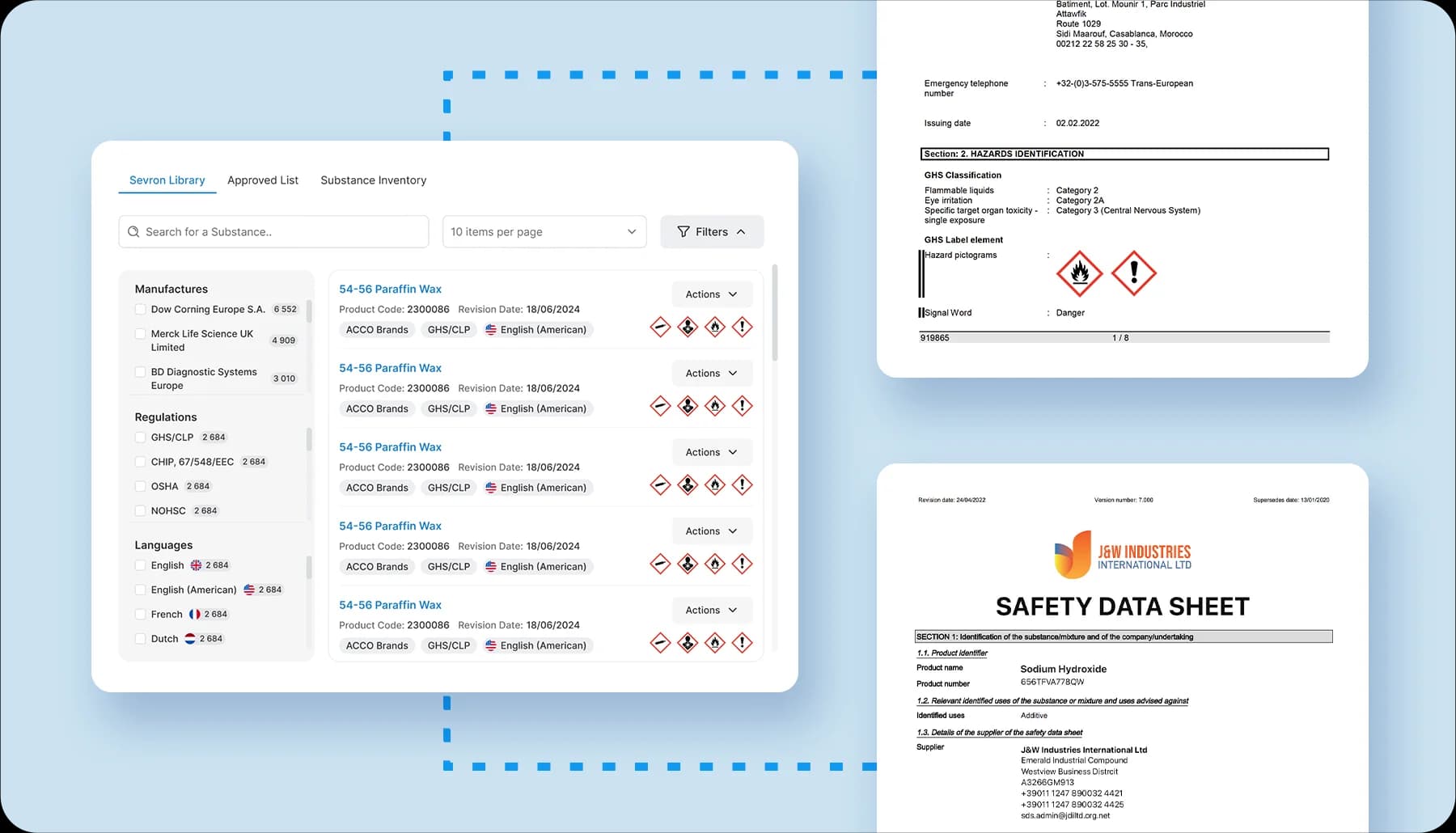
- Maintaining safety documentation: Manufacturers must maintain accurate records of their processes, materials, and quality management measures to demonstrate compliance and traceability. Centralising Safety Data Sheet (SDS) storage and updates helps prevent compliance gaps and supports safer handling. When regulatory authorities or regulatory bodies request evidence, documentation needs to be organised, current, and accessible. Scattered records across spreadsheets and filing systems make audit readiness impossible to achieve consistently. Complete records are essential for demonstrating compliance matters to inspectors.
- Keeping compliance records organised and current: Continuous improvement in compliance processes is essential for manufacturers to adapt to changing regulations and standards. Review dates expire, regulatory requirements shift, and corrective actions need tracking. This ongoing process requires systems that flag what needs attention before inspections rather than discovering gaps during audits. Compliance activities must stay up to date across all locations to meet applicable laws.
- Managing compliance across multiple facilities: Manufacturers with operations across several sites face the challenge of maintaining consistent compliance standards and workplace safety protocols. Each location handles different chemicals, processes, and regulatory requirements. Centralised tracking becomes essential when audit readiness depends on demonstrating compliance across the entire organisation, not just individual sites. Compliance frameworks often necessitate documentation, training, and regular audits, which can improve organizational efficiency.
How Safety365 Supports Manufacturers
Benefits of Safety365 for Manufacturers
Leveraging technology can significantly simplify chemical safety compliance management. Implementing an EHS management system can help reduce manual errors and provide better visibility into compliance status. When compliance sits in disconnected systems, compliance gaps become inevitable. Here is what changes when manufacturers move to Safety365.
Centralised compliance control across operations
Compliance management solutions help organisations adhere to laws, regulations, and industry standards set by authorities and industry associations. Every facility works from the same compliance standards, assessment templates, and documentation requirements. Senior management gains real-time visibility into compliance performance across the organisation rather than relying on site-by-site reports. Regular inventory reviews and up-to-date regulatory knowledge are essential for maintaining compliance in chemical safety.
Improved audit readiness
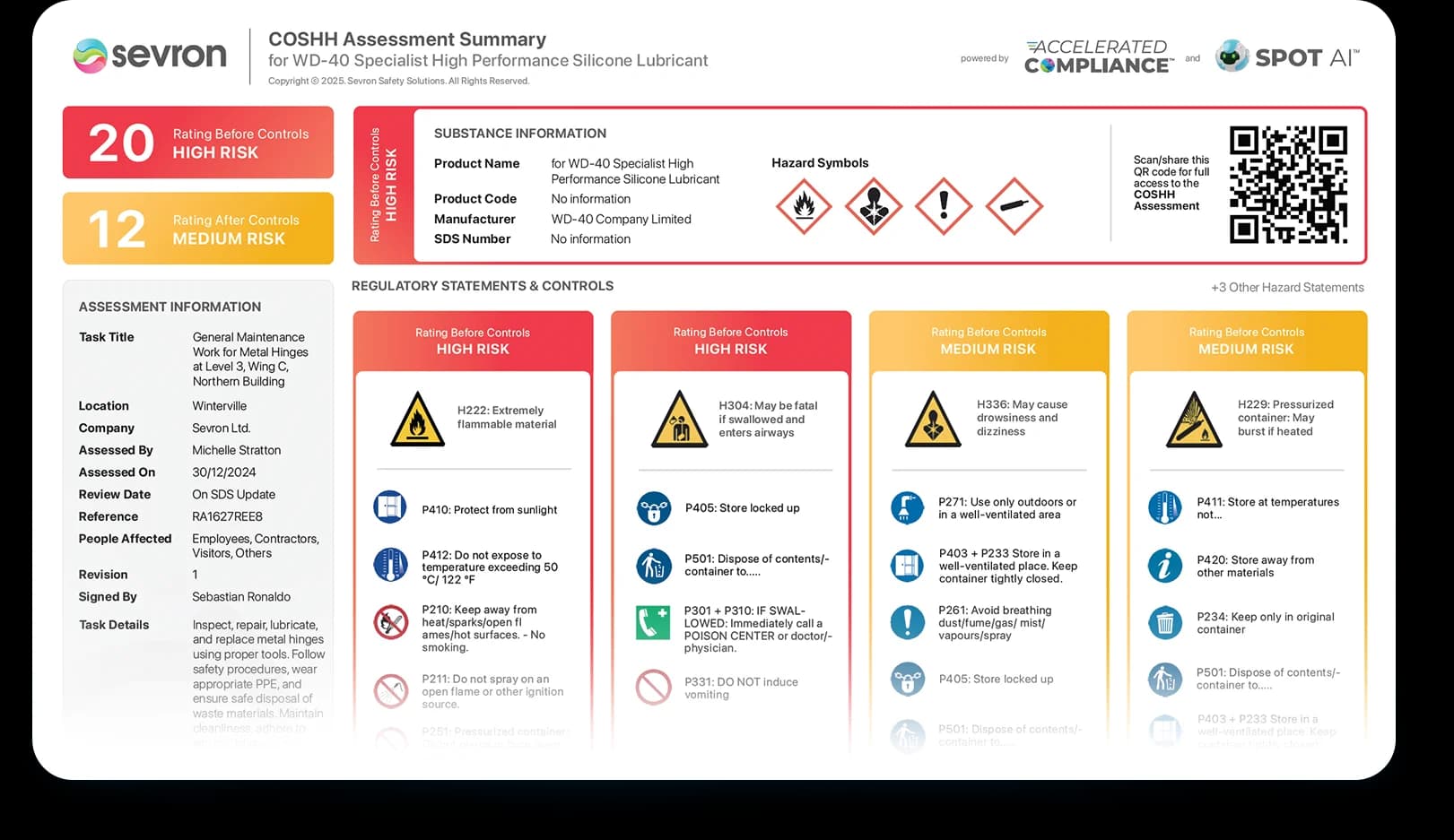
Use Safety Management Software to track real-time data and ensure audit readiness with time-stamped entries. Compliance management software automates repetitive tasks, integrates with existing systems, and provides real-time insights into compliance performance. When regulatory authorities request evidence, the system generates exportable reports that meet HSE and international standards immediately, ensuring product quality documentation is maintained.
Legal protection and reduced compliance risk
Safety compliance management ensures the protection of the workforce while safeguarding the business against legal, financial, and reputational risks. Regulatory adherence minimizes heavy fines, lawsuits, and legal sanctions. Ensuring regulatory compliance saves money by helping avoid costs associated with fines and legal issues. Automated review date notifications and escalation workflows ensure compliance requirements are met before inspection visits, enabling manufacturers to proactively manage potential risks and potential hazards.
Executive oversight through compliance metrics
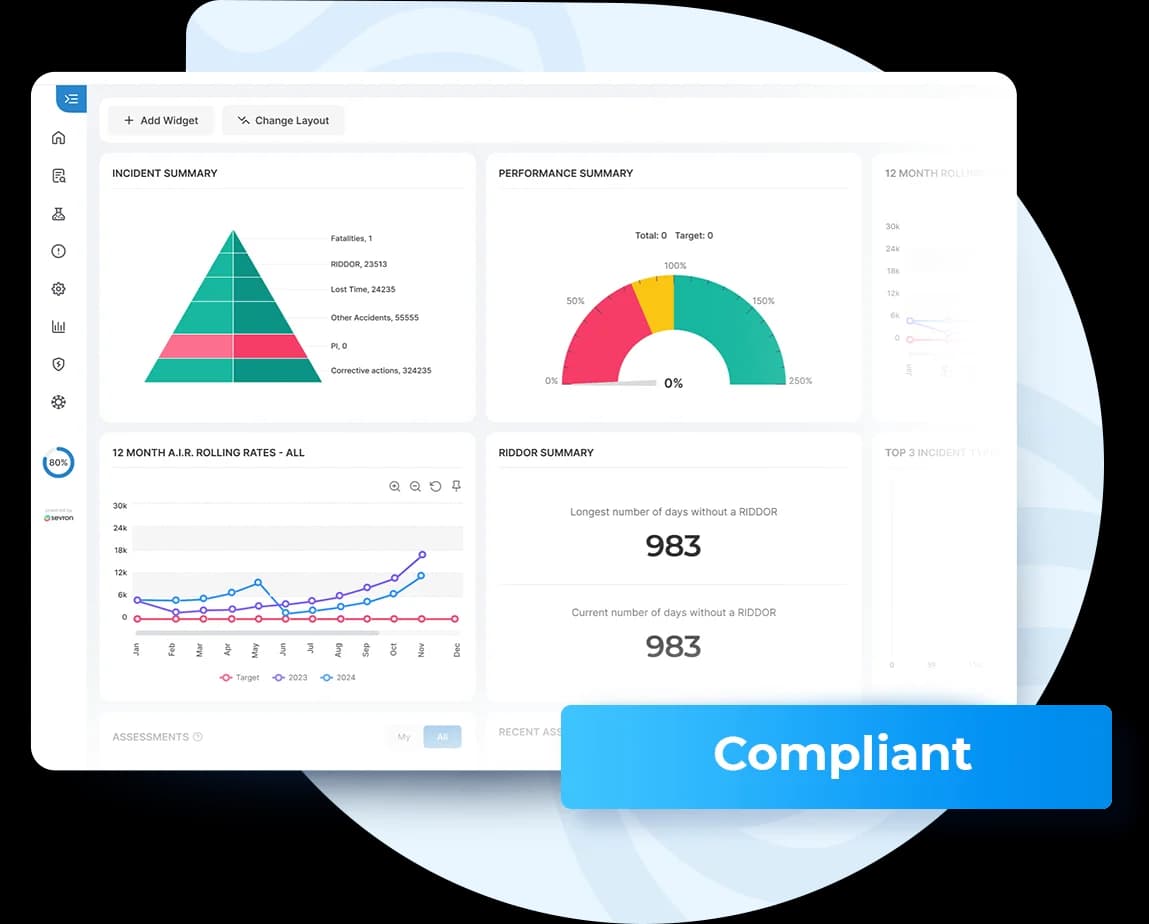
The compliance dashboard provides scored visibility into health and safety performance across all locations. The 0 to 1,000 scoring system across nine metrics shows exactly where regulatory compliance stands, tracking compliance standards and quality standards. This executive-level view enables data-driven decisions about resource allocation and compliance priorities, ensuring manufacturers can ensure employees have access to the information they need.
Faster response to regulatory changes
When regulatory standards change, Safety365 enables manufacturers to update assessments and documentation systematically. The platform supports continuous improvement in compliance processes rather than discovering gaps during inspections. Manufacturers can roll out updated protocols across all facilities from a centralised system, meeting environmental regulations and supply chain compliance requirements as they evolve.
Reduced human error in compliance processes
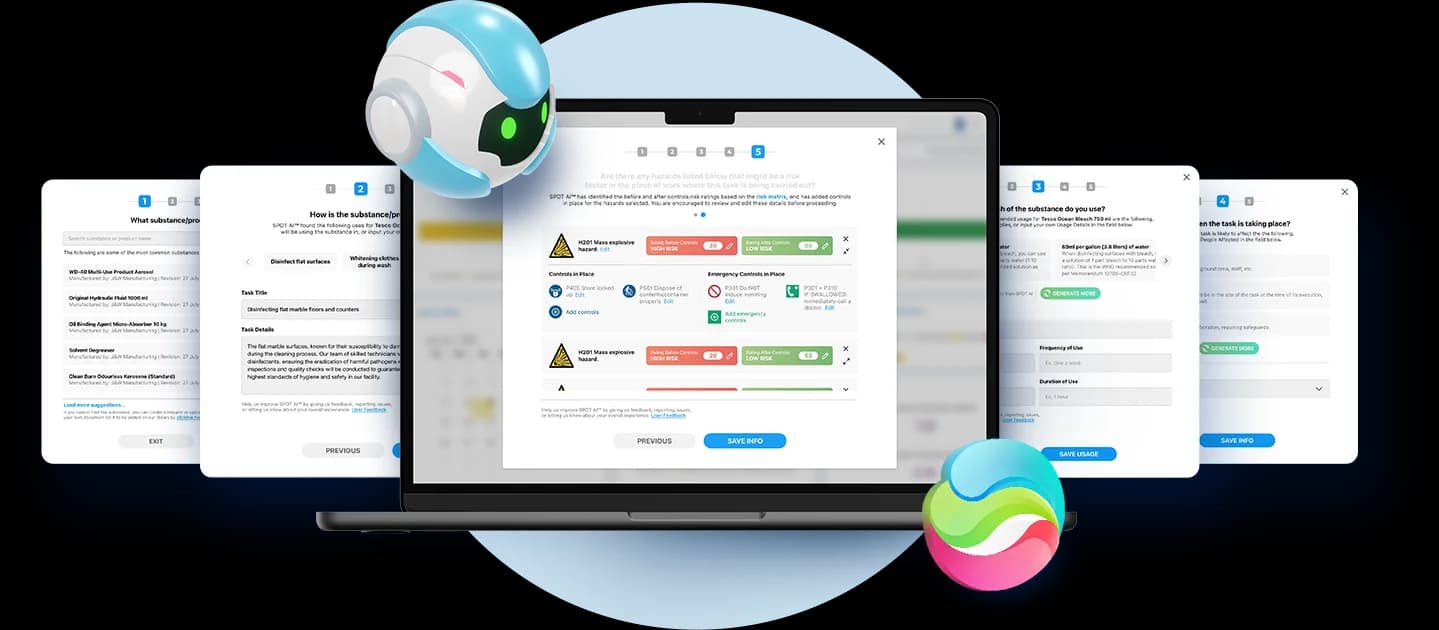
Manufacturers are adopting workflow automation to streamline compliance processes and reduce human error. Guided workflows, automated notifications, and structured assessment templates eliminate the inconsistencies that emerge from manual documentation. This systematic approach builds compliance discipline into daily operations without requiring extensive training sessions, supporting risk management practices across the organisation.
Protection of corporate reputation
Comprehensive safety compliance minimizes injuries, illnesses, and fatalities, improving employee morale, loyalty, and retention. Compliance programs help identify and mitigate safety and environmental risks, demonstrating environmental responsibility. Investing in compliance encourages companies to adopt environmentally friendly practices and develop safer products, delivering high quality products to customers. Demonstrating regulatory compliance to inspectors, customers, and insurers protects the company's reputation and commercial relationships. Compliance facilitates market access by ensuring products meet regulatory requirements, enabling companies to expand their customer base, and manufacturers can achieve ISO certifications and meet reputation management goals while encouraging feedback from stakeholders.
Frequently Asked Questions
Common questions from manufacturers about safety compliance management with Safety365.
Safety365 centralises all compliance documentation in one platform accessible across every site. The compliance dashboard shows assessment status, overdue actions, and compliance scores for each location in real-time. Manufacturers can standardise assessment templates and workflows company-wide whilst allowing site-specific customisation. Location-scoped access means each facility sees relevant documentation whilst senior management maintains oversight across the entire organisation.
The platform stores every assessment, incident record, and action with full revision history and timestamps. Automated review reminders ensure documentation stays current before audits. When regulatory authorities request evidence, Safety365 generates exportable reports in PDF, Excel, or CSV format that meet HSE standards. The compliance scoring system across nine metrics provides immediate visibility into audit readiness status.
Safety365 connects every chemical substance to its SDS and COSHH assessment. When suppliers provide materials, manufacturers can search the 1.6 million sheet database, link the documentation, and generate assessments through the wizard. The system tracks which substances are documented and which require follow-up with suppliers, supporting compliance programs that identify and address potential risks in supply chains.
When regulatory standards change, manufacturers can update assessment templates and protocols from the centralised platform. The system flags which existing assessments need review based on the changes. Updated templates roll out across all facilities systematically rather than relying on individual sites to implement changes independently. This structured approach to regulatory change management keeps compliance current.
The compliance dashboard provides senior management with real-time visibility into compliance status across all facilities. The 0 to 1,000 scoring system across nine metrics shows exactly where the organisation stands on regulatory compliance. Trend tracking shows whether compliance performance is improving or declining. This executive oversight enables data-driven decisions about compliance priorities and resource allocation.
Automated review date notifications go out 30 days before an assessment expires, with escalation if no action is taken. The compliance scoring system flags critical gaps like emergency controls incomplete, hazards without control measures, and overdue assessments. These automated checks prevent the compliance gaps that lead to penalties during HSE inspections. The platform builds compliance discipline into operations rather than relying on manual tracking.
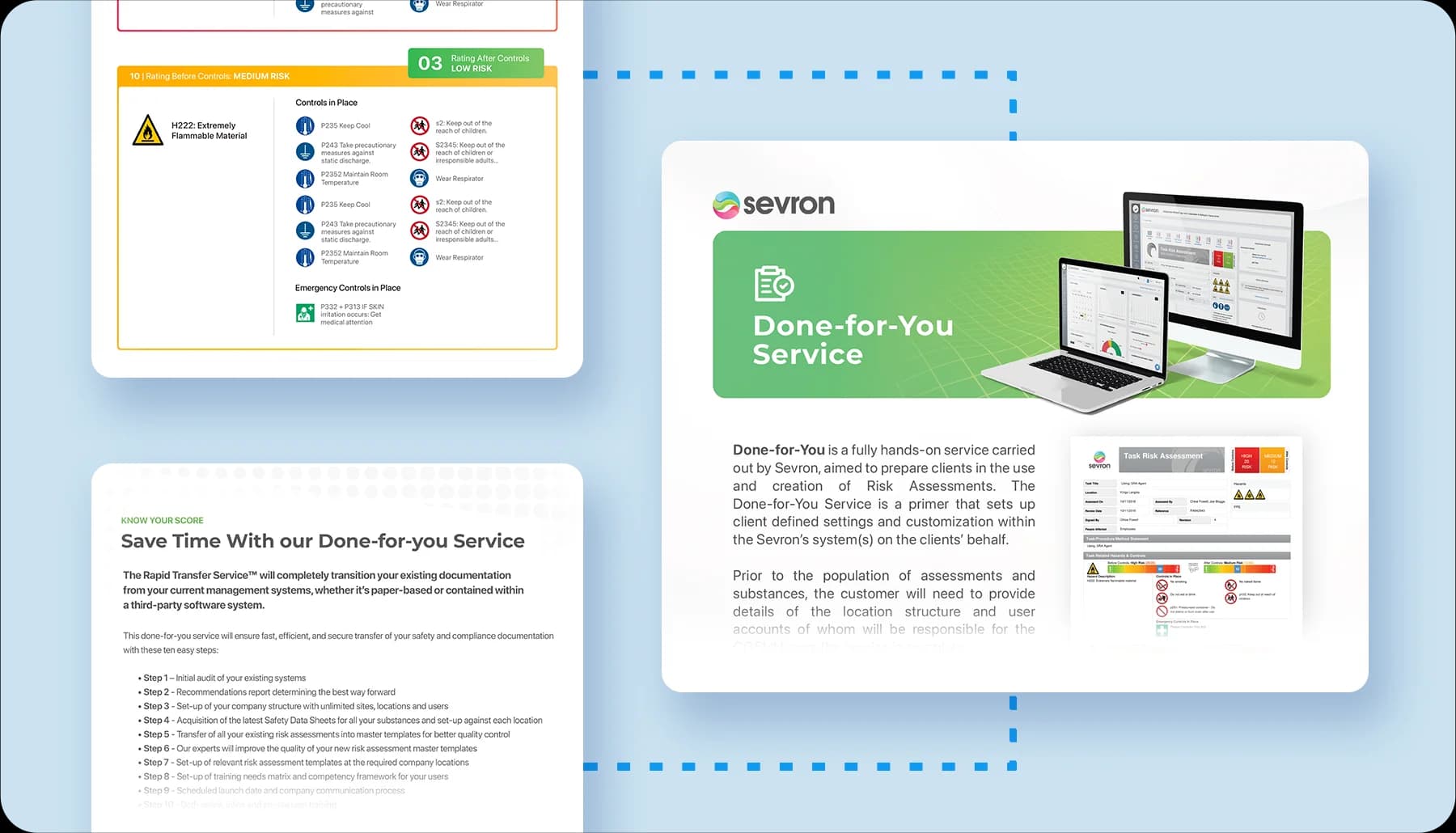
The Done-For-You Service handles the complete deployment process. Manufacturers provide their chemical inventory and Safety365 manages data import, assessment creation, and system setup across all facilities. This turnkey approach delivers enterprise-wide compliance deployment without pulling internal resources away from operations.
Use Cases

Manufacturing
Automate assessments and chemical safety across complex operations and fast-moving production environments.

Multi-Site Director
Gain real-time oversight across locations. Standardise compliance workflows, monitor performance, and generate reports in minutes.

Safety Officer
Reduce paperwork and admin time. Use automated assessments, dashboards, and documentation to stay compliant and stress-free.

Construction & Engineering
Ensure equipment safety, manage site risks, and maintain compliance across evolving project scopes.
685,800+ health and safety professionals in 135+ countries
rely on Sevron to simplify chemical safety compliance.
