
Smarter SDS management for your chemical safety starts here
Trusted by over 685,800+ users
in over 135 countries, from individual practitioners to global enterprises

Discover SDS solutions for your
chemical safety compliance
Automations
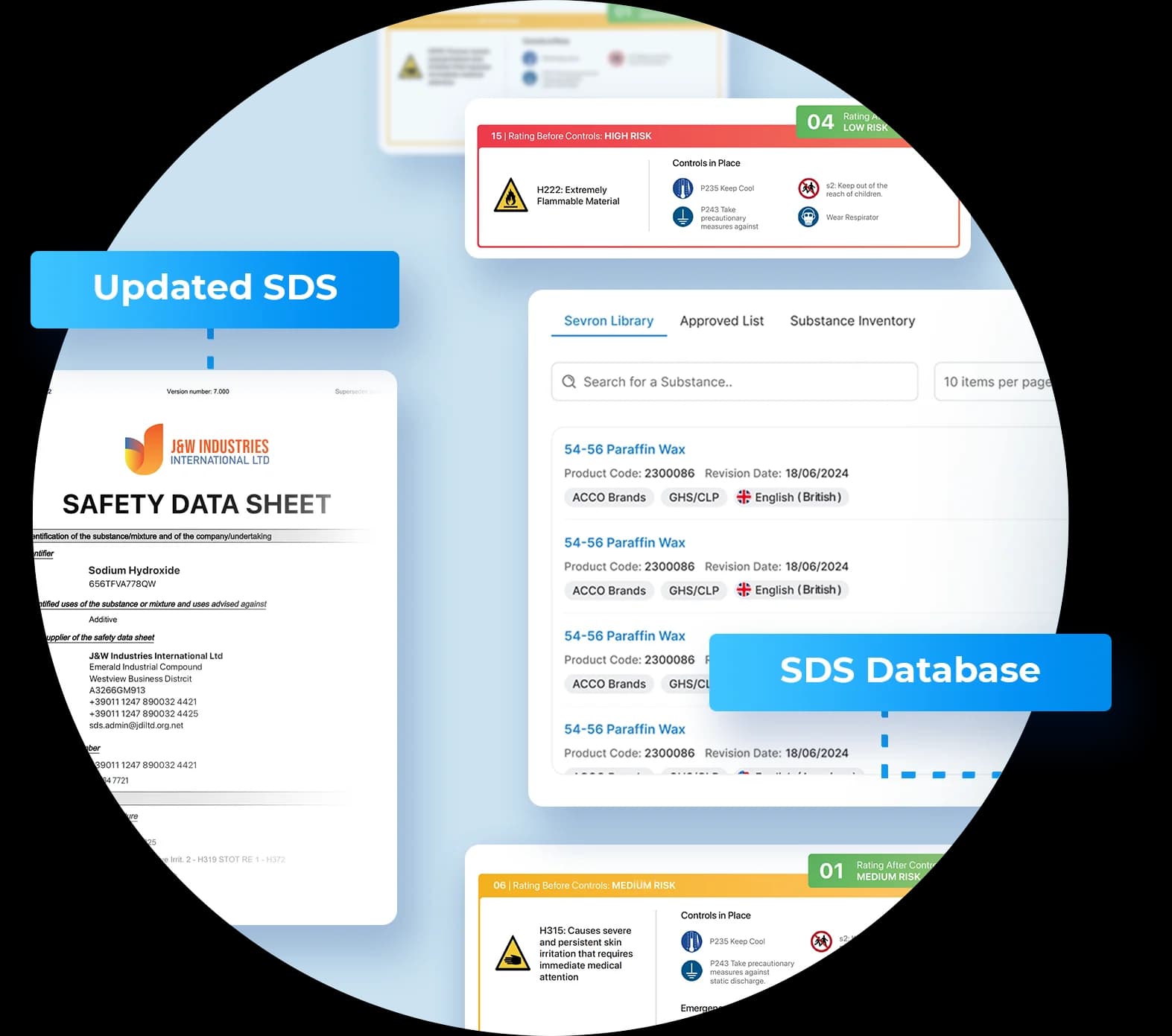
Instant updates across your inventory
Compliance Support
UK, EU, REACH, and GHS standards
Smart Tagging
Organise by class, language, SVHC, etc.
Version Tracking
Compare & review SDS versions
Struggling to Find the Safety Data Sheet You Need?
Finding and managing safety data sheets shouldn't slow your team down. Whether you're searching for a specific SDS, trying to keep your library up to date, or preparing for an audit, Sevron makes it simple.
With access to MSDS365 — one of the world's largest SDS databases — you can search, download, and request safety data sheets in three simple steps. No more chasing suppliers, digging through shared drives, or working with outdated documents.
Three Simple Steps to the SDS You Need
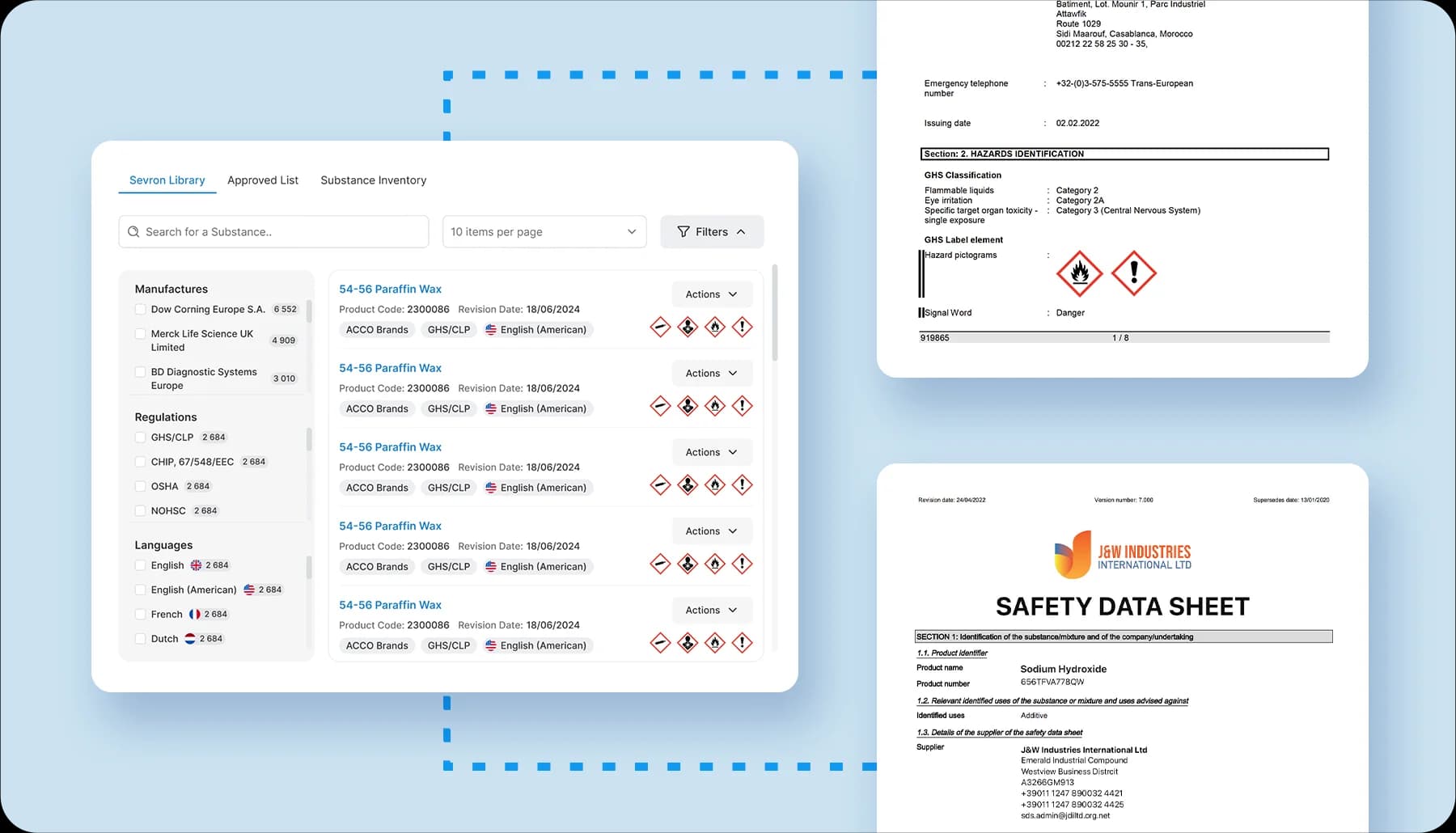
Search
Search our database of millions of safety data sheets by product name, manufacturer, or CAS number. Results appear instantly.
Download
Found what you need? Download the SDS directly to your device or add it straight to your Sevron library for centralised management.
Request
Can't find a specific SDS? Submit a request and our team will source it for you — typically within 24 hours.
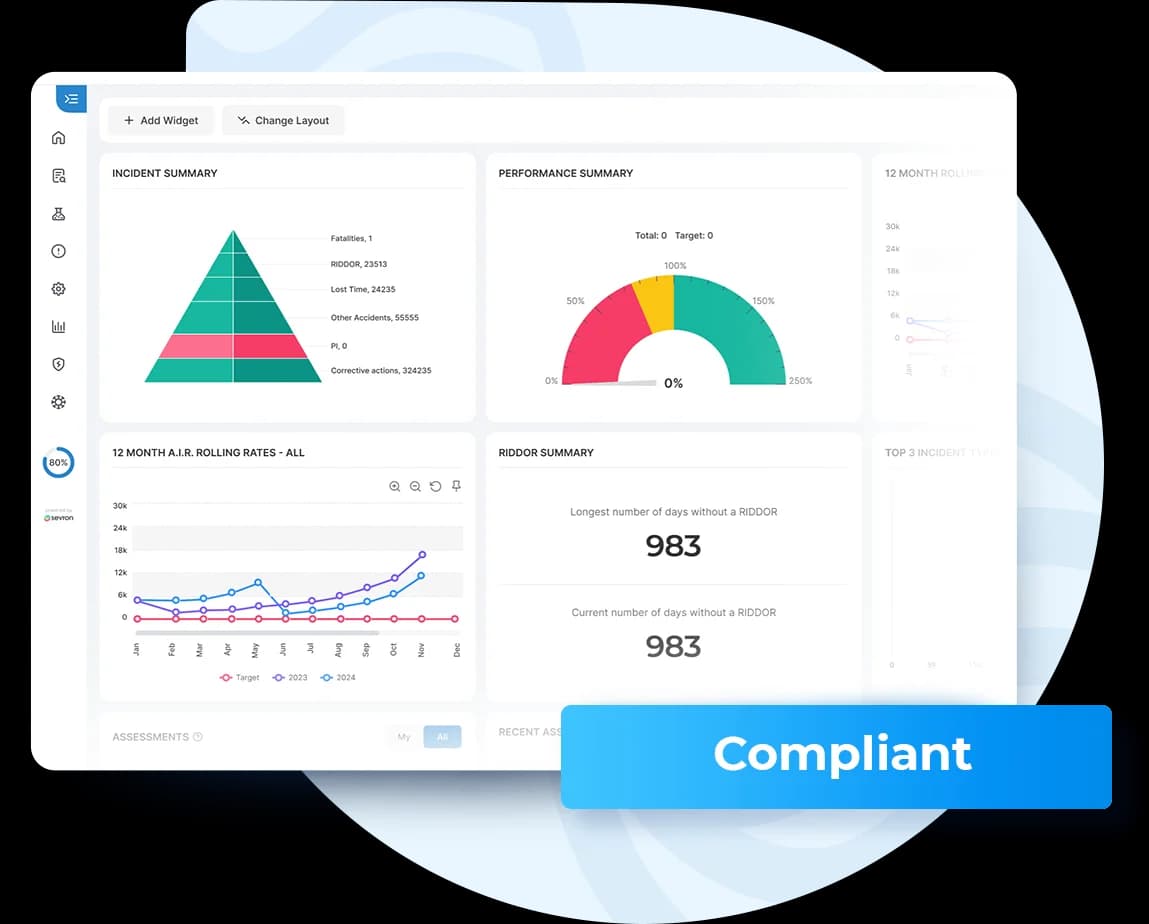
Your Entire SDS Library, Centralised and Always Current
See how Sevron brings all your safety data sheets into one searchable platform. Track updates automatically, compare versions side-by-side, and ensure every team member has access to the latest safety information — from any device, at any time.
TAKE A CLOSER LOOKTop SDS Solutions Built For Compliance
Free SDS Search
Search our database of millions of SDSs instantly. Find safety data sheets by product name, manufacturer, or CAS number - completely free.
Centralised SDS Inventory
Store all your safety data sheets in one secure location. Smart tagging lets you organise by hazard class, site, department, or product.
SDS Update Comparison Audit Tool
Compare old and new SDS versions side-by-side. Instantly see changes to hazard classifications, PPE requirements, and exposure limits.
Key Points
- UK's largest SDS database: Access the UK's largest SDS database
- Old vs updated SDSs: Instantly compare old vs updated SDSs
- SVHC tags: Filter by hazard class, language, and SVHC tags
- SDS updates: Automatically receive SDS updates from suppliers
- Organise SDSs: Organise SDSs by site, department, or product
- Audit-ready SDS inventories: Maintain audit-ready SDS inventories effortlessly
Safety data sheets are the foundation of chemical safety compliance. But when your SDS library is scattered across shared drives, email attachments, and physical binders, staying compliant becomes a constant struggle.
Sevron transforms how organisations manage safety data sheets. Our intelligent SDS management platform centralises your entire library, tracks updates automatically, and ensures the right information reaches the right people at the right time.
From single-site operations to multi-location enterprises, Sevron scales with your needs - keeping you compliant without the administrative overhead.
SDS Compliance Made Simple
Managing safety data sheets across multiple sites, departments, and suppliers is a compliance headache. Outdated SDSs, missing documents, and scattered storage mean audit failures waiting to happen.
Sevron centralises your entire SDS library in one secure platform. Every document is current, searchable, and accessible to the people who need it - from the shop floor to the boardroom.
Version Tracking & Updates
Chemical suppliers update their SDSs regularly, but tracking those changes manually is nearly impossible at scale. A single missed update could mean your team is working with outdated hazard information.
Sevron monitors your SDS library continuously. When suppliers publish updates, we flag the changes and show you exactly what's different - new hazard classifications, updated PPE requirements, revised exposure limits.
Organisation & Tagging
Finding the right SDS shouldn't require digging through folders or remembering cryptic file names. Your team needs instant access to safety information, especially in emergencies.
Smart tagging in Sevron lets you organise by hazard class, SVHC status, language, site, department, or product. Filter your entire library in seconds and find exactly what you need.
Spot SDS Changes. Simplify Your Audits.
Quickly compare the old and new versions of your SDS side by side, highlight updates, and keep track of changes with clear insights.
Contact Us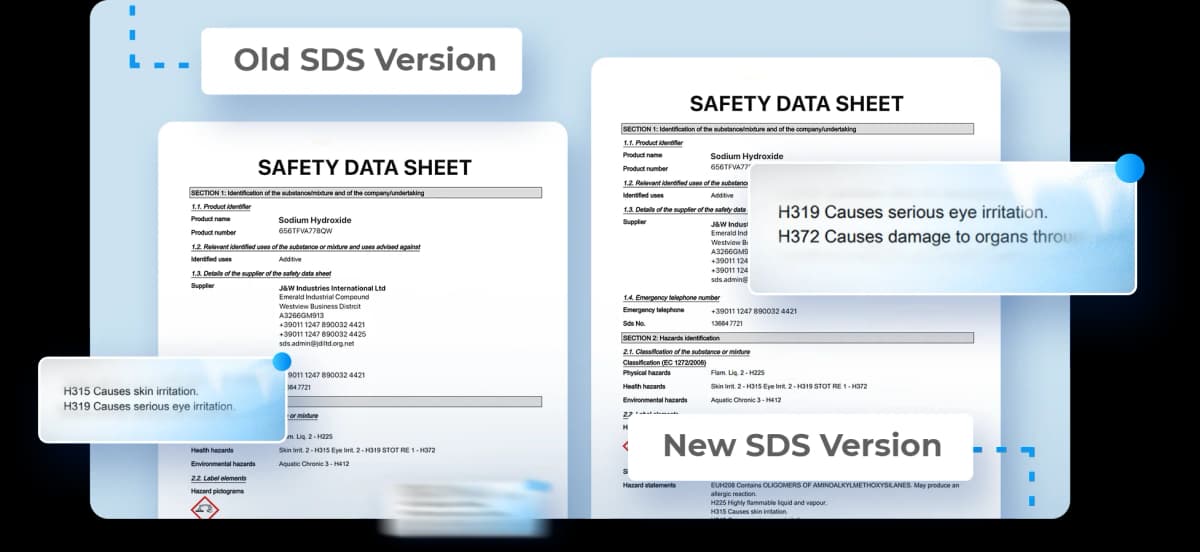
What Our Users Say About Sevron

Mary Edwards
University of Winchester
Sevron has significantly improved our COSHH substance recording and compliance processes. The risk assessment workflow is intuitive and largely involves a straightforward transfer of information from the product data sheet. This simplicity has led to an almost 100% completion rate for risk assessments over a short period of time.

Roy Rogers
Enigma IS
Safety365 Risk Management has been utilised by Enigma IS since 2007 and provides us with a transparent compliance platform enabling suitable & sufficient risk assessments to be produced across a wide spectrum of services.

Paul Hutchinson
MGL Group
The Sevron COSHH Risk Assessment Platform has become an indispensable tool for our business. Its extensive database provides instant access to substances, streamlining the assessment process and allowing our teams to generate COSHH assessments quickly and efficiently.

Paul Reilly
Peartree Cleaning
We've used Sevron for over 10 years and find it the perfect fit for our business which is UK-wide covering over 350 sites. The templates make it easy to create site-specific RAMS and the substance section is regularly updated when SDSs are reviewed.


Trusted by Safety Leaders. Proven by Performance.
Sevron is fully certified in quality management, information security management, cybersecurity, and other industry standards - with security and compliance built into everything we do.
SEE CERTIFICATIONSRelated Pages
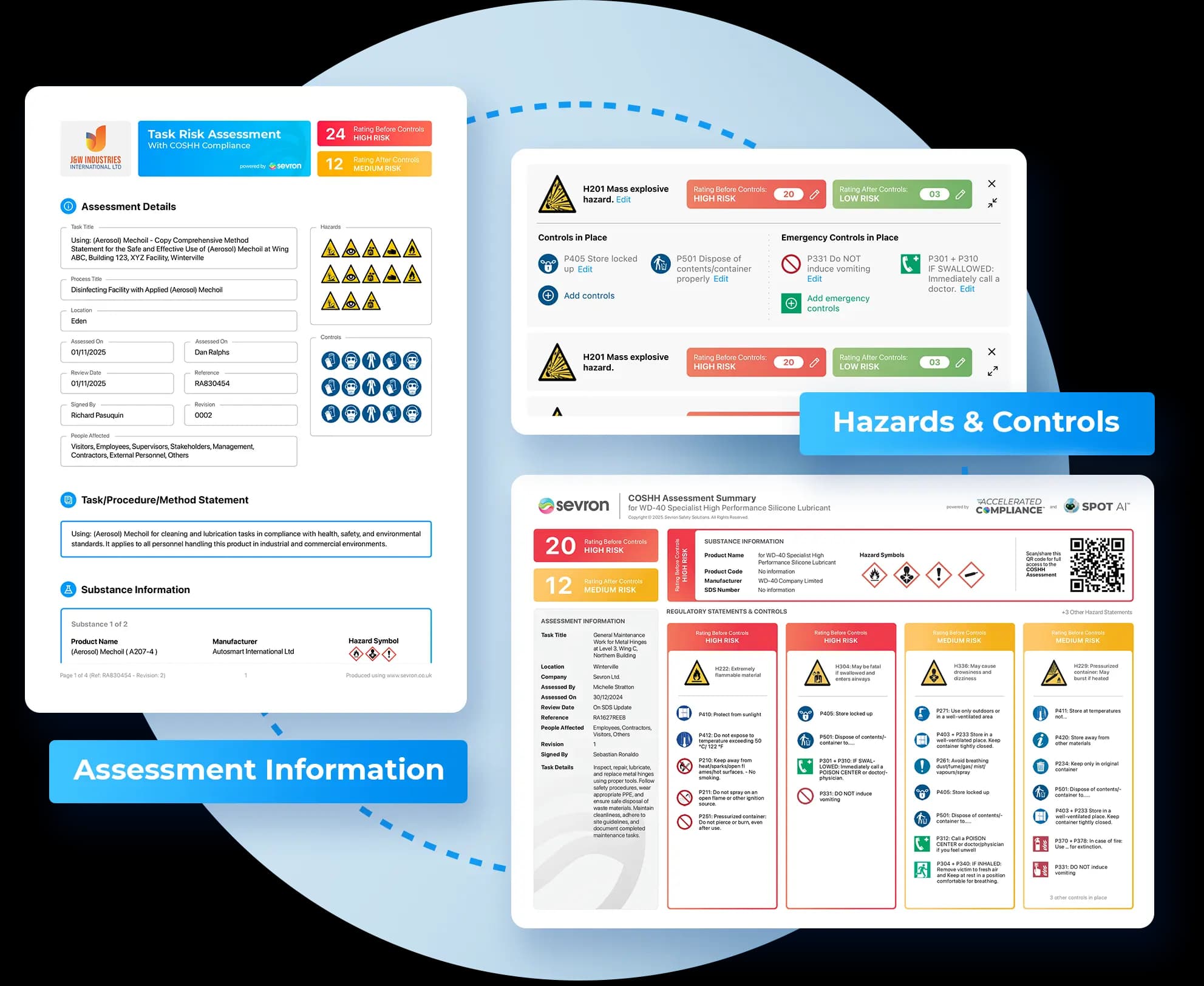
Chemical Management
Complete chemical management platform with COSHH assessments, SDS library, and compliance tracking.
COSHH Assessments
Create compliant COSHH assessments in minutes with AI-powered hazard identification.
SDS Search
Find safety data sheets instantly from our database of millions. Free to use.
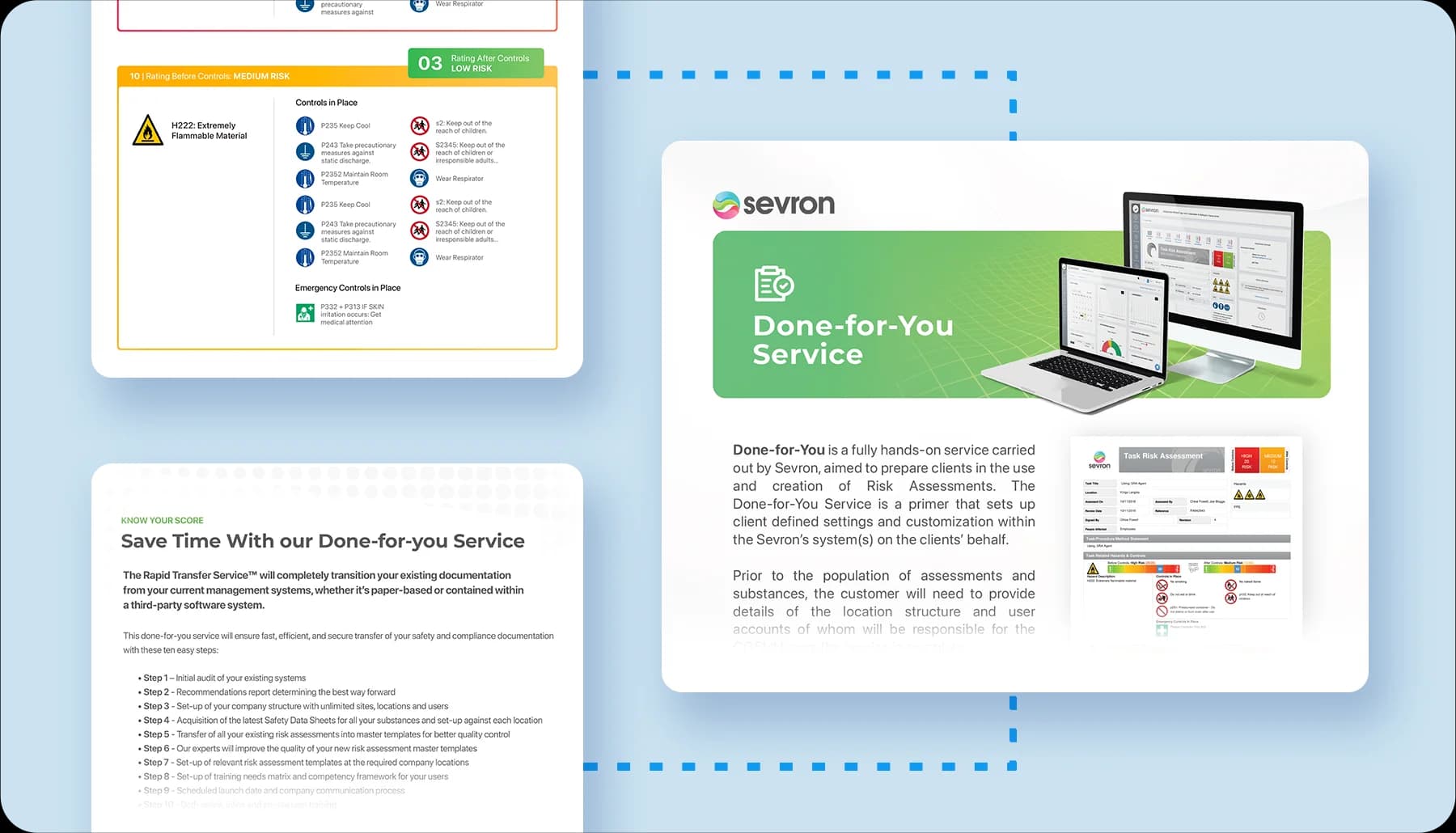
Done-For-You
Let our experts handle your compliance documentation and train your team.
Frequently Asked Questions
What is a Safety Data Sheet (SDS)?
A Safety Data Sheet is a standardised document that provides detailed information about a chemical product’s hazards, safe handling procedures, storage requirements, and emergency measures. Under UK REACH and CLP regulations, suppliers must provide an SDS for hazardous substances to ensure workers can handle them safely.
How often should Safety Data Sheets be updated?
Safety Data Sheets should be reviewed and updated whenever new hazard information becomes available, when regulations change, or when the product formulation changes. Suppliers must update SDSs promptly and provide revised versions to customers. As a best practice, review your SDS library at least annually to ensure all documents are current.
Who is responsible for maintaining Safety Data Sheets?
Employers are legally responsible for obtaining and maintaining current SDSs for all hazardous substances used in their workplace. While suppliers must provide SDSs, employers must ensure they’re accessible to workers, kept up-to-date, and used to inform COSHH risk assessments and safe working procedures.
What are the 16 sections of a Safety Data Sheet?
The 16 mandatory SDS sections are: (1) Identification, (2) Hazard identification, (3) Composition/ingredients, (4) First-aid measures, (5) Fire-fighting measures, (6) Accidental release measures, (7) Handling and storage, (8) Exposure controls/PPE, (9) Physical properties, (10) Stability and reactivity, (11) Toxicological information, (12) Ecological information, (13) Disposal, (14) Transport, (15) Regulatory information, and (16) Other information.
How do I find the right Safety Data Sheet for a product?
Search using the exact product name as shown on the container, the manufacturer name, and optionally the CAS number for precise identification. Sevron’s SDS search tool lets you search millions of SDSs by product name, manufacturer, or CAS number, with multi-language options and instant PDF access.
What’s the difference between an SDS and an MSDS?
MSDS (Material Safety Data Sheet) was the older format with varying structures across countries. SDS (Safety Data Sheet) is the globally harmonised format introduced under GHS with a standardised 16-section structure. Since June 2015, all safety data sheets in the EU/UK must follow the SDS format. The terms are often used interchangeably, but SDS is the current standard.
How should Safety Data Sheets be stored and made accessible?
SDSs must be readily accessible to all workers who handle hazardous substances. Store them in a central location—whether physical folders or digital systems—where workers can quickly access them. Digital SDS management systems like Sevron allow instant search and retrieval, automatic updates, and access from any device.
Can I use a Safety Data Sheet from another country?
SDSs must comply with the regulations of the country where the substance is used. UK/EU SDSs follow CLP regulation formatting, which may differ from US OSHA requirements. Always use region-appropriate SDSs and check that the language, hazard classifications, and regulatory information match UK requirements.