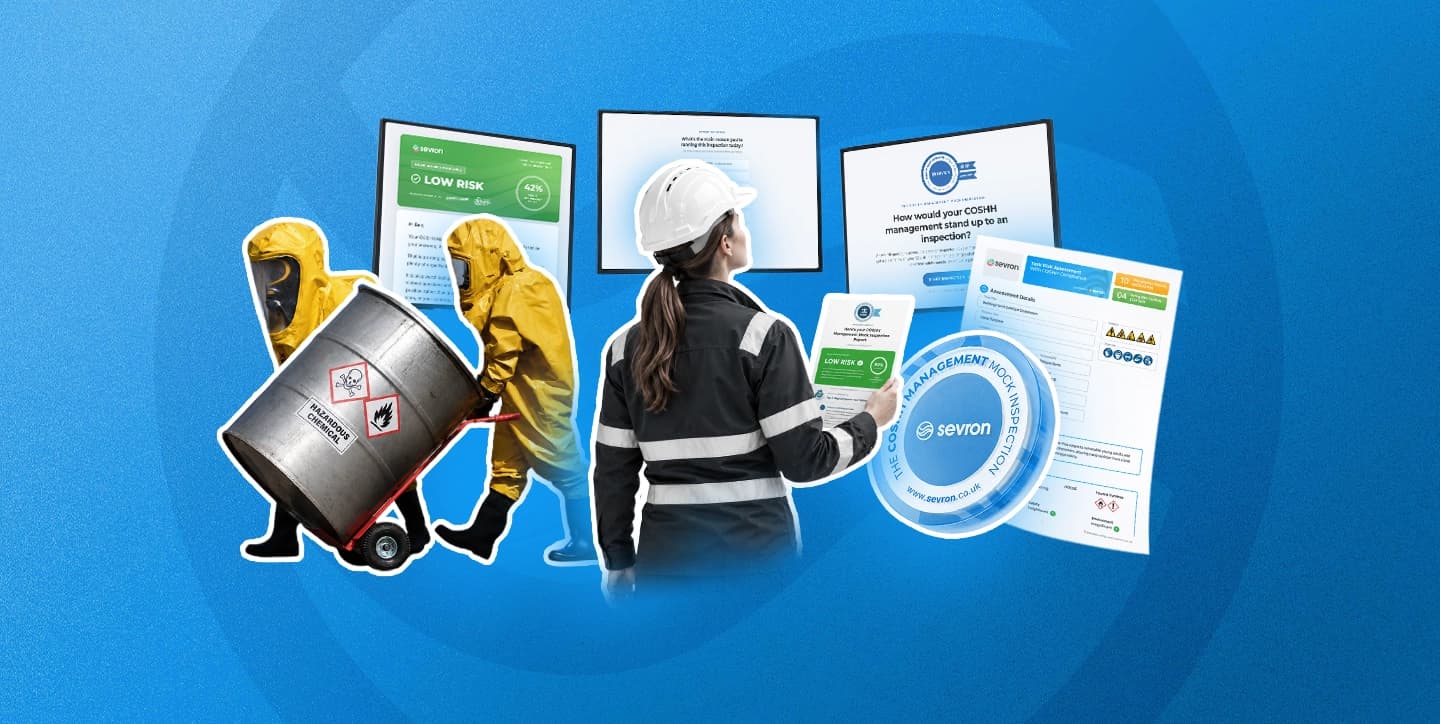

Proving COSHH compliance means producing current assessments, up-to-date Safety Data Sheets, records that controls have been examined and tested, evidence of training, and health surveillance records where they apply. Each one is a currency question. The document has to be valid on the day someone asks, and you have to be able to show it.
Ask a business whether it is COSHH compliant, and the answer is almost always yes. Ask it to prove it, right now, and the room goes quiet. That pause is the whole problem, because COSHH is not satisfied by control alone. It asks you to demonstrate the control.
So, when an inspector, a client or an auditor says show me, what should you actually be able to put in front of them, and how quickly?
Why "we are compliant" is not enough
COSHH is an evidence-based duty. Regulation 6 stops an employer carrying out work liable to expose people to a hazardous substance until a suitable and sufficient COSHH Assessment has been made and the steps it identifies have been taken. Health and Safety Executive guidance on COSHH runs the same thread through everything that follows. Maintain the controls. Check they still work. Keep the records.
A control you cannot evidence is, to an inspector, a control that might not exist. That is not cynicism. It is how enforcement has to work, because the alternative is taking every business at its word about the slowest and quietest harm there is.
What proof looks like
- Current COSHH assessments that match the substances and the tasks actually happening in the building.
- Up-to-date Safety Data Sheets sitting behind those assessments, meaning the version the supplier issues now rather than the one filed two formulations ago.
- Records that controls have been checked, including the thorough examination and test of any local exhaust ventilation, which Regulation 9 of the COSHH Regulations 2002 requires at least every 14 months for most systems, with the record kept and available for five years.
- Evidence that the people using the substances were trained and understood the risk, with a course record showing who completed what and when.
- Health surveillance records covering everyone it applies to, showing that it is happening on schedule.
Each item answers a different question an inspector will ask. Together they are the difference between a short conversation and an improvement notice.
The question behind the question
An inspector rarely asks whether you have an assessment. They ask when you last reviewed it, what changed, and who was trained. Those are currency questions, and a document with no visible history cannot answer them.
Why the folder lets you down
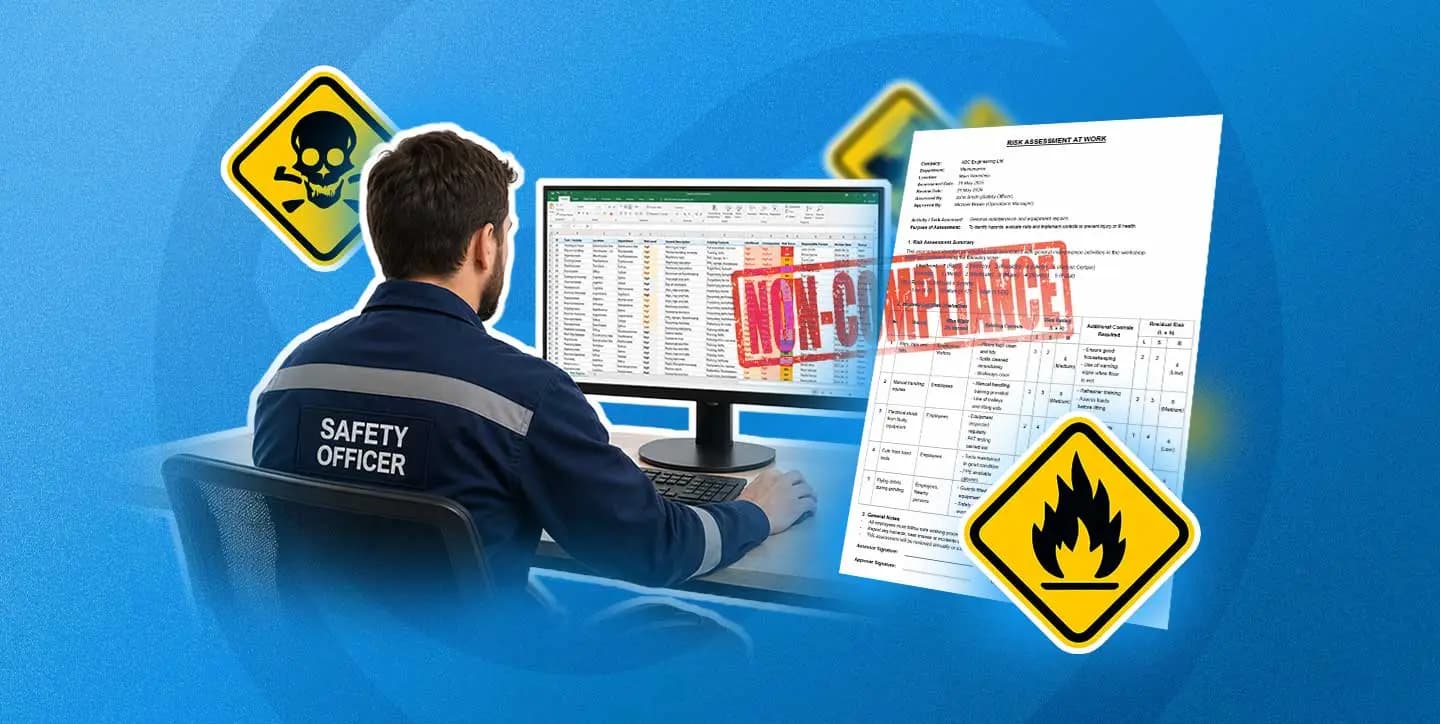
A folder, or its digital cousin the shared drive, is built to store documents rather than to prove they are current. It cannot tell you that a supplier reissued a Safety Data Sheet last month. It cannot tell you an assessment is overdue for review, or that three new starters never had the training.
It looks organised, which is exactly the trap, because organised and current are not the same thing. The gaps hide quietly inside a tidy folder until the day someone asks a currency question, and the tidiness turns out to be no answer at all. If checking a single supplier version means a phone call and a wait, the file is already telling you something. Anyone can search a Safety Data Sheet against a live database, which makes an outdated sheet on your shelf difficult to defend.
Reading compliance at a glance
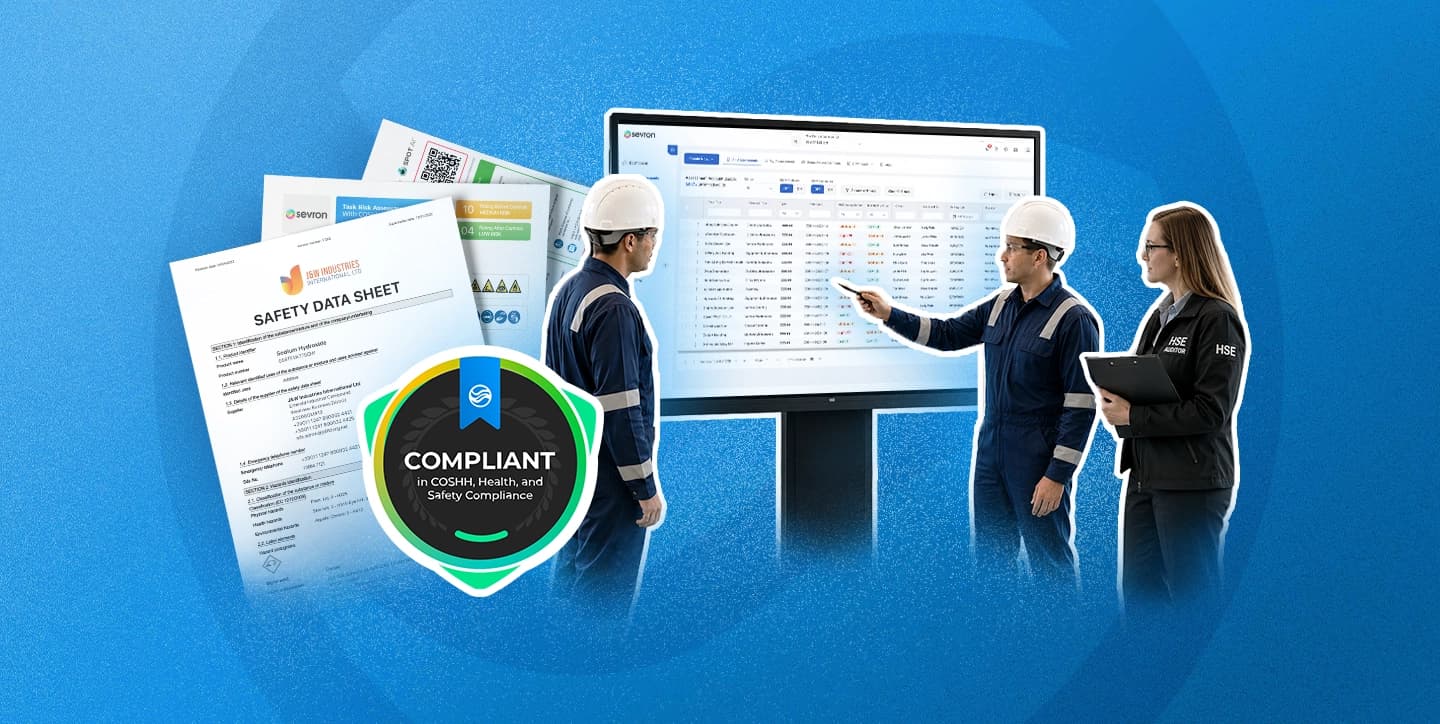
This is where a live picture changes what is possible. Rather than opening every document to check its state, a compliance dashboard reads across all of them and tells you where you stand. A shelf of paperwork becomes a single, honest position, backed by a list of what is done and what still needs attention.
Assessments due for review surface before they lapse. Safety Data Sheets tied to your assessments flag when they change. Required tasks become visible rather than remembered. Currency is where the value sits. The picture moves as your records move, so the answer exists before anyone asks for it.
The Friday afternoon test
A client emails at four on a Friday asking for your full COSHH file before Monday as a condition of renewal. With a folder, that is the weekend gone and a nagging worry you have missed a version. With a live record, it is an export and a reply before you leave. If your honest answer is the former, that is the gap worth closing.
What actually separates the two
It is worth sitting with the difference for a moment.
Two businesses hold the same substances and run the same risks. One keeps everything in folders and is, on paper, entirely compliant. The other runs a live compliance record. The inspection lands the same week for both.
The first spends three days assembling evidence and still cannot show when two assessments were last reviewed. The second opens one screen, shows the current assessments and the check records, and is back to work by lunch. Nothing about the actual risk differed. What differed was whether compliance could be proved on the day someone asked, and that is the thing enforcement, clients and insurers all care about.
This is the practical heart of Sevron's Accelerated Compliance approach, moving a business from Certified to Competent to Compliant with the evidence current and to hand throughout. Safety365 keeps site-specific COSHH Assessments, Safety Data Sheets, checks and training records in one connected place and reads your position live, so proving compliance stops being an event and becomes the default state you are already in.
See how a connected compliance record keeps your evidence current and ready to show.
Frequently Asked Questions
What does an HSE inspector ask for on a COSHH visit?
Evidence, in practice: current assessments and Safety Data Sheets, records that controls such as ventilation have been examined and tested, and proof of training and any health surveillance. Expect questions about when each was last reviewed.
Is a folder of assessments enough to prove compliance?
Not on its own. A folder shows a document exists but not that it is still valid, and validity is what an inspector questions.
How often should COSHH assessments be reviewed?
Whenever there is reason to think the assessment is no longer valid, such as a new substance, a reissued Safety Data Sheet or a changed process, and regularly in any case. A connected system flags the review while there is still time to act.
How often does local exhaust ventilation need testing?
At least every 14 months for most systems under Regulation 9, and more frequently for certain higher-risk processes set out in Schedule 4. Records of the examination and test must be kept available for at least five years.
Compliant is a claim. Provable is the job. See how Safety365 keeps your evidence ready.

Safety & Compliance Experts
The Sevron team brings decades of combined experience in health and safety compliance, risk assessment, and workplace safety solutions.

Reviewed by
Dale Allen
CEO & Founder