
A label changes, a safety data sheet is reissued, and nobody tells you. That is how a sound COSHH assessment becomes a quiet liability. During 2025, HSE issued two editions of the Great Britain Mandatory Classification and Labelling list, and through 2026 they are driving mandatory updates to chemical labels and safety data sheets under the GB CLP Regulation.
If your assessments rest on sheets you downloaded a year or two ago, this matters more than it might first appear. When did you last check the revision date on the products in your store?
What the GB MCL List Is, and How It Works
The Great Britain Mandatory Classification and Labelling list is HSE's set of legally binding hazard classifications for certain substances on the GB market. Since leaving the EU, Great Britain runs its own GB CLP Regulation rather than following EU classifications automatically, and HSE makes its own technical assessments. When a substance lands on the GB MCL list with a new or revised classification, suppliers to the GB market must apply it. There is no opting out, and no waiting to see what the EU decides.
The sixth edition (February 2025) introduced new classifications for 46 substances, and the seventh edition (September 2025) added 32 more. The deadline to know is 15 August 2026 for sixth edition substances, with the seventh following into early 2027. The rule works on a placing-on-the-market basis, so product released into the supply chain after the deadline that does not reflect the new classifications is non-compliant. Separately, from 21 May 2026 the requirement to notify HSE of classification and labelling of substances placed on the GB market is removed, which trims one administrative task even as the classification updates add another.
Why a Label Change Reaches Your COSHH File
Your COSHH assessment is only as reliable as the safety data sheet behind it. When a substance gets a new or revised classification, its label and sheet change, and the hazards you assessed may have changed with them. An assessment built on a superseded classification is no longer suitable and sufficient, which is the exact standard COSHH requires.
A mandatory classification change is rarely cosmetic. A substance can be newly classified for a more serious hazard: as a carcinogen, a mutagen, a reproductive toxin, or a skin or respiratory sensitiser. That can bring a new pictogram, a different signal word (danger replacing warning), and new hazard and precautionary statements. Consider a cleaning product used daily in a workshop. If one of its components is reclassified as a skin sensitiser, the label gains a new statement, the supplier revises the safety data sheet, and your assessment now needs stronger glove guidance and a training note. Nothing about the task itself changed. The law underneath it did, and so did the right controls, and the only way you caught it was noticing the new version of the sheet before the inspector did.
The Ripple Through Mixtures
The harder part for many businesses is not a single substance but the knock-on through mixtures. When a raw material is reclassified, the hazard profile of every product containing it has to be recalculated against the concentration limits that decide when a hazard triggers a label change. One change to one ingredient can cascade through a whole product range, each finished item needing its own reassessment and possibly a new label. For a business with dozens of formulations, working out which products are affected is the first job, and a manual search through paper sheets makes it a slow one.
How to read a sheet for change
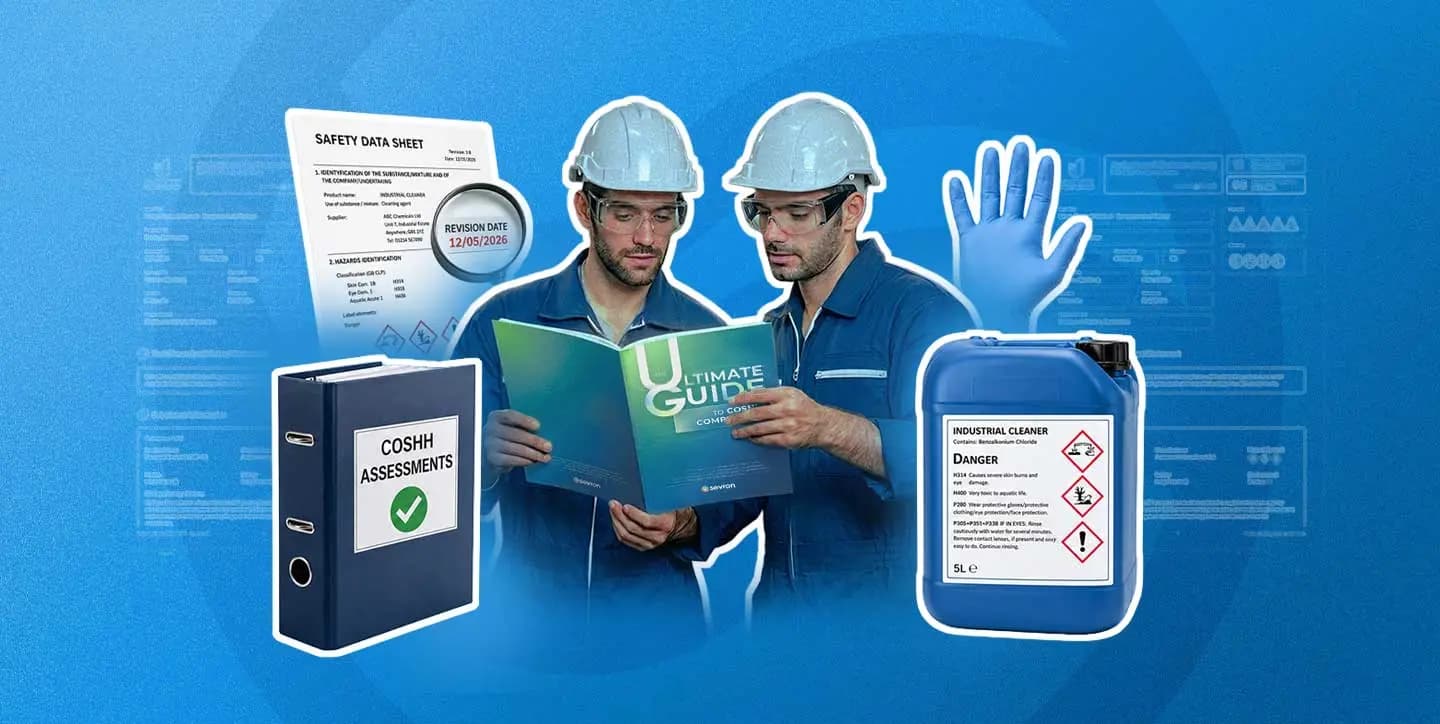
Every safety data sheet carries a revision date and usually a version number, with the classification in section 2. When a supplier reissues a sheet, those move. Suppliers rarely announce it, so a sheet from two years ago can be quietly out of date while looking exactly the same on the shelf.
What You Should Do
Work through it in order rather than all at once. Identify which of your substances fall under the sixth and seventh GB MCL editions. Get the updated safety data sheets from suppliers, or check them against your sheet source. Re-check the COSHH assessments where a classification changed, and update controls, labels and training to match. Where a reclassified substance sits inside a mixture, trace which finished products are affected and reassess those too. Then diarise 15 August 2026 for the sixth edition, and plan for the seventh into early 2027 so it does not arrive as a surprise.
The placing-on-the-market trap
Compliance is judged at the point product enters the supply chain. Stock placed on the market after the deadline must reflect the new classifications, so a backlog of old-label product is a problem you carry forward rather than one that clears itself.
Catching the Change Before It Catches You
This is exactly what an SDS management system is for. Safety365 pulls from one of the UK's largest safety data sheet databases, links each sheet to the assessments and mixtures that use it, and alerts you when a sheet tied to your COSHH assessments has changed, so a reclassification does not slip past. That is the practical edge of Sevron's Accelerated Compliance approach, keeping your assessments certified, competent and compliant without anyone having to chase suppliers by hand. With one, you stay ahead automatically.
What a connected SDS system catches that a spreadsheet does not
A spreadsheet holds the sheet you saved. A connected system holds the current version and tells you when it changes. When a supplier reissues a sheet after a reclassification, your assessments and mixture calculations update from the same source rather than waiting for someone to notice.
Stop chasing safety data sheets by hand.
Safety365 watches for new versions and tells you when an assessment needs another look.
Watch the demo · Book a free call
Frequently Asked Questions
What is the GB MCL list?
The Great Britain Mandatory Classification and Labelling list, HSE's legally binding hazard classifications for certain substances on the GB market. The sixth and seventh editions drive the 2026 changes.
What is the deadline?
15 August 2026 for sixth edition substances, with the seventh following into early 2027. Diarising both now beats a rushed check later.
Do I still notify HSE of classifications?
No. From 21 May 2026 the GB notification requirement is removed, though the classification updates themselves still apply.
What happens to my mixtures when a raw material is reclassified?
Their hazard profile may change. You need to recalculate against the concentration limits and reassess any product where the change crosses the threshold.
Does this change my COSHH assessment?
It can. If a substance you use has a new or revised classification, re-check the assessment, the controls and the label.
A reclassified sheet is a quiet liability until someone notices. See how Safety365 flags SDS changes for you.

Safety & Compliance Experts
The Sevron team brings decades of combined experience in health and safety compliance, risk assessment, and workplace safety solutions.

Reviewed by
Dale Allen
CEO & Founder