
A COSHH Assessment covering every substance on site can still leave some of them unassessed.
That reads like a contradiction until you look at what COSHH actually claims. Regulation 5 disapplies Regulations 6 to 13, the assessment duty through to health surveillance, where a substance is hazardous to health solely by virtue of its radioactive, explosive or flammable properties.
Solely is the word doing the work. A solvent that irritates skin and burns is inside COSHH for the irritation. A substance whose only hazard is that it ignites sits outside those duties entirely, and the regime that does reach it is a different one.
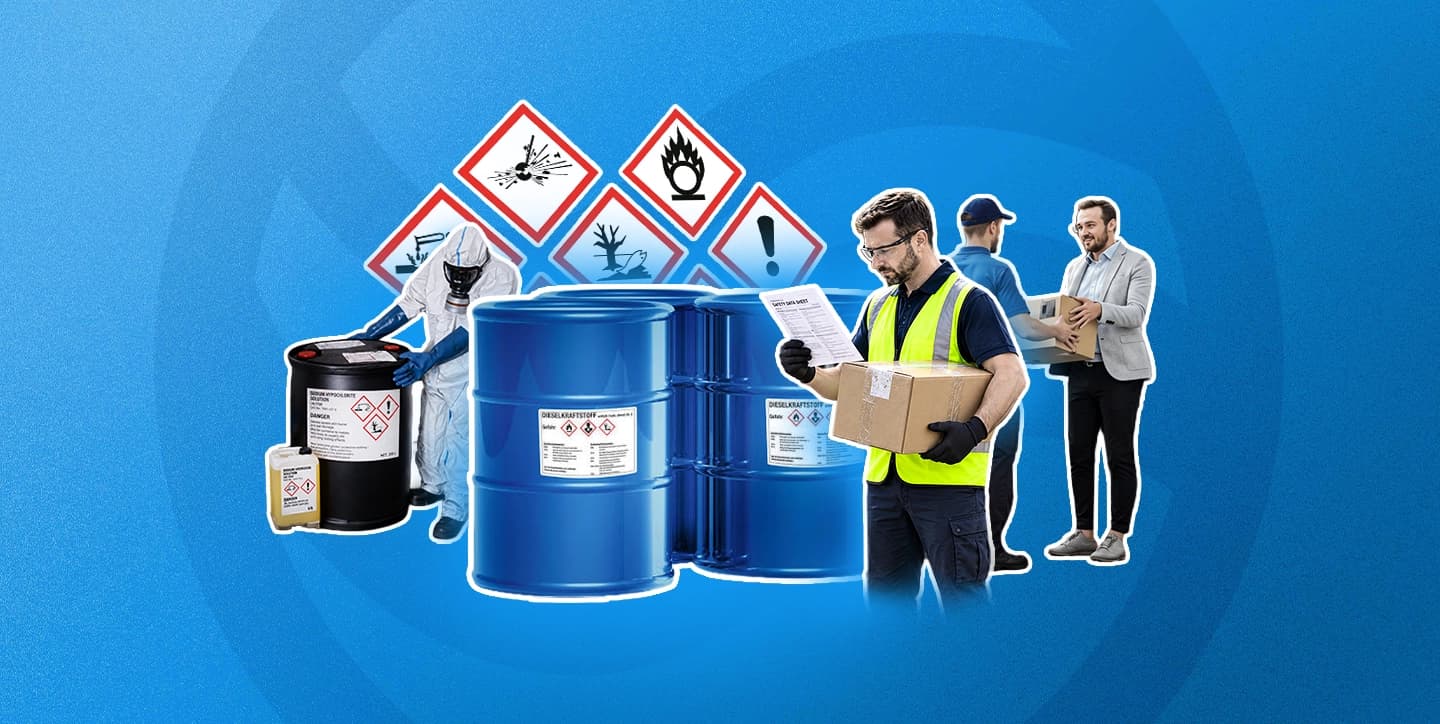
That regime is the Dangerous Substances and Explosive Atmospheres Regulations 2002 (DSEAR). The hazard classes on the label decide which one applies, and a chemical inventory organised around COSHH will not surface the other.
What DSEAR counts as a dangerous substance
The definition reaches further than the phrase suggests.
The Health and Safety Executive (HSE) sets three conditions for DSEAR to apply: work carried out by an employer or self-employed person, a dangerous substance present or liable to be present, and a risk to people from fire, explosion or similar energetic events or from corrosion to metal. Nothing in that test mentions quantity, sector or site size.
Flammables in ordinary quantities
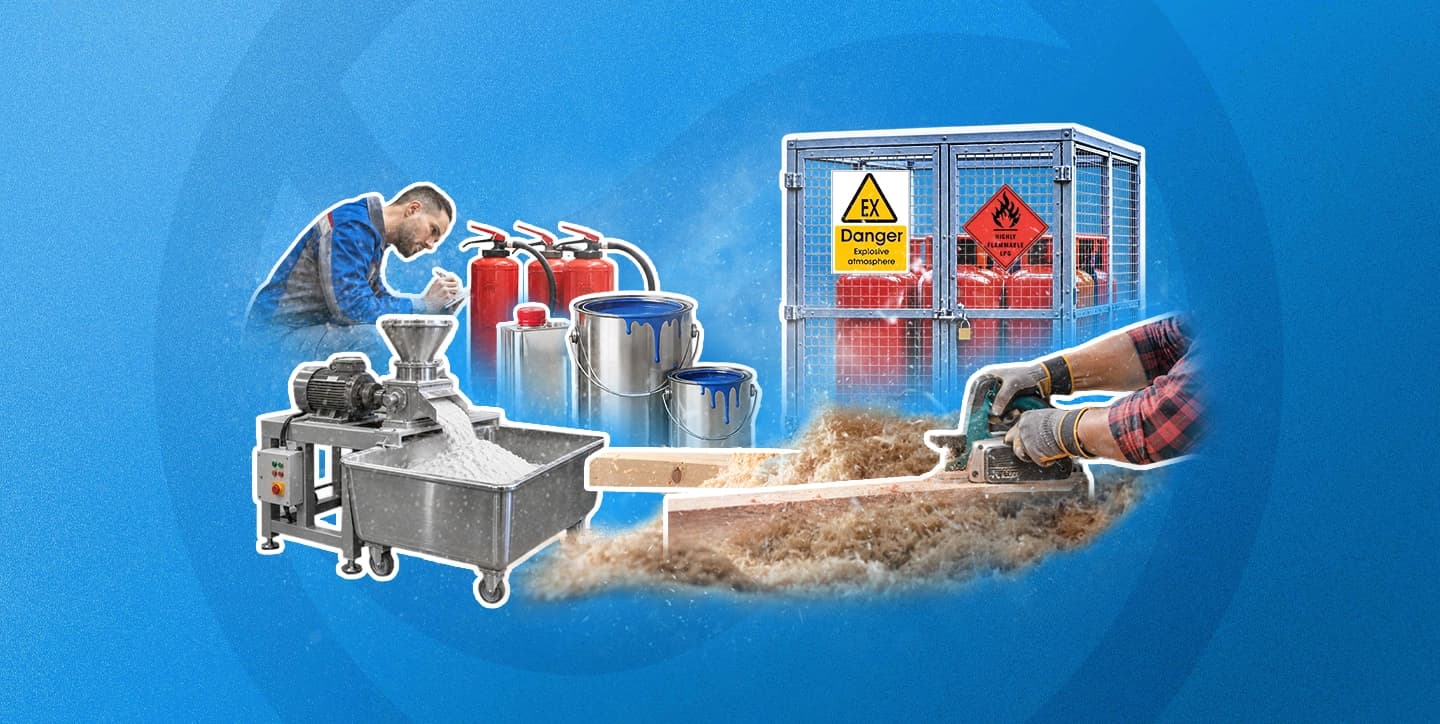
Solvents, paints, varnishes, thinners, aerosols and liquid petroleum gas all qualify. So do the fuels in a maintenance store and the cleaning products with a low flash point.
A workshop with four drums of solvent and a paint booth carries DSEAR duties. So does a care home with an oxygen concentrator and a cylinder store. The Regulations set no threshold below which they stop applying.
Combustible dusts
Dust from machining and sanding operations counts, as does dust from foodstuffs. Flour, sugar, wood, and metal dusts can all form explosive atmospheres at the right concentration in air.
This catches bakeries, joinery shops, feed mills and food producers. Those dusts carry health duties as well, since dust generated by the work itself sits inside COSHH on the criteria alone. The dust extraction unit and the housekeeping regime are DSEAR controls whether or not anyone has ever called them that.
The June 2015 extension
HSE confirms that the June 2015 extension brought substances corrosive to metals and gases under pressure into scope, placing a formal requirement on employers to assess the risks where substances are classified for those properties.
Both are physical hazard classes under the classification system, which is why they landed in DSEAR. The practical consequence is that a nitrogen cylinder or a compressed air receiver sits in scope on pressure alone, with no flammability involved. HSE notes that gases under pressure can cause explosions producing the same harmful effects, and that substances corrosive to metal can damage metal structures and reduce their integrity.
Sites that carried out a DSEAR assessment before 2015 and have not revisited it since are working from a narrower definition than the one now in force.
The assessment, and the record
Regulation 5 of DSEAR requires a suitable and sufficient assessment of the risks where a dangerous substance is or may be present at the workplace.
The wording will look familiar from COSHH, and the standard is the same. What differs is the question being asked. A COSHH Assessment asks what exposure does to a person over time. A DSEAR assessment asks what the substance does when it meets an ignition source, a pressure release or a metal surface.
The Regulations define risk narrowly for this purpose. The explanatory note sets it out as the likelihood of a person's safety being affected by harmful physical effects from fire, explosion or other events arising from the hazardous properties of a dangerous substance, together with the extent of that harm.
Harmful physical effects means something specific. HSE identifies thermal radiation, overpressure and oxygen depletion, and extends the same treatment to runaway exothermic reactions and to the decomposition of unstable substances such as peroxides.
The record is not optional. Where dangerous substances are present, the assessment has to exist as a document you can produce, in the same way a COSHH Assessment does. An informal understanding that the solvent store is well ventilated does not satisfy Regulation 5.
What follows the assessment
Two duties sit downstream, and only one of them applies everywhere.
Elimination and reduction
Regulation 6 requires every employer to ensure that risk is either eliminated or reduced so far as is reasonably practicable. Where risk cannot be eliminated, employers must apply measures to control it and mitigate the effects, consistent with the assessment.
HSE's guidance on DSEAR sets out that the control measures under Regulation 6 have a priority order, applied consistently with the risk assessment and appropriate to the activity. Substitution comes before containment, containment before mitigation.
The reasoning mirrors the COSHH position, where adequate control is defined through a three-part test.
Hazardous area classification
Regulation 7 covers places where explosive atmospheres may occur. Where such places exist, they must be classified as hazardous or non-hazardous, and hazardous places must be divided into zones.
This is the part of DSEAR that dominates the published guidance, and it is also the part that applies least widely. Zoning becomes relevant where a flammable atmosphere can actually form in air, which depends on volatility, quantity, ventilation, and the nature of the process. A sealed drum store with good ventilation may need no zones at all, while a spray booth almost certainly will.
Where zoning does apply, it is specialist work involving hazardous area drawings and equipment selection against the zone. That is a job for someone competent in it. Knowing whether you need it is the duty holder's question, and the assessment under Regulation 5 is what answers it.
Running two regimes off one inventory
One list of chemicals and one set of Safety Data Sheets has to serve two separate assessment regimes. They ask different questions, produce different records, and trigger reviews at different moments.
That is manageable while the list is short. It stops being manageable when a supplier reformulates a product, a new hazard statement appears on a revised Safety Data Sheet, and somebody has to work out which of the two assessment sets that change touches. Often it touches both.
Sevron built Safety365 around keeping that link intact. Substances, Safety Data Sheets and assessments stay tied together, so a change surfaces against everything it affects. COSHH Assessments built against each substance record hold the chemical side and task-based Risk Assessment covering workplace hazards and controls holds the activity records that DSEAR work generates.
Worth being straightforward about the boundary. Safety365 is not a hazardous area classification tool and it does not produce zone drawings. What it does is stop the two regimes drifting apart in the record.
The label tells you which duties you have taken on. Both sets have to end up somewhere.
Frequently Asked Questions
What is the difference between COSHH and DSEAR?
COSHH addresses risks to health from exposure to substances hazardous to health. DSEAR addresses risks to safety from fire, explosion, energetic events and corrosion to metal. Many substances engage both, and each needs its own assessment.
Does DSEAR apply to small businesses?
Yes. The Regulations set no threshold based on quantity, sector or site size. A workshop storing solvents or a bakery generating flour dust carries DSEAR duties in the same way a chemical plant does, though the assessment will be far simpler.
Does a DSEAR risk assessment have to be written down?
Yes, where dangerous substances are present. Regulation 5 requires a suitable and sufficient assessment, and the record needs to exist as a document rather than as an informal understanding.
Do we need hazardous area zoning?
Only where explosive atmospheres may occur. Regulation 7 requires classification into zones for those places, and many workplaces carry DSEAR duties without meeting that test. The Regulation 5 assessment is what establishes whether you do.
Are compressed gas cylinders covered by DSEAR?
Yes, since June 2015. Gases under pressure were brought into scope alongside substances corrosive to metals, so a cylinder store falls inside DSEAR on pressure alone, with no flammability required.
Can one substance need both a COSHH and a DSEAR assessment?
Frequently. A flammable solvent that also irritates the airways engages both regimes, and satisfying one says nothing about the other.

Safety & Compliance Experts
The Sevron team brings decades of combined experience in health and safety compliance, risk assessment, and workplace safety solutions.

Reviewed by
Dale Allen
CEO & Founder