
Nothing on a hazard label tells you who decided it.
Under the GB Classification, Labelling and Packaging Regulation (GB CLP), classification is the responsibility of the chemical supplier. The Health and Safety Executive (HSE) states directly that a supplier's conclusions on classification are not approved or vetted by the GB CLP Agency or any other government authority. They may be scrutinised later if a problem emerges or a concern is raised. That is a very different thing from being checked in advance.
So the label is an informed opinion arriving with your delivery. It is the best starting point you have, and only a starting point. The duties it signals begin at the pictogram and run well past it.
What the classification actually does is route you. Different hazard classes pull you into different regulations, with different assessment requirements and different control expectations. Read it that way and the label becomes a decision tool.
Who decides a chemical is hazardous
Two routes exist, and they behave differently.
Where HSE sets the classification
Mandatory classification is legally binding across Great Britain. HSE, acting as the GB CLP Agency, hosts and manages the GB mandatory classification and labelling list (GB MCL list), the domestic equivalent of the harmonised classifications under EU CLP. Where a substance carries a mandatory classification for a hazard class, suppliers placing it on the GB market must apply it. There is no discretion.
The list inherited its starting point. Every EU harmonised classification in force on 31 December 2020 carried across into the GB MCL list when Great Britain took on its own regime, which is why the two systems still overlap heavily.
Mandatory classification is also selective. It concentrates on the hazard classes where the consequences of getting it wrong are most serious, carcinogenicity and germ cell mutagenicity among them, and it reaches a small proportion of the chemicals in commercial use. Everything outside that scope falls to the supplier.
Where the supplier sets it
Self-classification covers the remainder. HSE guidance explains that self-classification applies to all mixtures, and to substances with no mandatory classification. It also applies to any hazard class a mandatory classification does not cover, so a substance can carry a binding classification for carcinogenicity and a supplier-determined one for skin irritation at the same time.
The evidence standard behind self-classification explains much of the variation you see between suppliers. HSE confirms that GB CLP generally does not require new studies to be conducted for classification purposes. Suppliers obtain and evaluate the information already available to them. Physical hazards are the exception, where suppliers are required to generate test data if none exists.
Two suppliers, two data sets, two defensible conclusions about the same chemical. That is how an evidence-based system behaves when the evidence is uneven.
Sitting underneath all of this is a competence requirement that rarely gets discussed. HSE states that classifying and labelling must be carried out by someone with the scientific competence to do so, and that a business without that competence available to it must make alternative arrangements. The duty does not soften because the supplier is small.
A parallel expectation sits downstream. Interpreting a classification and building an assessment on it calls for its own competence, and free certification covering COSHH awareness and risk assessment through The Knights of Safety Academy, Sevron’s training partner, is one route to establishing it.
Which supplier in the chain carries the duty
Supplier is a legal term covering four roles, and the duties attached to each are different. HSE defines a GB-based supplier as a manufacturer, importer, downstream user or distributor placing chemicals on the GB market.
Manufacturers and importers carry the primary burden. They classify, label and package before placing a chemical on the market. From 21 May 2026, HSE no longer requires them to notify the classification and labelling of substances placed on the GB market. Importers carry a further obligation that matters to everyone downstream of them, because HSE requires them to take all reasonable steps to make themselves aware of new scientific or technical information affecting the classification of what they place on the market.
A downstream user is anyone using a substance or mixture in the course of industrial or professional activities, which takes in formulators of mixtures, re-fillers moving product between containers, and re-importers. They may rely on a classification already derived by another GB actor, provided the composition stays unchanged. Change the composition and the duty to classify becomes theirs.
A distributor who only stores and sells on can rely on the classification passed down the GB supply chain, though HSE requires them to keep the underlying information available for at least ten years after last supply. Reformulate, and that distributor becomes a downstream user with the full classification duty attached.
This matters to you for one practical reason. When a classification looks wrong, knowing which actor in your supply chain made the call determines who you ask and what they are obliged to tell you.
What a hazard classification is made of
The label compresses several separate decisions into a small space, and reading it well means pulling them apart.
Class, category, and statement
A hazard class names the type of hazard. Skin corrosion is a class. Carcinogenicity is a class. Acute toxicity is a class.
A category grades severity within that class. Carcinogenicity runs from Category 1A through 1B to 2, reflecting how strong the evidence is that the substance causes cancer in humans. Two substances can share a class and sit in very different categories, which is why calling something a carcinogen is rarely precise enough to build a control decision on.
A hazard statement puts the class and category into standardised words. H350 states that a substance may cause cancer. H351 states that it is suspected of causing cancer. The codes exist so the same hazard reads identically in every supply chain using the system.
Signal words and pictograms
Above the statements sits the signal word. HSE confirms that GB CLP uses two signal words, with Danger applied where the hazard is more severe and Warning where it is less so. One signal word appears on a label, reflecting the most severe hazard present, so the word describes the worst thing in the container and stays silent about everything else.
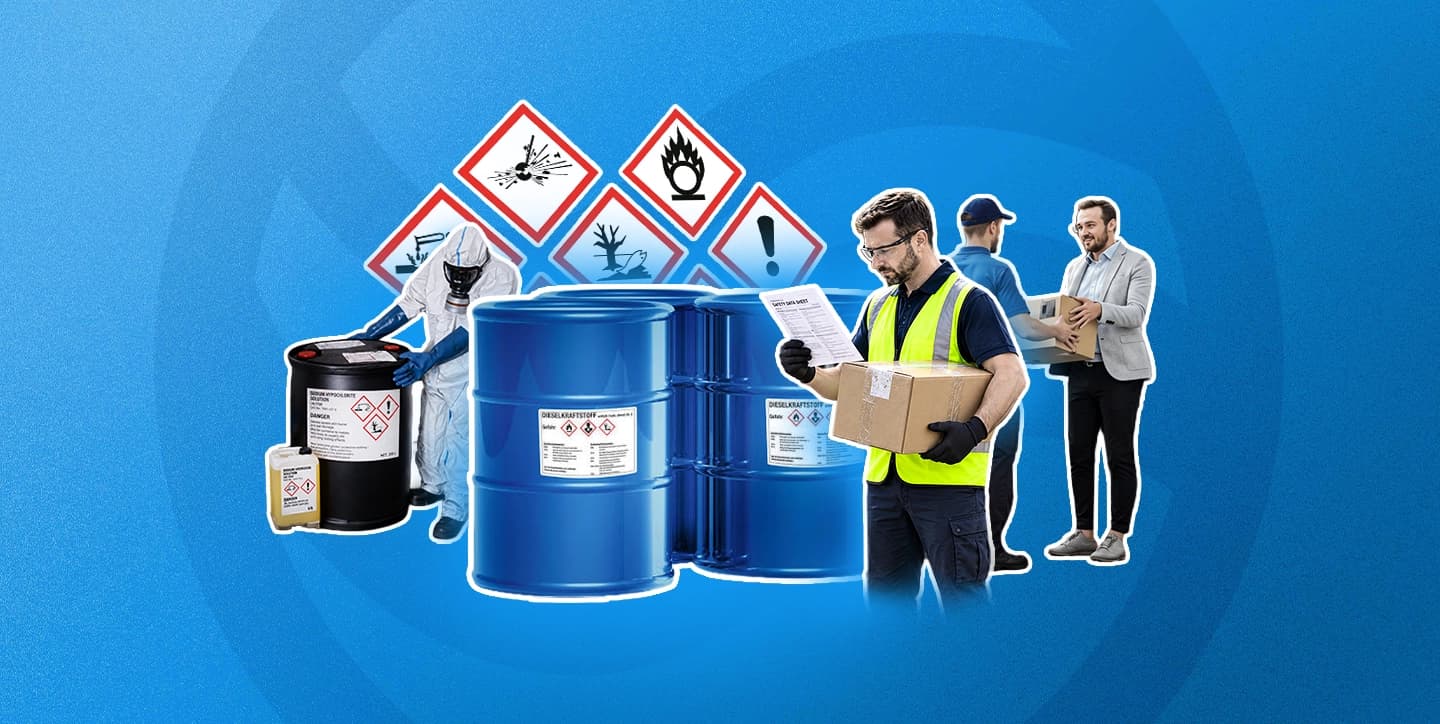
The pictograms behave the same way. They compress multiple classes into single symbols. The health hazard pictogram covers carcinogenicity, respiratory sensitisation, reproductive toxicity and specific target organ toxicity among others. Seeing it tells you a serious health hazard is present. It does not tell you which one, and the control measures those hazards demand are not interchangeable. The compression runs deeper still, because what the pictograms leave off includes hazards the rules deliberately suppress.
Precautionary statements complete the set. HSE notes that suppliers determine the appropriate precautionary statements based on the hazard statements required, usually no more than six.
That last point deserves attention. The P statements on your container are the supplier's general advice for the product across all foreseeable uses. They are written without knowledge of your ventilation, your task duration, or how many people work alongside the substance every day.
Three families, three different destinations
HSE sets out classification criteria across three families. Physical hazards, covering explosivity and flammability among others. Health hazards, covering the potential to cause cancer or to irritate skin and eyes. Environmental hazards, covering harm to the aquatic environment.
The three sit together on the label as one taxonomy. UK workplace law splits them across three separate regimes.
Health hazards and the COSHH route
Health hazard classes are what COSHH is built around. The Control of Substances Hazardous to Health Regulations 2002 define a substance hazardous to health to include substances meeting the criteria for classification within any health hazard class under the CLP Regulation.
The definition then reaches further. It takes in substances with a workplace exposure limit approved by HSE, biological agents connected with the work, dust of any kind present in substantial concentrations in air, and a catch-all covering anything creating a comparable hazard to health.
Four of those five routes into COSHH have nothing to do with a label. What follows from being in scope is a separate question, and what adequate control under COSHH requires turns on the hazard statement itself.
Physical hazards and the DSEAR route
Physical hazard classes belong to the Dangerous Substances and Explosive Atmospheres Regulations 2002 (DSEAR). HSE describes its scope as covering risks to safety from fire, explosion and substances corrosive to metals, across solvents, paints, varnishes, flammable gases, dusts from machining and sanding, dusts from foodstuffs, and pressurised gases.
The distinction is one of mechanism and timescale. COSHH addresses harm that accumulates through exposure, often across years. DSEAR addresses harm arriving in a moment, through ignition or pressure release. The assessment questions differ, the control measures differ, and the competence needed to carry them out differs.
A COSHH Assessment concluding that local exhaust ventilation is adequate has answered a health question. It has said nothing about whether the extracted vapour passes through equipment capable of igniting it. Two questions, two assessments, and both need a record you can produce on request. The activity side of that belongs with task-based Risk Assessment covering workplace hazards and controls. Working out which substances need a DSEAR assessment starts from the same classification.
Environmental hazards and where they land
Environmental hazard classes route away from worker protection law entirely, into environmental permitting, discharge consent and waste duties. They appear on your label alongside the others and they carry no COSHH consequence.
Those duties land with whoever holds your environmental permits and waste paperwork. The label is what routes them there.
When one substance pulls you two ways
A drum of solvent arrives carrying a flame pictogram and a health hazard pictogram together. The COSHH file covers the second. Nothing in the organisation has assessed the first, because the substance went into the chemical inventory and the chemical inventory is understood to mean COSHH.
HSE's own Approved Code of Practice on dangerous substances addresses this directly. Discussing the COSHH definition, it notes that gases with flammable properties may also satisfy the definition of a dangerous substance under DSEAR, and that employers will need to assess and adequately control the risks to health and safety under both sets of regulations.
Both sets, together. The filing system does not get a vote.
This is the single most useful thing a hazard classification can tell you, and it is the part most often lost. The pictograms on a container are a list of the regimes you have just taken on.
Why COSHH reaches past the label
Here is the part that catches out organisations running a tidy, label-driven system.
The COSHH definition works on the classification criteria themselves. A substance falls in scope if it meets the criteria for a health hazard class, whether or not it has been classified under the CLP Regulation at all.
Substances the work creates
Read that against how work actually happens. Wood dust from a sanding operation arrives with no supplier and no label. Welding fume is created by the work. A reaction by-product has no Safety Data Sheet because nobody manufactured it on purpose. Flour dust in a bakery, silica dust from cutting stone, rubber fume from curing. None of these carry a pictogram, and all of them can sit squarely within COSHH. Finding the substances the work creates takes a different method from reading a delivery note.
Which raises an awkward question for anyone who built their inventory from supplier documentation. If every hazardous substance on your site had to be evidenced by a label, how much of what your people breathe would appear on the list?
Where COSHH stops and other regulations start
The exclusions run the other way too. Regulation 5 of COSHH switches off the main duties, assessment through to health surveillance, in specific circumstances. Lead and asbestos are handled by their own regulations. So is anything hazardous to health solely because of its radioactive, explosive or flammable properties, which is the same boundary the DSEAR split sits on.
Applying the wrong regime is its own failure mode, and it tends to produce assessments that look complete while missing the duties carrying the heaviest enforcement.
What counts as a substance hazardous to health sets out the full definition, exclusions included.
What happens when a classification changes
Classifications are not fixed. HSE monitors international forums including the European Chemicals Agency Committee for Risk Assessment (RAC), and where a RAC opinion is published, HSE as the GB CLP Agency must form its own view on whether to align with it under the Article 37 procedure. Great Britain is free to set its own mandatory classifications where the scientific data and wider policy considerations support doing so.
Where GB and EU positions separate
That independence is why GB and EU classifications for the same substance can drift apart, and why a supplier serving both markets may hold two positions on one chemical. HSE confirms that substances and mixtures placed on the market in Northern Ireland remain subject to EU CLP, which means a UK-wide supplier can be running two classification regimes inside one business.
For a downstream user, the practical consequence is that a Safety Data Sheet written for one market is not automatically correct for the other. The document can be accurate and still be the wrong document. Holding the right version against the right site and substance is where a managed Safety Data Sheet system earns its keep.
The cascade into mixtures
The operational consequence sits further downstream again. When a substance classification changes, mixtures containing that substance are reassessed against the new classification. A cleaning product, adhesive or coating that never carried a particular hazard can acquire one without a single change to its formulation. Nothing about the product moved. The science underneath it did.
For anyone maintaining assessments, that makes classification a live input. The revised Safety Data Sheet arriving from a supplier is a trigger to check whether the controls, the exposure conclusions and the health surveillance decisions built on the old classification still hold.
Where no revised sheet has arrived and you need the supplier's current position, a Safety Data Sheet search by substance will show what is being declared now.
Turning classification into a control decision
Classification tells you what a substance can do. It does not tell you what your people are exposed to, for how long, or whether what you have in place is working. That gap between the hazard and the risk is where the assessment lives, and no label closes it for you.
The practical work is a chain. Identify what is present, including what the work itself creates. Establish which hazard classes apply and therefore which regulations you are operating under. Assess exposure in your conditions. Record it, review it, and act when the inputs move.
Doing that across one site with forty products is manageable. Doing it across nine locations with several hundred, while suppliers reformulate and HSE updates the mandatory list, is where paper-based systems quietly stop being current. The assessments drift, one supplier update at a time, until an inspection or an incident reveals how far.
That drift is what Sevron built Safety365 to remove. The Accelerated Compliance framework runs from training that builds genuine competence through to a system holding assessments, Safety Data Sheets and change history in one place, so being certified, competent and compliant becomes a state you maintain. COSHH Assessments inside Safety365 stay tied to the substances they cover, which means a supplier reclassification surfaces against every assessment it touches instead of sitting unread in an inbox.
The label starts the conversation. What you do with it afterwards is the compliance.
Frequently Asked Questions
Who is responsible for classifying chemicals in Great Britain?
The supplier, which under GB CLP covers manufacturers, importers, downstream users and distributors. HSE does not approve classifications in advance, though it may scrutinise them if a concern arises.
Does a hazard pictogram mean COSHH applies?
Not on its own. Health hazard classes engage COSHH, while physical hazard classes such as flammability engage DSEAR instead. Many substances engage both.
Can a substance be covered by COSHH without a hazard label?
Yes. The COSHH definition works on whether a substance meets the criteria for a health hazard class, independent of whether it has been classified. Process-generated dusts and fumes are common examples.
What is the difference between a hazard class and a hazard category?
A class names the type of hazard, such as carcinogenicity or skin corrosion. A category grades severity within that class, which is why two substances sharing a class can demand very different controls.
What is the difference between mandatory and self-classification?
Mandatory classifications appear on the GB MCL list and must be applied by suppliers. Self-classification covers all mixtures, substances without a mandatory entry, and any hazard class a mandatory entry does not address.
Why do GB and EU classifications sometimes differ for the same substance?
Great Britain assesses classification proposals independently and can set its own mandatory classifications where the evidence and policy position support it, so the two regimes can diverge over time.
Classification tells you which rules you are playing by. See how Safety365 keeps the assessments built on it current.

Safety & Compliance Experts
The Sevron team brings decades of combined experience in health and safety compliance, risk assessment, and workplace safety solutions.

Reviewed by
Dale Allen
CEO & Founder