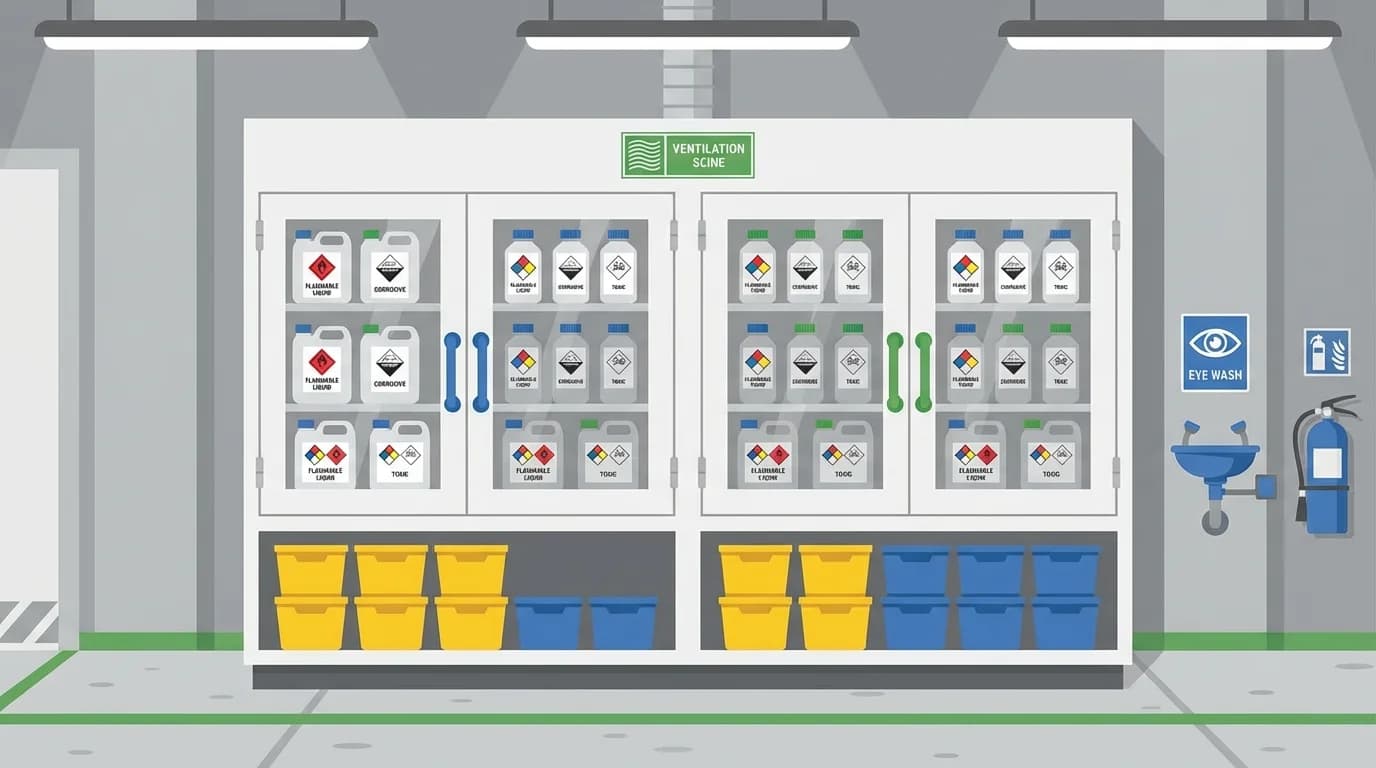
A substance hazardous to health is any material that can cause harm to a person's physical well-being. This definition is central to the Control of Substances Hazardous to Health Regulations (COSHH), which place duties on employers to prevent or control exposure to hazardous substances.
While many people immediately think of industrial chemicals, the legal definition is much broader, encompassing everything from everyday cleaning products to the dust created by sanding a piece of wood.
In a practical workplace setting, hazardous substances might be the fumes generated by a welder, the bacteria found in a cooling tower, or the solvents used in a printing press. Because these substances can cause immediate injuries or long-term chronic illness, identifying them is the first step in any robust risk assessment.
The numbers alone demonstrate this clearly: approximately 8% of global deaths are now attributed to hazardous chemicals, with 24% of fatalities linked to modifiable environmental factors, including chemicals, waste, and pollution.
See Sevron in Action
Watch our demo to see how Sevron simplifies COSHH compliance with automated risk assessments and real-time SDS data.
BOOK A DEMODefinition of a Substance Hazardous to Health (COSHH)
A substance hazardous to health is a substance that can cause adverse health effects to a person if inhaled, ingested, or through contact with the skin. Under the specific regulations of COSHH, this includes substances that are classified as very toxic, toxic, harmful, corrosive, or irritant. It also covers biological agents and any kind of dust, provided it is present in a high concentration in the air. The prevention of exposure to these substances is a core responsibility for employers, and they are responsible for ensuring the necessary precautions are taken.
Furthermore, any substance not covered by those specific categories but which creates a comparable risk to health is also included. The safety executive and local authorities can therefore regulate new or emerging hazards that might not yet have a specific classification but still pose serious risks to workers. The definition stretches this far deliberately, because hazardous substances can include solids, powders, liquids, vapours, fumes, mists, gases, and biological agents.
What COSHH Means by "Substance"
Under workplace safety regulations, the term "substance" goes far beyond bottled substances, referring instead to the physical form the material takes and how it interacts with the human body. A substance includes:
- Solids, liquids, gases: From solid metal bars that may produce dust when worked, to liquid oils and compressed gases.
- Vapours, fumes, mists, dusts: These are often the most dangerous because they are easily inhaled and can bypass the body's natural filters.
- Biological agents: Such as bacteria, viruses, or fungi that can cause infection.
- Substances created by work processes: Materials that are not "brought in" but generated during tasks like grinding, cutting, or chemical reactions.
Types of Substances Hazardous to Health
Knowing which category a substance falls into determines what precautions and control measures are needed. Hazardous substances are classified based on their inherent physical or chemical properties, such as being toxic, corrosive, flammable, or explosive.
Chemicals and Products
Many workplaces rely on manufactured products to function. Chemical products that are hazardous include cleaning agents, pesticides, solvents, flammable gases, work-generated substances, and radioactive materials. These are often easy to identify because they come in packaging with warning labels and must be accompanied by Safety Data Sheets (SDS).
In 2026, many countries follow updated standards like the Globally Harmonized System (GHS) and OSHA's 2024 Hazard Communication Standard to identify and label hazardous materials correctly.
Examples:
- Cleaning chemicals: Bleach, industrial detergents, and floor strippers.
- Pesticides: Used in agriculture, landscaping, and pest control.
- Solvents, paints, adhesives: Used in manufacturing, decorating, and repairs.
- Acids and alkalis: Common in laboratories, metal treatment, and battery maintenance.
- Fuels and oils: Including diesel, petrol, and hydraulic fluids.
- Flammable gases: Such as LPG, acetylene, and hydrogen.
Dusts
Dusts are often overlooked in the workplace, yet they are a major cause of occupational illness. They can be transported through the air with ease, and because many are so fine they are invisible to the naked eye, they travel deep into the lungs before workers even realise the danger. The adverse health effects can be severe, with the lungs, skin, and other parts of the body all potentially affected, leading to conditions like leukemia or mesothelioma developing decades later.
Examples:
- Silica dust: Created when cutting stone, bricks, and concrete.
- Wood dust: Especially from MDF and hardwoods, which are known sensitizers.
- Cement dust: Common on construction sites and in masonry work.
- Flour dust: A significant hazard in bakeries and food manufacturing.
Health effects:
- Occupational asthma (caused by sensitization).
- COPD (Chronic Obstructive Pulmonary Disease).
- Silicosis.
- Cancer.
Fumes, Vapours, and Mists
These substances are airborne and can be transported quickly across a workspace if engineering controls like local exhaust ventilation are not used. Because these substances can evaporate into the air, they also contribute to wider air pollution, smog, and acid rain.
Examples:
- Welding fumes: Containing a mix of metal oxides.
- Solvent vapours: Evaporating from cleaning baths or paint trays.
- Paint sprays: Fine droplets suspended in the air during application.
- Exhaust fumes: Such as diesel engine exhaust, which is a known carcinogen.
Inhalation is the primary risk route for these substances. Because exposure can often be invisible, workers may not realize they are being exposed until symptoms develop. This invisible exposure is why monitoring exposure to hazardous substances is required in certain circumstances to ensure control measures are effective.
Biological Agents
Exposure to harmful microorganisms can lead to serious infections and diseases. These are hazardous materials that are alive and can multiply within the host or the environment. Employers should follow specific HSE guidance when biological agents are present, as the risks and control measures differ significantly from those for non-biological hazards.
Examples:
- Bacteria: Such as Legionella in water systems or Leptospirosis from vermin.
- Viruses: Including blood-borne viruses like Hepatitis or respiratory viruses like Flu.
- Fungi and Moulds: Often found in damp environments or specialized agricultural settings.
Typical workplaces:
- Healthcare: Hospitals and clinics where patient contact is frequent.
- Waste and recycling: Dealing with refuse, sewage, and contaminated materials.
- Construction: Working on water systems, drainage, or in damp, old buildings.
- Laboratories: Specifically those researching or testing biological samples.
Substances Created During Work
Not all hazardous materials arrive in a container with a label. Some are the result of the work itself, known as process-generated substances. These require a specific focus during a risk assessment because they may not have an accompanying SDS.
Examples:
- Cutting, sanding, and grinding dust: Fine particulates from mechanical abrasion.
- Welding fumes: Created by the heat of the arc vaporizing metal and flux.
- Diesel exhaust fumes: Emitted by internal combustion engines used indoors or in confined spaces.
- Reaction by-products: Such as toxic gases produced when mixing two cleaning agents or other substances.
How Substances Can Harm Health
The extent to which a hazardous substance causes adverse health effects depends on the type of substance, concentration, duration, and route of exposure. Workers can be exposed to these materials depending on their work activity, and in most cases the harm can be either direct or indirect. Even a toxic substance encountered briefly can cause damage if handled without the proper controls in place.
The most common route of exposure is inhalation, where fumes, dusts, or gases are breathed deep into the lungs. Direct skin contact is another significant route, and the skin is one of the most commonly affected areas, with irritation, dermatitis, or even skin cancer developing over time. Ingestion is less common but can occur when workers eat or drink with contaminated hands, or when food is consumed in work areas where substances are present.
Injection is the least common of the four, but it remains a real risk where cuts, punctures, or high-pressure equipment such as grease guns are involved. Exposure to endocrine disruptors and "forever chemicals" (such as PFAS) is also linked to reduced fertility and developmental issues in children.
Health effects are often categorised as either acute or chronic. Acute effects appear immediately after a high level of exposure, such as a chemical burn or dizziness caused by solvent vapours. Chronic effects, such as cancer or lung disease, may not appear until many years after the initial exposure.
Some substances also cause sensitisation, where the body develops an allergic response to a material; for instance, occupational asthma can result from sensitisation to hazardous substances such as isocyanates in paints or adhesives. Repeated, low-level exposure poses its own serious risks. Over time, small amounts of a substance can build up in the body, causing harm that might go entirely unnoticed for years.
Furthermore, Persistent Organic Pollutants (POPs) do not break down and accumulate in the food chain, reaching high concentrations in humans and wildlife.
Carcinogenic and Mutagenic Risks
Many hazardous substances are either carcinogenic, meaning they can cause cancer, or mutagenic, meaning they alter the genetic material in living cells. These represent some of the most serious adverse health effects a worker can face, largely because they often do not show up for years or even decades after the damage has been done.
Cells deep within the body can be affected long before any symptoms appear. Leukemia and mesothelioma are two of the most well-documented conditions linked to prolonged contact with substances such as asbestos, benzene, and certain industrial dusts.
The risk extends well beyond the workplace as well. Persistent pollutants can accumulate in the tissues of organisms and increase in concentration as they move up the food chain, a process known as bioaccumulation.
This poses the greatest danger to top predators, including humans, who sit at the very top. When hazardous substances enter the wider environment through industrial leakage or improper disposal, these substances can leach into rivers, lakes, and groundwater, making water sources unsafe for both drinking and agriculture. The consequences, in other words, do not stay contained to the factory floor.
Start Managing COSHH Compliance Today
Get a demo of our premium software, or get started with free tools.
What Is NOT Classed as a Substance Hazardous to Health Under COSHH?
While COSHH covers a vast range of materials, some substances are governed by their own specific regulations because they require unique and often more stringent control measures. Asbestos, for example, is not covered under COSHH and is instead managed by the Control of Asbestos Regulations, which set out detailed requirements for its handling and removal.
Similarly, lead is regulated under the Control of Lead at Work Regulations, which impose specific duties on employers due to the serious and long-term nature of lead poisoning. Radioactive substances also fall outside the scope of COSHH, as they are regulated under ionising radiation legislation because they pose unique radiological rather than purely chemical risks.
These distinctions exist for good reason; applying the wrong set of regulations to any of these substances could leave workers unprotected. Employers should refer to the specific guidance for each substance and seek appropriate advice to ensure they are fully meeting the correct legal requirements.
How to Identify Substances Hazardous to Health in Your Workplace
Employers must carry out a risk assessment, specifically a COSHH assessment, to identify all hazardous materials present in the workplace. Following HSE guidance on this process is strongly recommended, as it provides clear advice on how to approach each stage.
Reviewing the Safety Data Sheets (SDS) for every product on site is the logical first step, as a material safety data sheet should be provided for any hazardous substance that is handled or sampled. These documents provide detailed guidance on a substance's risks and proper handling procedures, along with further information on safe storage and disposal. From there, employers should observe day-to-day work processes closely, paying particular attention to any tasks that generate dusts, fumes, or vapours, such as cutting, sanding, or pouring liquids, as these are among the highest risk activities.
Where possible, the aim should be to eliminate the hazardous substance entirely or replace it with something safer before considering other controls. Activities carried out less frequently should also come under scrutiny, including routine cleaning, machine maintenance, and any work involved when storage tanks or equipment are opened or broken down, as hazards in these situations are often missed.
As of January 1, 2026, new frameworks like the European Union's "one substance, one assessment" laws aim to streamline these safety evaluations, making it easier to find consistent and reliable data when identifying hazardous materials. Once hazardous substances have been identified, personal protective equipment (PPE) should be used when handling them to minimise exposure until more permanent controls can be put in place.
What Does a COSHH Assessment Involve?
A COSHH assessment is the formal process employers must carry out to evaluate the risks posed by hazardous substances in the workplace. It begins with identifying every substance on site, whether brought in as a product or generated during work.
The next step is to assess the extent of exposure workers are likely to face, taking into account the form the substance takes, how it is handled, and how long contact is likely to last. From there, the assessment determines what control measures are needed to prevent or reduce that exposure to safe levels.
The results should be recorded and reviewed regularly, and health surveillance must be arranged where necessary.
See Sevron in Action
Watch our demo to see how Sevron simplifies COSHH compliance with automated risk assessments and real-time SDS data.
BOOK A DEMOHealth Surveillance Under COSHH
Health surveillance is a requirement under COSHH when workers are likely to remain exposed to hazardous substances even after control measures have been put in place. It involves regular medical checks carried out by or under the guidance of a qualified occupational health professional, designed to detect any adverse health effects as early as possible.
The type of health surveillance needed depends on the substance involved and the nature of the exposure. For example, workers regularly handling substances known to cause occupational asthma or skin conditions may need periodic skin and respiratory assessments.
Employers must keep records of all health surveillance carried out and act on any findings without delay.
Why Correct Identification Matters for COSHH Compliance
Correct identification is the foundation of workplace safety. If you fail to identify a hazardous material, the entire safety system fails. Without accurate identification, it is not possible to carry out a valid risk assessment, which in turn means that the wrong control measures may be put in place, leaving workers exposed to harm.
The adverse health effects that can follow are wide-ranging, and the extent of the damage depends entirely on what was missed. Workers may be affected by conditions that could have been avoided had the substance been correctly identified from the outset.
Incorrect identification can also result in the selection of inadequate personal protective equipment or protective clothing, meaning that workers believe they are protected when they are not. Health surveillance, which may be required if exposure to certain hazardous substances remains likely even after controls are applied, may also fail if the substance has not been correctly identified in the first place. Left unchecked, these gaps can result in enforcement action by the Health and Safety Executive.
This is especially true for the wider environment as well; chemical pollution is one of the leading causes of global biodiversity loss, contributing to a 40% decline in insect species and threatening nearly 20% of endangered species, and industrial leakage of toxins like arsenic and lead can harm drinking water supplies and kill soil fertility.
Accurate identification directly shapes your control measures, ensures workers receive the right training, and guarantees that health surveillance is implemented where necessary. The goal of prevention should always come first; where possible, eliminate the hazardous substance or substitute it with a safer alternative before other controls are considered.
Employers should also seek advice from the Health and Safety Executive or refer to published guidance when unsure how to proceed. It also informs wider community safety; the planning system requires hazardous substances consent for the presence of certain quantities of materials, and local planning authorities must consider the long-term need for appropriate distances between hazardous establishments and sensitive areas.
When making planning decisions, local planning authorities must take into account the total number of people present in consultation zones around hazardous sites. They are also required to consult with expert bodies when considering development proposals near hazardous installations, and public participation is necessary when dealing with proposals that may affect them.
Topics:
