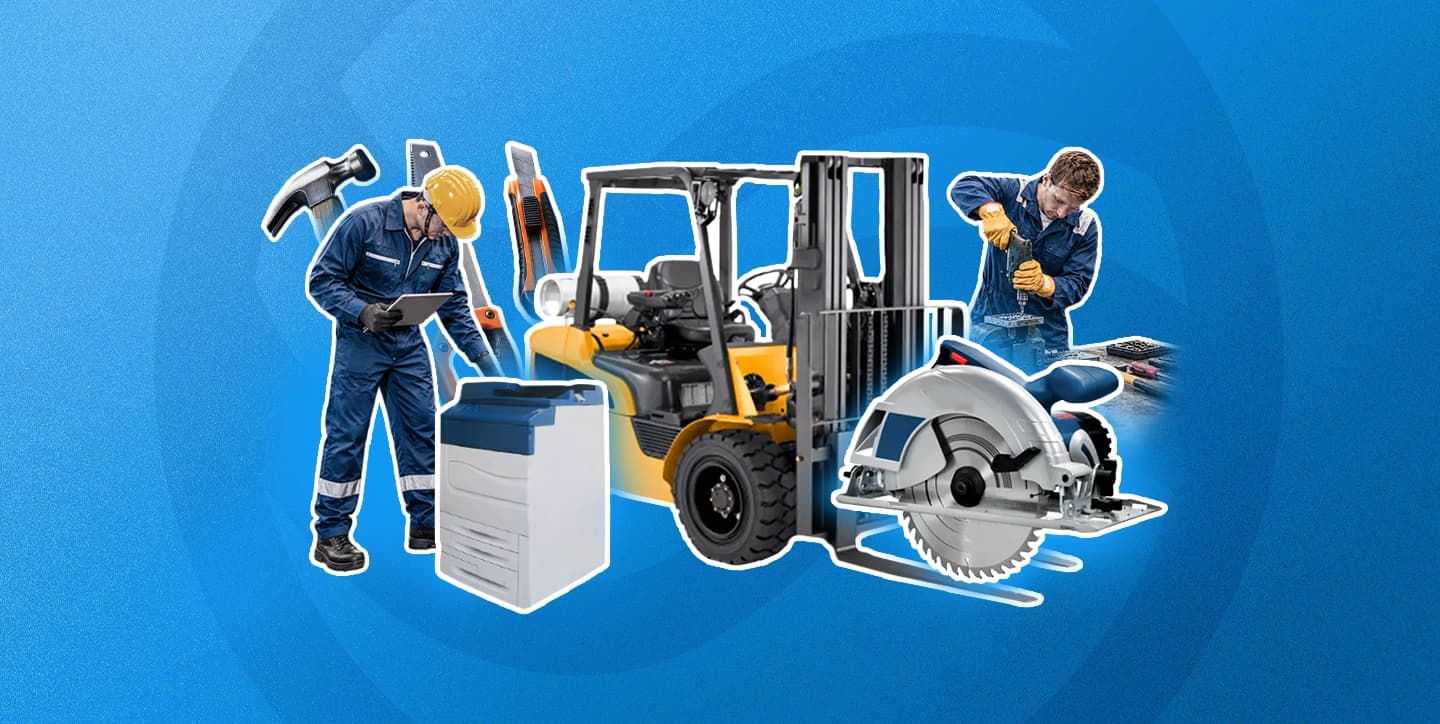

Ask most safety managers what PUWER covers and you will get an answer about machinery. Guards, interlocks, the big things on the shop floor.
That answer is right and it is roughly a third of the picture.
What PUWER is
PUWER stands for the Provision and Use of Work Equipment Regulations 1998. It is a statutory instrument, SI 1998/2306, made under the Health and Safety at Work etc. Act 1974, and it came into force on 5 December 1998.
The PUWER regulations require that work equipment is suitable for what it is used for, kept in good working order, inspected where it could deteriorate into something dangerous, and used only by people who have been given adequate information, instruction and training.
They are supported by L22, the Approved Code of Practice published by HSE. According to L22, the regulations place duties on people and companies who own, operate or have control over work equipment, and also on businesses whose employees use work equipment whether the business owns it or not.
The legal weight of L22
An Approved Code of Practice carries a legal status of its own. Follow it and you will normally be doing enough to comply. If you are prosecuted for a breach of the regulations and it is proved that you did not follow the relevant ACOP provisions, a court can take that as evidence of the breach unless you can show you complied in some other way.
What counts as work equipment
This is where most organisations find they have more in scope than they thought. HSE's own definition is deliberately broad.
Work equipment is any machinery, appliance, apparatus, tool or installation for use at work, whether used exclusively at work or not. HSE's PUWER guidance states plainly that the scope is extremely wide, and that it includes equipment which employees provide for their own use at work.
So the list runs further than the shop floor:
- Hand tools: hammers, knives, handsaws and screwdrivers are work equipment in exactly the way a lathe is
- Single machines: drills, circular saws, photocopiers, dumper trucks
- Hired and borrowed equipment: ownership makes no difference to whether the duties apply
- Second-hand equipment: scope is the same as for anything bought new
- Equipment brought from home: an employee's own tool used at work sits inside the regulations
- Installations: fixed plant and assemblies of machines working together
The word "use" is drawn just as widely. HSE defines it as any activity involving work equipment, including starting, stopping, programming, setting, transporting, repairing, modifying, maintaining, servicing and cleaning.
Read that list again. The duties attach while a machine is being cleaned or repaired, as much as while somebody is operating it. How much of your equipment register reflects that?
What the regulations require
The core duties sit in the opening regulations, and an inspector will read them in order.
Regulation 4, suitability. Equipment has to be constructed or adapted to suit the purpose it is used for, and used only for operations and conditions it suits. Suitable here means suitable in any respect it is reasonably foreseeable will affect anyone's health or safety.
Regulation 5, maintenance. Equipment has to be maintained in an efficient state, in efficient working order and in good repair. Note the wording. It describes a condition to reach. How you get there is left to you. Regulation 5(2) adds that where machinery has a maintenance log, the log has to be kept up to date.
Regulation 6, inspection. Where safety depends on installation conditions, equipment is inspected after installation and after assembly at a new site. Where equipment is exposed to conditions causing deterioration liable to result in dangerous situations, it is inspected at suitable intervals and each time exceptional circumstances occur. The result has to be recorded and kept until the next inspection is recorded.
Regulations 7 to 9 cover specific risks, information and instructions, and training.
The maintenance log trap
Regulation 5(2) says that where machinery has a maintenance log, keep it current. Having one at all is optional. Regulation 6(3) does require an inspection result to be recorded. So the document most organisations reach for when asked to prove compliance is the one PUWER never demanded, while the record it does demand often turns out to be missing. A combined service log recording lubrication, oil changes and reactive repairs evidences the condition of the equipment. Regulation 6 asks for something else entirely: proof that a competent person inspected it.
PUWER sets no inspection interval
Here is the part that catches people out.
Regulation 6 says "at suitable intervals". It gives no number. PUWER inspections sit on no fixed calendar. There is no annual rule, no six-monthly rule, and nothing in the regulations that tells you when your particular machine is due. The interval is yours to set, based on how the equipment is used, how quickly it deteriorates and what happens if it fails.
Which means the interval itself is a judgement you have to be able to defend. If somebody asked why your inspection cycle is what it is, what would you point to?
The one place PUWER does prescribe a cycle is the power press. Under Regulations 32 to 35, a power press and its guards must be thoroughly examined at least every twelve months where it has fixed guards only, and at least every six months where other guard types are fitted, along with an examination after exceptional circumstances. Reports follow under Regulation 34, and where the examiner finds a defect that is or could become a danger, a copy goes to the enforcing authority.
Equipment that leaves your site has to take its paperwork
Regulation 6(4) is the duty almost nobody quotes, and it is the one that bites hardest on multi-site operations and anyone using contractors.
No work equipment may leave your undertaking, and no equipment obtained from another undertaking may be used in yours, unless it is accompanied by physical evidence that the last required inspection has been carried out.
That applies to plant moving between your own sites. It applies to equipment you hire in. It applies to kit a contractor brings onto your premises. The same duty appears again in LOLER for lifting equipment, which makes it a principle: equipment crossing an organisational boundary arrives with its evidence, or it stays idle.
Where other regulations take over
PUWER is the broad envelope. Several categories of equipment carry additional duties on top, and Regulation 6 steps aside entirely for some of them.
Lifting equipment falls under the Lifting Operations and Lifting Equipment Regulations 1998, SI 1998/2307. Regulation 9 there requires thorough examination at least every six months for equipment used to lift people and for lifting accessories, at least every twelve months for other lifting equipment, or in line with a written examination scheme. LOLER sits on top of PUWER, so a forklift carries both sets of duties at once.
Pressure equipment falls additionally under the Pressure Systems Safety Regulations, and personal protective equipment under the PPE Regulations.
Regulation 6 also does not apply to power presses and their guards, to lifting equipment for persons, to mines winding apparatus, to certain equipment already inspected under the Construction (Design and Management) Regulations 2015, or to equipment covered by regulation 12 of the Work at Height Regulations 2005. If your equipment sits in one of those categories, the inspection rules you need are somewhere else.
What this looks like in practice
Strip away the regulation numbers and PUWER compliance comes down to four things you should be able to produce on request.
An equipment register that reflects the full scope, including hired, borrowed and employee-owned items. A PUWER risk assessment against each item, covering suitability and the risks its use creates. Inspection records separate from maintenance records, attributable to a competent person and dated. And training records linked to the equipment they cover.
What a PUWER inspection record needs
Keep the inspection record distinct from the service log, since they evidence different duties. Record who carried it out and when. Write down the interval you set and the reasoning behind it, because "at suitable intervals" puts the justification on you. Track defects through to close-out and keep the equipment out of service until they are resolved. And attach the evidence to any equipment that leaves the site, because Regulation 6(4) makes that a condition of its use elsewhere.
That list is what our PUWER Assessments was built to hold. The equipment register, statutory inspection scheduling, defects tracked to resolution, and assessments built on PUWER-aligned templates, with the records exportable when somebody asks for them. Where equipment risk is tied to a specific activity rather than the machine itself, task-based risk assessments cover that side. It is the practical end of the Accelerated Compliance approach, taking a team from trained and capable through to genuinely audit-ready.
Knowing which regulation applies to which piece of equipment is the first step, and it is the one most organisations skip. The same question comes up with chemicals, where DSEAR and COSHH divide the ground between them in a way that catches people out for exactly the same reason.
Frequently Asked Questions
What does PUWER stand for?
PUWER stands for the Provision and Use of Work Equipment Regulations 1998. It is a UK statutory instrument, SI 1998/2306, made under the Health and Safety at Work etc. Act 1974.
Is PUWER a legal requirement?
Yes. PUWER imposes legally enforceable duties on employers, the self-employed and anyone with control over work equipment. HSE enforces it, and breaches can lead to improvement notices, prohibition notices and prosecution.
How often is a PUWER inspection required?
There is no fixed interval for most equipment. Regulation 6 requires inspection after installation where safety depends on installation conditions, at suitable intervals where equipment could deteriorate dangerously, and after exceptional circumstances. The employer sets the interval and should be able to justify it. Power presses are the exception, with a six or twelve month cycle depending on the guards fitted.
What is the difference between PUWER and LOLER?
PUWER covers all work equipment. LOLER adds specific duties for lifting equipment, including thorough examination at six or twelve month intervals and the planning of lifting operations. Both apply at the same time, so lifting equipment carries two sets of duties and two sets of records.
Does PUWER apply to equipment we hire in?
Yes. The duties follow the use of the equipment rather than its ownership. Regulation 6(4) also means hired equipment should reach you with physical evidence that its last inspection was carried out, and equipment you send out has to carry the same.
Work equipment compliance is mostly a record-keeping problem wearing an engineering costume. If you want to talk through how yours would stand up to an inspection, speak to our team.

Safety & Compliance Experts
The Sevron team brings decades of combined experience in health and safety compliance, risk assessment, and workplace safety solutions.

Reviewed by
Dale Allen
CEO & Founder