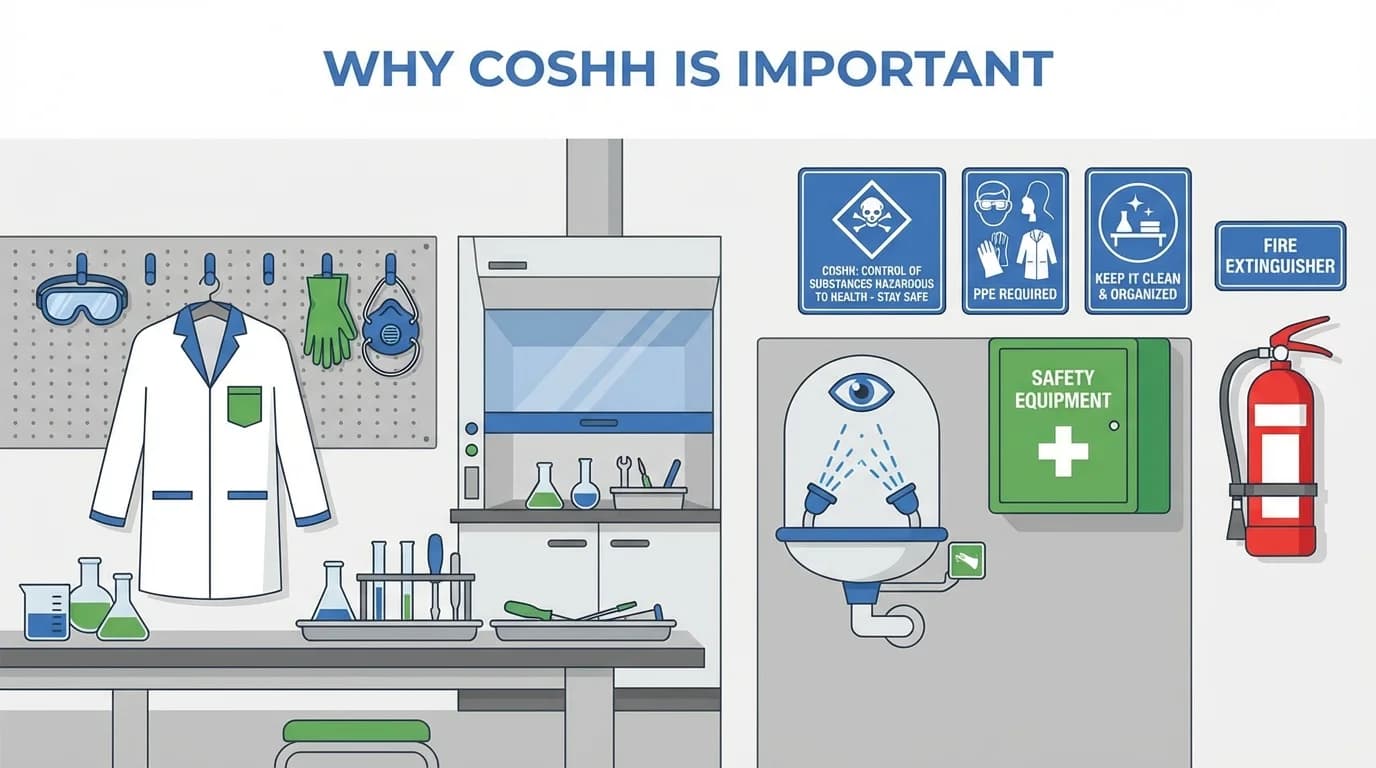
COSHH was first introduced in 1988 to reduce accidents and minimise the risk to employee health in the workplace. The current Control of Substances Hazardous to Health (COSHH) Regulations 2002 are the central framework for managing chemical and biological risks in UK workplaces. While physical hazards like falls are immediate, the danger from dust, fumes, and vapours is often invisible.
Understanding COSHH means recognising the importance of long-term wellbeing rather than just immediate injury. These regulations provide a system to identify hazards and implement control measures before they cause chronic illness.
This guide outlines the safety, legal, and operational reasons to comply with COSHH regulations. It details how substance exposure leads to occupational disease, the duties of employers, and how a risk assessment reduces business liability. For any organisation handling hazardous substances, these regulations are a foundational requirement for a healthy working environment.
Start Managing COSHH Compliance Today
Get a demo of our premium software, or get started with free tools.
What Problem Does COSHH Actually Solve?
The main problem COSHH regulations covers is the "latency period" of occupational diseases. Unlike an accident that causes an immediate injury, many workplace wellbeing hazards involve a slow build up of damage. A worker might inhale silica or wood dust for years without symptoms, only to develop a life-limiting condition like occupational asthma later.
Occupational diseases are typically slow, invisible, and irreversible. Exposure to hazardous substances can occur through inhalation, skin contact, injection, or ingestion, often without triggering immediate pain that warns of danger.
These regulations exist to prevent harm before symptoms appear by stopping exposure to hazardous substances at the source. A COSHH risk assessment lets businesses quantify invisible health hazards and apply the hierarchy of control based on evidence and necessary control measures. Regular health monitoring catches early signs of ill health.
COSHH Protects Workers from Long-Term Health Damage
Most illnesses related to hazardous substances develop over years. Because the effects are not instant, employees may become lax with protective equipment or control measures. However, the reality of ignoring these workplace dangers are severe and often shorten life expectancy.
-
Respiratory Disease: Inhaling dust, vapours, or gases causes permanent lung damage. Conditions like COPD, silicosis, and asthma occur when exposure is not managed. These often result in a total loss of fitness for work. Proper COSHH training teaches workers how to control exposure to these harmful substances.
-
Skin Conditions: Occupational dermatitis is common in the healthcare sector and manufacturing. Contact with chemicals or biological agents strips the skin of its natural protection, leading to chronic pain and secondary infections. Personal protective equipment must be worn consistently to minimise exposure.
-
Occupational Cancers: Many substances are carcinogens. Exposure to materials like hardwood dust or specific solvents can trigger cancer growth over decades. COSHH training is vital to ensure workers respect these potential risks and understand how dangerous substances affect long-term wellbeing.
-
Sensitisation: Certain micro organisms or chemicals act as sensitisers. Once a worker is sensitised, even tiny future exposure triggers a violent reaction, effectively ending their career in that environment. Health surveillance programmes can detect early sensitisation before permanent damage occurs.
COSHH Is a Legal Requirement
COSHH stands for a set of statutory regulations. In 2026, COSHH remains a strict legal requirement in the UK that requires employers to be compliant. Non-compliance is a criminal offence resulting in severe penalties. If an organisation handles hazardous substances, they are legally bound to implement control measures and maintain a safe system of work.
-
Applies to all: Legal requirements state that employers must take responsibility for all substances on site. This applies regardless of business size, from multinationals to the self-employed.
-
HSE Enforcement: The Health and Safety Executive (HSE) does not grant exemptions for small teams. The biological impact of a substance does not change based on company turnover.
-
Proactive Duty: The HSE can issue notices based on the lack of a COSHH risk assessment alone, without requiring an accident to occur first.
See Sevron in Action
Watch our demo to see how Sevron simplifies COSHH compliance with automated risk assessments and real-time SDS data.
BOOK A DEMOCOSHH Reduces Business Risk and Liability
COSHH regulations are a tool for risk mitigation and operational continuity. High standards insulate an organisation from the fallout of occupational failures. Focusing on control allows a business to operate with stability.
-
Reduces Claims: Adhering to health regulations builds a strong legal defence. Compensation for ill health can reach hundreds of thousands of pounds. A COSHH assessment system proves the company fulfilled its duty to protect staff.
-
Management Protection: Compliance protects directors from personal prosecution. Under UK law, managers can be held negligent for failing to oversee hazardous substances. Documented COSHH training and safety training programmes prove a commitment to staff wellbeing.
-
Operational Continuity: Following regulations prevents work stoppages. If the HSE issues a prohibition notice, work must stop. This leads to broken contracts and financial penalties. Proactive management of hazardous materials keeps the business running.
COSHH Improves Workplace Control and Standards
Compliance is about creating a more ordered workplace, not just generating paperwork. Compliance with COSHH enhances corporate reputation by demonstrating a commitment to health and safety standards.
-
Clear Procedures: Control measures result in better work instructions, reducing the likelihood of errors and accidents.
-
Better Storage: Handling hazardous substances correctly reduces waste and the risk of spills.
-
Safer Processes: Substituting dangerous substances for safer alternatives often reduces energy costs and insurance premiums.
-
Professionalism: Identifying risks from substances hazardous to health simplifies chemical inventory and creates a professional environment that improves morale and retention. There are approximately 500 hazardous substances with Workplace Exposure Limits (WELs) monitored to control exposure effectively.
COSHH Supports Compliance with Other Health and Safety Laws
These regulations are a vital part of the broader UK framework. They provide the data needed for an overall risk management strategy. Positioning them as foundational ensures policies are mutually reinforcing.
During audits, Safety Data Sheets (SDS) and the COSHH assessment system are a primary focus, as SDS provide essential information for conducting risk assessments. Auditors check if you have identified harmful substances and provided personal protective equipment. Strong management reflects well on the entire company. It also aligns with ISO management systems.
Having health and safety procedures to manage substances hazardous to health demonstrates technical competence to clients and stakeholders. This makes the business more competitive in the long term. Properly trained employees understand workplace exposure limits and know how to reduce exposure through effective control.
What Happens When COSHH Is Ignored?
Ignoring COSHH regulations can lead to anything from physical problems to business failure. When a company neglects to comply with COSHH, the results are often permanent for both employers and workers.
-
Immediate Incidents: Exposure can cause chemical burns or acute poisoning from vapours. Without training, workers may mishandle substances.
-
Long Term Liability: Ill health claims often manifest years after an employee has left. These are hard to defend without a COSHH assessment and health surveillance records.
-
Financial Penalties: The HSE can impose hefty fines and custodial sentences for businesses that fail to comply.
-
Reputational Damage: Clients avoid businesses with poor records. Non-compliance is a direct threat to commercial survival.
Key Reasons COSHH Is Important
To summarise, every organisation must prioritise these regulations to ensure stability:
-
Protects Workers: Prevents terminal diseases from biological agents, chemicals, and substances.
-
Prevents Illness: Stops invisible damage from hazards posed by substances before it is irreversible through health surveillance.
-
Legal Duty: Ensures the business stays in compliance with requirements to avoid prosecution.
-
Reduces Liability: Lowers the risk of compensation claims and financial penalties.
-
Operational Control: Creates safer procedures and monitors workplace exposure limits to control exposure effectively.
Ready to Simplify Your COSHH Assessments?
Create professional COSHH risk assessments in minutes with our free online tool. No credit card required.
CREATE FREE ASSESSMENTTopics:
