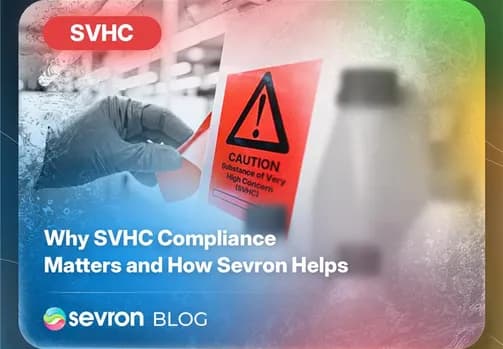

A Substance of Very High Concern (SVHC) is a chemical identified under the EU's REACH regulation — the Registration, Evaluation, Authorisation and Restriction of Chemicals framework that governs the manufacture, import, and use of chemicals in Europe — for its potential risks to human health and the environment. These include carcinogenic substances, chemicals that persist in nature, and endocrine disruptors.
For businesses, staying on top of SVHC compliance is not just a legal requirement, it's a way to prevent supply chain disruptions, avoid penalties, and protect your reputation. Without a clear approach, mismanagement can lead to operational delays or costly recalls.
What is REACH?
The Registration, Evaluation, Authorisation and Restriction of Chemicals (REACH) is the European Union regulation that controls the manufacture, import, and use of chemicals. Its goal is to protect human health and the environment by ensuring chemical risks are identified, assessed, and properly managed.
What are Substances of Very High Concern?
SVHCs are chemicals that pose significant threats to human health and the environment. These include substances:
- Known to cause carcinogenic, mutagenic, or reproductive harm (Carcinogenic, Mutagenic, or Reproductive toxicity - CMR)
- That persist in the environment and accumulate in living organisms (Persistent, Bioaccumulative, and Toxic - PBT / very Persistent and very Bioaccumulative - vPvB)
- With endocrine-disrupting properties
These substances are listed on the REACH Candidate List and, in many cases, require special authorisation before industrial use.
Additional requirements include:
- Legal requirements to notify customers and downstream users
- Requirements to monitor and report usage volumes
- Strategic planning for eventual substitution or elimination
Compliance Imperative
As global regulatory frameworks grow more stringent, organisations must be proactive with SVHC compliance. Noncompliance in managing these substances in your business can lead to fines, operational delays, and reputational damage — not to mention the persistent and invisible threat to your employees' health.
Why SVHC Compliance Matters?
A common misconception in SVHC compliance management is that it is optional, or only required for businesses that deal with extremely dangerous substances such as acid or chemicals with hard to pronounce names. However, keep in mind that an SVHC is any substance that can pose serious threat to human health — many of which are found in everyday materials.
Avoid Legal Penalties
Failure to comply with REACH can lead to fines, restrictions on chemical use, or enforcement actions that disrupt your business. Authorities may impose penalties for late reporting, underreporting, or misclassification of SVHCs. Beyond financial costs, legal issues can damage your company's credibility and erode trust with regulators. By maintaining strict compliance, businesses not only stay within the law but also demonstrate a commitment to responsible chemical management.
Expert Tip
Read our guide on why risk assessment is important for the safe use of hazardous substances.
Protect Your Supply Chain
Mismanagement of SVHCs can cause sudden bans or restrictions on critical materials, creating delays and shortages in production. This can ripple across your supply chain, affecting partners and customers. Companies that proactively track and manage SVHCs (such as with Sevron Safety365) can plan substitutions or alternative sourcing in advance, minimising operational disruptions.
Expert Tip
Reduce Operational Risks
Proper SVHC compliance reduces the likelihood of workplace incidents, environmental harm, and costly recalls. Handling high-risk chemicals with validated systems and clear protocols prevents accidents and ensures a safer working environment. Operational risks extend beyond immediate safety concerns—non-compliance can trigger production stoppages, audits, and investigations that divert resources from core business activities.
Expert Tip
Read our guide on protecting your employees with proactive COSHH risk assessments.
Enhance Corporate Reputation
Demonstrating a commitment to chemical safety and environmental stewardship strengthens your company's reputation with regulators, customers, and the public. Organisations known for responsible chemical management are more attractive to partners, investors, and clients who prioritize sustainability and safety. SVHC compliance shows that your business not only meets legal obligations but also actively contributes to a safer and more sustainable industry.
Expert Tip
Future-Proof Your Business
Proactive SVHC compliance allows you to anticipate changes, implement new controls, and maintain operational continuity without last-minute crises. Businesses that integrate compliance into their long-term strategy reduce uncertainty, protect their bottom line, and remain competitive on a global scale.
Expert Tip
Benefits and Challenges of SVHC Compliance
Overview: Benefits vs. Challenges of SVHC Compliance Management
Benefits of SVHC Compliance Management:
- Protects human health and the environment
- Supports regulatory compliance
- Enhances operational planning
- Builds stakeholder trust
Challenges of SVHC Compliance Management:
- Tracking all substances
- Keeping pace with updates
- Documentation and reporting
- Training and awareness
Benefits of SVHC Compliance Management
Properly managing SVHCs offers both regulatory and operational advantages for businesses. Staying ahead ensures safety, reduces risk, and demonstrates responsibility to stakeholders.
- Protects human health and the environment: Managing SVHCs correctly minimizes exposure to harmful chemicals and reduces environmental impact.
- Supports regulatory compliance: Keeping track of SVHCs helps your business meet REACH obligations and avoid potential fines.
- Enhances operational planning: Awareness of high-risk substances allows for smarter sourcing, substitution, and long-term planning.
- Builds stakeholder trust: Proactive chemical management signals responsibility to customers, regulators, and the public, strengthening your reputation.
Challenges in SVHC Compliance Management
Managing SVHCs involves navigating a complex and ever-shifting landscape. Many organisations face challenges such as:
- Tracking all substances: Maintaining up-to-date records of all substances in use and identifying those classified as SVHCs.
- Keeping pace with updates: The REACH Candidate List is updated frequently, requiring continuous monitoring.
- Documentation and reporting: Producing documentation that meets regulatory requirements without diverting resources from other safety or operational priorities.
- Training and awareness: Training staff and managers to ensure everyone is Certified, Competent, and Compliant in the handling and reporting of these high-risk substances.
Compliance Risks
These challenges are not trivial. Inadequate tracking or oversight can result in noncompliance, delays, fines, and even bans on critical materials. Organisations must find reliable ways to simplify, automate, and strengthen their SVHC compliance processes.
Managing SVHC Compliance With Safety365 SVHC Monitoring
Safety365 SVHC monitoring from Sevron is designed specifically to address the complexity of SVHC compliance. It is a robust, cloud-based solution that gives companies full visibility into their chemical inventory and real-time awareness of their regulatory obligations. The platform continuously monitors for changes in substance status, automates alerts, and streamlines the process of documentation and reporting.
Safety365 provides powerful capabilities that empower teams across departments:
- Automated identification of substances that are or may become SVHCs
- Seamless logging of quantities used and stored, supporting threshold tracking and audit readiness
- Instant alerts when changes to the REACH Candidate List affect substances in your inventory
- Built-in tools to generate updated Safety Data Sheets (SDS) and other compliance reports
- Intuitive dashboards that translate complex data into actionable insights
What Makes Safety365 Stand Out for SVHC Compliance?
What sets Safety365 apart is its ability to integrate seamlessly into existing workflows, enhancing rather than disrupting operations. It is scalable, secure, and constantly updated to align with evolving regulations.
With Sevron, your organisation's SVHC compliance is:
- Certified through robust documentation and system validation
- Competent with tools that support informed decision-making and prompt responses
- Compliant with national and international safety laws and standards
How Sevron Supports Both Technical Teams and Business Leaders in SVHC Compliance
The impact of SVHC compliance extends beyond the EHS (Environment, Health, and Safety) department. Safety365 delivers value across the organisation by providing tools, insights, and automation that empower technical staff and business leaders alike, ensuring operational safety and strategic compliance work hand-in-hand.
How Sevron Delivers Value Across Departments
Technical Teams:
- Gain clear workflows and automated support
- Automated identification of SVHCs reduces errors
- Seamless logging of quantities supports threshold tracking
- Real-time alerts keep teams updated on regulatory changes
- Reduce manual tasks and improve day-to-day operational efficiency
Business Leaders:
- Achieve transparency and effective risk management
- Access audit-ready documentation and reporting tools
- Monitor compliance and mitigate legal and reputational risks
- Make informed, data-driven strategic decisions
- Align compliance with broader business objectives
Technical Teams Gain Clear Workflows and Automated Support
Safety managers, chemical handlers, and technical staff gain automated identification of SVHCs, seamless logging, and real-time alerts. These features reduce manual work, improve accuracy, and make day-to-day compliance straightforward and reliable.
Business Leaders Achieve Transparency and Effective Risk Management
Procurement, compliance, and legal teams benefit from audit-ready documentation, dashboards, and reporting tools. This visibility helps mitigate legal and reputational risks, while supporting data-driven strategic decisions.
Departments Collaborate Seamlessly for Full Compliance
By connecting technical and business workflows, Sevron ensures that operational safety aligns with strategic compliance goals. Teams can collaborate efficiently, respond quickly to regulatory updates, and maintain full SVHC compliance across the organisation.
By unifying these perspectives, Sevron helps align operational safety with strategic compliance goals.
Getting Started with SVHC Compliance Using Sevron
Step 1: Assess Your Current Chemical Inventory
Start by identifying all substances in your inventory that are classified as SVHCs or listed on the REACH Candidate List. Understanding what you already have is critical to avoid noncompliance and prepare for reporting obligations.
You can also reach out to a Sevron representative for a free COSHH compliance consultation. A thorough assessment lays the foundation for a structured compliance strategy.
Step 2: Implement Safety365 SVHC Monitoring
Use Safety365 to automate tracking and monitoring of high-risk chemicals. The platform ensures accurate, up-to-date records and sends alerts for regulatory changes, reducing manual work and keeping your team ahead of compliance requirements.
Step 3: Develop Internal Protocols
Establish protocols that make your team Certified, Competent, and Compliant with SVHC handling. Training staff on both chemical safety and using Safety365 ensures documentation is accurate and processes are standardized across departments.
Step 4: Establish a Review Cadence
Regularly audit your chemical inventory, update training, and evaluate the performance of your compliance system. A structured review cadence keeps your organisation agile, ensures ongoing adherence to regulations, and prepares you for future regulatory changes.
Each of these steps brings your organisation closer to a future-proofed SVHC compliance model that can withstand scrutiny, scale with operations, and reduce risk.
Keep Your Business Safe With Safety365 SVHC Monitoring
Maintaining SVHC compliance does not have to be overwhelming. Safety365 SVHC monitoring equips your teams with the tools, insights, and support they need to stay ahead of compliance demands and build a culture of safety and responsibility.
Reach out today for a personalised demonstration and discover how Sevron can help you remain Certified, Competent, and Compliant—every step of the way.
Frequently Asked Questions
What is an SVHC and why is it important to comply?
A Substance of Very High Concern (SVHC) is a chemical identified under the EU's REACH regulation for potential risks to human health and the environment. Complying with SVHC regulations protects your workforce, prevents legal penalties, and ensures safe operations.
How does Sevron's Safety365 help with SVHC compliance?
Safety365 automates identification, tracking, and reporting of SVHCs. It provides real-time alerts, audit-ready documentation, and intuitive dashboards, helping organisations stay proactive and compliant across all departments.
Who in my organisation benefits from SVHC compliance tools?
SVHC compliance benefits technical teams, such as chemical handlers and safety managers, as well as business leaders, including procurement, legal, and compliance staff. Safety365 ensures both operational safety and strategic oversight.
What are the risks of not complying with SVHC regulations?
Noncompliance can lead to fines, supply chain disruptions, operational delays, and reputational damage. Maintaining up-to-date SVHC compliance is essential to avoid these costly consequences.
How can my organisation get started with SVHC compliance?
Begin by assessing your chemical inventory, implementing automated monitoring with Safety365, developing internal protocols, and establishing a review cadence. Following these steps creates a structured, future-proof compliance model.
Ready to simplify your SVHC compliance? Contact our team to learn how Safety365 can help you stay ahead of REACH regulations and protect your business.

Safety & Compliance Experts
The Sevron team brings decades of combined experience in health and safety compliance, risk assessment, and workplace safety solutions.

Reviewed by
Dale Allen
CEO & Founder