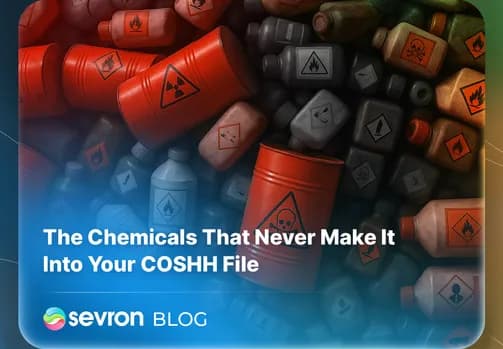

Even in safety-conscious workplaces, everyday "low-risk" chemicals slip through COSHH assessments, yet these overlooked substances cause occupational asthma and other long-term health issues. Many result in costly HSE enforcement actions.
The Hidden Chemicals You're Probably Missing
Common examples include:
- Cleaning and janitorial products (glass cleaners, bleach-based sprays, disinfectant wipes)
- Maintenance materials (lubricants, adhesives, degreasers, paint thinners)
- Air fresheners, printer toners, and polishes used in offices or communal spaces
- Occasional-use products (pest control sprays, descaling agents) forgotten between inspections
These products may seem low-risk, but their ingredients can include irritants, sensitizers, and volatile organic compounds (VOCs) that build up with repeated exposure.
Why These Oversights Still Happen
COSHH risk assessment applies to all hazardous substances, regardless of purchase source or frequency. Several recent HSE inspections revealed companies with complete production material documentation were missing entries for daily-use "low-risk" products. Results included formal improvement notices and fines for incomplete hazard management.
Case Study: When Cleanliness Becomes a Hazard
At a UK food processing plant, workers developed dermatitis and skin irritation from frequent hand washing and contact with cleaning agents. Despite using approved hygiene products, the company failed to recognize these substances as hazardous under COSHH. Regular exposure combined with insufficient training and protective measures led to multiple occupational dermatitis cases.
Lesson Learned
Even routine cleaning chemicals must be assessed. What seems harmless can still cause harm when overlooked, especially in high-frequency use environments like food processing or healthcare.
Recognizing Early Warning Signs
- Workers reporting headaches, dry skin, or coughing after cleaning or maintenance tasks
- Unlabelled containers or "decanted" chemicals stored for convenience
- Expired or missing SDS documentation
- Stockrooms containing duplicate or unverified brands of cleaning products
Building Accountability into Chemical Safety
The most effective COSHH systems share one trait: clear ownership.
When everyone assumes someone else will handle documentation, small oversights multiply quickly. Employers should explicitly assign responsibility for maintaining COSHH files and reviewing new products as they enter the workplace.
Managers should make the reporting process visible and easy to follow. When safety documentation is treated as a living system rather than a static folder, awareness naturally improves.
Workers should feel confident flagging new substances or asking for an SDS without hesitation. Regular training can help workers respond appropriately to potential hazards.
Closing the Gaps in Chemical Oversight
Oversight often happens not because of neglect, but because systems aren't designed to keep up with workplace chemical volume and variability. Chemical data living in separate spreadsheets or manual folders leads to delayed updates and unreliable information.
Organizations need continuous compliance processes that track every chemical and action taken. Automated tools ensure that even low-risk or "common" substances are logged and updated in real time, turning reactive safety into proactive protection.
By building this infrastructure, teams shift focus from chasing paperwork to creating genuinely safer workplaces where no chemical, however small, goes unnoticed.
The Sevron Accelerated Compliance Framework
The framework focuses on three key pillars:
Certified
Every COSHH and SDS document is verified and kept up-to-date through automatic updates from trusted data sources.
Competent
Training records and audit trails ensure teams understand each control measure and apply it effectively in daily operations.
Compliant
Every action is logged, every update is traceable, and every inspection becomes easier to prepare for.
Frequently Asked Questions
What are the most commonly overlooked chemicals under COSHH?
Everyday cleaning products, maintenance sprays, and hand sanitizer are often missed because they seem "low risk." However, regular exposure can lead to respiratory irritation or long-term health effects. The International Crash Course on Chemical Safety offers further information.
How can I tell if my COSHH file is missing substances?
Review purchasing and inventory lists. Any item with a safety label or hazard symbol should appear in your COSHH file. Cross-checking with supplier Safety Data Sheets (SDS) is the best way to identify gaps.
Who is responsible for ensuring all chemicals are recorded?
Employers hold primary responsibility for assessing and controlling chemical risks under COSHH regulations. However, everyone plays a role, from procurement (ensuring correct documentation) to supervisors and workers (following control measures).
What's the best way to maintain up-to-date SDS and COSHH documentation?
Automation. Manual tracking quickly becomes unreliable, especially for large or multi-site operations. Tools like Sevron's Safety365 automatically update SDS and COSHH records from verified sources, ensuring every chemical is accurately logged and assessed.
How can organisations prevent missed hazards in the future?
Create a culture of situational awareness viewing chemical safety as ongoing, not occasional. Combine the Accelerated Compliance Framework with strategies from Safety-Verse to make safety an everyday habit, not just a compliance task.
Do not let hidden chemicals create compliance blind spots. Contact our team to learn how Sevron can help you capture every substance and build a comprehensive COSHH management system.

Safety & Compliance Experts
The Sevron team brings decades of combined experience in health and safety compliance, risk assessment, and workplace safety solutions.

Reviewed by
Dale Allen
CEO & Founder