
The UK government has officially implemented a ban on disposable vapes, effective 1 June 2025. This policy marks a significant phase, not only for public health, but for environmental safety and legal compliance across UK industries.
Disposable vapes are not merely a youth health issue. They pose serious risks in terms of fire safety, hazardous chemical exposure, and waste management. Encased within bright plastic shells are lithium-ion batteries, synthetic e-liquids, heavy metals, and flammable components. None of which were designed for safe disposal in general waste streams.
The Business Risk Behind the Vapour
In 2023, UK consumers purchased over 168 million disposable vapes. The vast majority were disposed of improperly, often crushed in bins or compactors, causing fires, chemical leaks, or system failures.
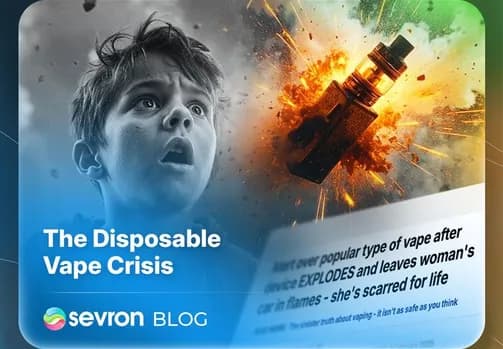
Retailers, schools, councils, and logistics firms have seen the fallout firsthand: fires in recycling plants, emergency callouts in schools, vehicle damage, and mounting insurance claims. These aren't isolated incidents. They represent systemic risk.
Real-World Consequences
Councils have lost vehicles to bin fires caused by discarded vapes. Schools have experienced locker explosions. Retailers now face enforcement from fire safety officers and environmental health authorities.
Now, with the ban enforced, businesses are left holding stock, handling unsafe waste, and facing growing legal responsibility. The central question is no longer whether disposable vapes should go. It's how to safely manage the aftermath.
What the New Ban Requires
The UK's new legislation prohibits the sale and supply of all disposable vapes. It also introduces stricter controls on underage access, marketing practices, and waste handling protocols. Crucially, it shifts the burden of disposal onto businesses. Manufacturers, retailers, venues, and local authorities are now accountable for safe handling and recycling.
Disposal obligations fall under multiple frameworks, including COSHH (Control of Substances Hazardous to Health), WEEE (Waste Electrical and Electronic Equipment), and the Battery Regulations. Businesses must now assess how vape components, especially lithium batteries and nicotine residues, fit into their existing compliance systems.
COSHH and Chemical Risk Management
Under COSHH, any substance that presents a health hazard must be assessed, controlled, and documented. Vape-related waste clearly qualifies:
- Nicotine solutions, even in residue form, are toxic and require hazardous waste handling
- Lithium-ion batteries are known fire hazards and require temperature-controlled storage
- Damaged vapes may release vapours or chemicals upon rupture, exposing staff to inhalation or contact risks
Compliance Is No Longer Optional
Risk assessments must now include vape disposal scenarios. Staff training, updated Safety Data Sheets (SDS), proper labelling, and compliant storage procedures are no longer optional. They are legally necessary.
Becoming Certified, Competent, and Compliant
To meet your legal obligations and protect your workforce, consider the following steps:
Practical Steps
- Provide vape safety training to relevant staff. The Knights of Safety Academy offers free, accredited courses tailored to schools, retailers, and public services
- Use COSHH software to develop site-specific risk assessments for vape-related waste. Sevron's COSHH365 includes battery storage, public bin management, and incident readiness
- Implement disposal protocols and ongoing monitoring procedures
- Prepare for regulatory inspection by documenting all compliance activities
The Cost of Inaction
This is not a hypothetical risk. Councils have lost vehicles to bin fires caused by discarded vapes. Schools have experienced locker explosions. Logistics firms are incurring rising insurance costs. Retailers now face enforcement from fire safety officers and environmental health authorities.
At the heart of the issue is a contradiction. A critical mineral, lithium, is wrapped in single-use plastic, filled with toxins, and marketed as disposable. The consequence is a growing safety burden shared by all public and private organisations.
Safety and Compliance Burden
The ban does not remove risk. It heightens it by leaving legacy waste in circulation and placing the duty of care squarely on businesses.
What Comes Next?
Business leaders must take immediate action to protect their organisations:
- Document risk assessments that specifically address vape waste handling
- Train staff on the hazards associated with lithium batteries and nicotine residues
- Update chemical registers to include vape-related substances
- Create and enforce disposal plans that comply with COSHH, WEEE, and Battery Regulations
Key Regulatory Frameworks
Your compliance obligations span multiple regulatory frameworks:
- COSHH - Control of Substances Hazardous to Health (chemical risk management)
- WEEE - Waste Electrical and Electronic Equipment (electronic waste disposal)
- Battery Regulations - specific requirements for lithium-ion battery handling and recycling
How Sevron Can Help
For help navigating these responsibilities, Sevron offers tools, templates, and support for businesses managing hazardous waste. Our comprehensive platform enables organisations to stay ahead of their compliance requirements through:
- COSHH365 - Generate accurate, site-specific risk assessments for vape-related waste
- MSDS365 - Maintain up-to-date Safety Data Sheets for all hazardous substances
- Task Risk Assessments - Document disposal procedures and control measures
Ready to ensure your organisation is certified, competent, and compliant? Contact our team to discuss your vape waste management requirements and develop a tailored compliance solution.

Safety & Compliance Experts
The Sevron team brings decades of combined experience in health and safety compliance, risk assessment, and workplace safety solutions.

Reviewed by
Dale Allen
CEO & Founder